
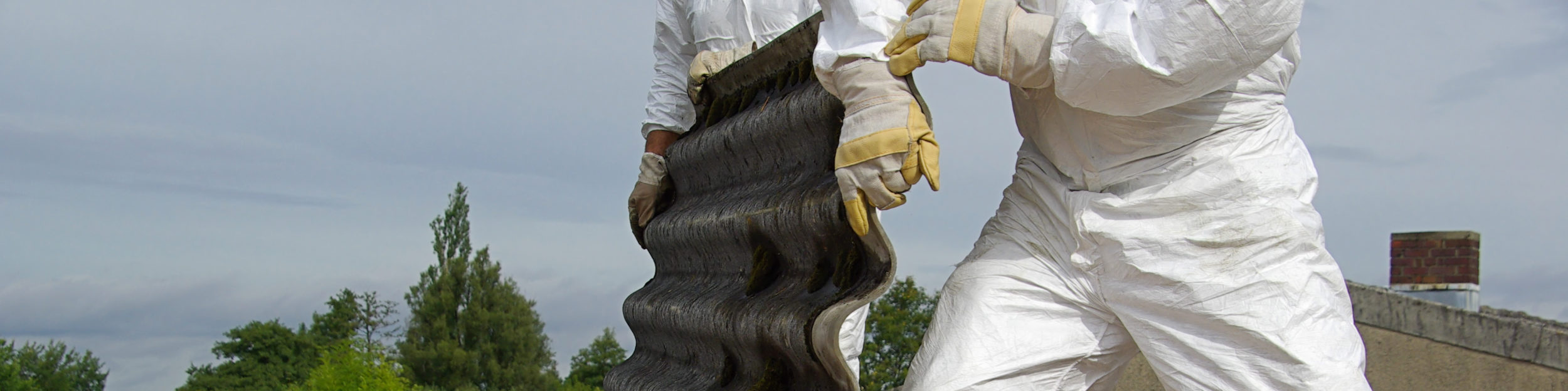
Quick answer: Asbestos has been banned in Australia since 31 December 2003, but an estimated 6 million tonnes of legacy asbestos remains in our built environment. In Victoria, the management, removal and disposal of asbestos is governed by the Occupational Health and Safety Act 2004, the Occupational Health and Safety Regulations 2017, and the Environment Protection Regulations 2021, with WorkSafe Victoria and EPA Victoria as the lead regulators. Removing more than 10m² of non-friable asbestos legally requires a Class B (or Class A) asbestos removal licence.
If you own, manage, renovate or demolish a property built before 31 December 2003 anywhere in Melbourne or regional Victoria, this guide will walk you through exactly what the law requires — and where the costly mistakes happen.
Why Asbestos Law Still Matters in 2026
Asbestos is not a historical problem. It is a present-day legal and health obligation.
- Approximately 4,000 Australians die every year from asbestos-related diseases such as mesothelioma, lung cancer and asbestosis.
- Roughly 1 in 3 Australian homes built before 1990 contains some form of asbestos-containing material (ACM).
- The Commonwealth, state and territory governments have endorsed the Asbestos National Strategic Plan (ANSP) 2024–2030 (Phase Three), which prioritises proactive removal of ageing asbestos rather than the older “manage in place” approach.
Translation for property owners, builders and developers in Victoria: the regulatory direction is moving towards more removal, more documentation, and stricter enforcement — not less. Renovations, demolitions and commercial fit-outs are now flashpoints for compliance audits.
The Legal Framework: Who Regulates Asbestos in Australia?
Asbestos law in Australia sits at three levels. Understanding which rule applies to your job — and which regulator enforces it — is the difference between a smooth project and a stop-work notice.
1. National framework
- Asbestos and Silica Safety and Eradication Agency (ASSEA) — formerly ASEA — coordinates national policy and administers the Asbestos National Strategic Plan 2024–2030.
- Safe Work Australia publishes the model Work Health and Safety (WHS) laws and the Code of Practice: How to Manage and Control Asbestos in the Workplace.
- Australian Border Force enforces the prohibition on importing asbestos-containing goods.
2. Victorian framework (the one that matters for Melbourne jobs)
- Occupational Health and Safety Act 2004 (Vic) — the primary safety statute.
- Occupational Health and Safety Regulations 2017 (Vic) — Part 4.4 sets out the specific asbestos duties, including registers, licensing, removal control plans and clearance certificates.
- Compliance Code: Managing Asbestos in Workplaces and Compliance Code: Removing Asbestos in Workplaces — issued by WorkSafe Victoria, these are the practical “how-to” documents inspectors will measure you against.
- Environment Protection Act 2017 (Vic) and the Environment Protection Regulations 2021 (Vic) — govern transport and disposal. Asbestos is classified as Reportable Priority Waste (RPW) under these regulations.
3. Local council requirements
Many Melbourne councils — including the City of Melbourne, Yarra, Boroondara, Whitehorse, Knox, Casey, Wyndham, Hume, Maribyrnong and Moonee Valley — require notification, permit conditions or specific waste tracking before demolition or major renovation work begins. Always check your local council’s planning and building requirements before committing to a removal date.
Friable vs Non-Friable Asbestos: The Legal Distinction
This is the single most important classification in Australian asbestos law because it dictates who is legally allowed to touch the material.
Non-friable asbestos (also called “bonded” asbestos)
- Definition: Asbestos fibres are bound within a solid matrix (typically cement) and cannot be crumbled, pulverised or reduced to powder by hand pressure when dry.
- Common examples in Melbourne homes and commercial sites: fibro cement sheeting (Super Six, Hardiplank), corrugated asbestos roofing, eaves, fences, vinyl floor tiles, and asbestos-cement water and drainage pipes.
- Who can remove it: A licensed Class B asbestos removalist (or a Class A holder) where the area exceeds 10m² or the work takes more than one hour over any seven-day period.
Friable asbestos
- Definition: Asbestos that, when dry, can be crumbled, pulverised or reduced to powder by hand pressure — or that becomes friable as a result of a work process (for example, fire damage, water damage, or aggressive power-tool use).
- Common examples: sprayed limpet insulation, pipe lagging, asbestos rope, millboard, and fire-damaged cement sheeting.
- Who can remove it: Only a Class A licensed asbestos removalist. A Class B licence holder is not permitted to perform Class A work under any circumstances.
Key insight for builders and demolishers: Non-friable asbestos that has been damaged by fire often becomes friable. WorkSafe Victoria treats fire-damaged cement sheeting as Class A work — even though it started life as Class B.
Asbestos Removal Licences in Victoria: Class A vs Class B
WorkSafe Victoria issues two licence classes. Both are valid for up to five years and must be renewed before expiry.
Class B Asbestos Removal Licence (Non-Friable)
A Class B licence holder can legally remove all forms of non-friable asbestos, including bonded cement sheeting, roof tiles, eaves, and fences — the vast majority of asbestos found in Victorian residential and light commercial properties.
To obtain and maintain a Class B licence in Victoria, the business must demonstrate:
- Trained removalists holding the nationally recognised unit of competency CPCCDE3014 — Remove non-friable asbestos.
- A nominated site supervisor with CPCCBC4051A — Supervise asbestos removal.
- Compliant respiratory protective equipment, Class H hazardous-dust vacuum cleaners, and protective clothing.
- Medical fit-for-work certificates for each removalist (updated every two years).
- A documented Safe Work Method Statement (SWMS) and Asbestos Removal Control Plan (ARCP) for every job.
Class A Asbestos Removal Licence (Friable + Non-Friable)
Class A holders can remove all asbestos types — friable and non-friable. Requirements include everything in Class B, plus an external Occupational Health and Safety (OHS) Management System certificate, mandatory on-site supervision throughout the works, enclosures, decontamination units, negative air units and air monitoring.
When is a licence NOT required?
A removal licence is not required in Victoria only if all of the following apply:
- The asbestos is non-friable.
- The total area is less than 10m².
- The total removal work takes less than one hour in any seven-day period.
Even within this exemption, WorkSafe Victoria strongly recommends engaging a licensed removalist. The cost of one professional job is almost always less than the cost of a contamination clean-up, EPA fine, or refusal to issue an occupancy certificate.
Your Legal Duties as a Property Owner or Employer
Under Part 4.4 of the OHS Regulations 2017, anyone with management or control of a Victorian workplace where asbestos may be present has specific, enforceable duties.
1. Asbestos register
- Required for all workplaces where the building was constructed before 31 December 2003.
- Must list all identified or assumed ACMs, their location, condition, and type.
- Must be reviewed at least every five years (and more often if the condition changes).
2. Asbestos management plan
- Required for any workplace where ACM is identified or assumed.
- Must document how risks are controlled, who is responsible, training, incident response, and review schedules.
3. Notification of removal work
- Licensed removalists must notify WorkSafe Victoria at least five days before starting most removal jobs.
- The notification details the site address, type of asbestos, quantity, control measures and supervisor.
4. Independent clearance certificate
Under Regulation 297 of the OHS Regulations 2017, the person who commissioned Class A or Class B asbestos removal work must obtain a clearance certificate from an independent competent person before re-occupying the area. The clearance assessor cannot be the removal contractor — this separation prevents conflicts of interest.
5. Demolition obligations
Before any building or structure is demolished, the person with management or control must — so far as reasonably practicable — ensure that all identified or assumed ACM is removed first. This applies to both commercial and residential demolitions in Victoria.
Asbestos Disposal in Victoria: The EPA Rules
Removing asbestos legally is only half the job. Disposal is regulated separately by EPA Victoria under the Environment Protection Regulations 2021.
Key requirements:
- Asbestos waste from commercial or trade activity is Reportable Priority Waste (RPW) and must be tracked through the EPA’s online Waste Tracker system.
- Waste must be double-wrapped in heavy-duty polyethylene (minimum 200 microns), clearly labelled “CAUTION ASBESTOS”, and sealed.
- Bags must be filled to no more than half capacity to prevent tearing.
- Waste must be transported in a covered, secure vehicle by an operator with the appropriate EPA permissions.
- Disposal is only legal at an EPA-licensed landfill authorised to receive asbestos waste. There are a limited number of these around Greater Melbourne — your removalist should know which one your job is going to.
- Transport certificates and disposal receipts must be retained as evidence of compliance.
EPA Victoria’s guidance document Publication IWRG611.2 — Asbestos transport and disposal is the practical reference.
Penalties for Non-Compliance
Victorian asbestos penalties are not symbolic. Recent enforcement has hardened, and prosecutions are routinely published on the WorkSafe Victoria website.
- Failure to obtain a clearance certificate under Regulation 297 carries penalties of 100 penalty units for an individual and 500 penalty units for a body corporate.
- Operating without an asbestos removal licence, or breaching licence conditions, can attract fines well in excess of $30,000 for individuals and significantly more for companies.
- Illegal asbestos dumping under the Environment Protection Act 2017 can trigger fines exceeding $50,000 for serious breaches, plus remediation costs.
- Aggravated offences involving reckless conduct that places workers at serious risk can attract imprisonment of up to five years.
And these are just the financial penalties. The reputational damage to a builder, developer or property owner who appears on a published prosecution list typically far exceeds the fine itself.
What This Means for Renovations and Demolitions in Melbourne
If your project involves any of the following, you are almost certainly in scope for the regulations above:
- Demolishing a house, garage, factory or warehouse built before 2004.
- Removing fibro cement sheeting, eaves, soffits or fences.
- Replacing a corrugated asbestos cement roof.
- Strip-outs of pre-2004 commercial fit-outs, kitchens or bathrooms.
- Removing vinyl floor tiles or asbestos-cement water pipes.
- Renovating cool stores, factory roller doors, electrical switchboards (Zelemite/Ausbestos panels), or boiler rooms.
- Any project triggered by storm, fire or flood damage to a pre-2004 building.
The compliance pathway is consistent: identify → register → control plan → licensed removal → clearance certificate → EPA-tracked disposal.
How Asbestos Gone and Clean Handles Class B Asbestos Removal in Melbourne and Victoria
We are a WorkSafe Victoria licensed Class B (non-friable) asbestos removalist and demolition contractor based in Melbourne, servicing all of Greater Melbourne and regional Victoria — from the inner suburbs out to Geelong, Ballarat, Bendigo, the Mornington Peninsula, the Yarra Valley and beyond.
Every job we take on follows the same compliance backbone:
- Site inspection and identification — including sampling by a NATA-accredited laboratory where required, in line with AS 5370:2024.
- Documented Asbestos Removal Control Plan (ARCP) and Safe Work Method Statement (SWMS) specific to the site.
- WorkSafe Victoria notification at least five days before works commence.
- Containment, removal and decontamination using H-class vacuums, P2/P3 respiratory protection, and full PPE protocols.
- EPA-compliant double-wrapping, labelling and transport to an EPA-licensed landfill, with full waste tracking.
- Independent clearance inspection to satisfy Regulation 297 before re-occupation.
- Full documentation pack — licences, certificates, manifests and clearance — handed to you for your records, insurer and any future buyer due diligence.
For builders and developers, we also offer integrated soft strip and demolition services so your asbestos works dovetail with the rest of the program rather than holding it up.
Frequently Asked Questions
Is it legal to remove asbestos yourself in Victoria?
A homeowner may legally remove non-friable asbestos only if the total area is under 10m² and the total work takes under one hour over any seven-day period. Above either threshold, a licensed removalist is mandatory. Even within the exemption, WorkSafe Victoria recommends using a licensed professional.
Do I need a licence to remove an asbestos shed or fence in Melbourne?
If the total area of asbestos cement sheeting exceeds 10m², yes — a Class B asbestos removal licence is required. Most fences and sheds exceed this threshold by some margin.
What is the difference between Class A and Class B asbestos removal?
Class A licence holders can remove friable and non-friable asbestos. Class B holders can remove non-friable asbestos only. Class B holders are legally prohibited from undertaking Class A work.
Who issues asbestos removal licences in Victoria?
WorkSafe Victoria. Licences are issued for up to five years and require evidence of training, medical fitness, equipment compliance, and (for Class A) a formal OHS management system certificate.
Do I need an asbestos register for my commercial property?
If the building was constructed before 31 December 2003 and is a workplace, yes. The register is mandatory under the OHS Regulations 2017 and must be reviewed at least every five years.
How much does professional asbestos removal cost in Melbourne?
Cost depends on the type of material, the quantity, access, and the disposal route. For most non-friable residential jobs in Melbourne — a fence, a garage, an eave replacement — expect a fixed-price quote after a free site assessment. Cheap quotes are usually a sign the contractor is cutting corners on disposal or licensing.
What happens if asbestos is illegally dumped or unsafely removed?
The site owner can be issued a remediation notice, an EPA infringement, and a WorkSafe prosecution simultaneously. Insurance policies typically exclude losses arising from unlicensed asbestos work, so the financial exposure is rarely capped.
Is asbestos still legal in Australia?
No. The manufacture, supply, use and reuse of all forms of asbestos has been banned in Australia since 31 December 2003. The legal obligations now relate to managing, removing and disposing of legacy asbestos already in the built environment.
Get a Compliant Quote for Your Melbourne or Victorian Project
Asbestos law in Australia is detailed, but compliance does not need to be complicated when you work with a licensed team.
If you are planning a renovation, strip-out, roof replacement, or demolition anywhere in Melbourne or Victoria, Asbestos Gone and Clean can provide a no-obligation site inspection, a fixed-price Class B non-friable asbestos removal quote, and a complete compliance pack.
☎ Call us: 0475 143 106
✉ Email: asbestosgoneandclean@gmail.com
???? Contact Us: Asbestos Gone and Clean – Contact
We service all Melbourne metropolitan suburbs and travel throughout Victoria for larger commercial and demolition projects.
Sources and Further Reading
- WorkSafe Victoria — Asbestos: Safety Basics, Licensing and Compliance Codes
- WorkSafe Victoria — Compliance Code: Removing Asbestos in Workplaces
- WorkSafe Victoria — Compliance Code: Managing Asbestos in Workplaces
- Occupational Health and Safety Regulations 2017 (Vic), Part 4.4
- EPA Victoria — Publication IWRG611.2: Asbestos Transport and Disposal
- Environment Protection Regulations 2021 (Vic)
- Asbestos and Silica Safety and Eradication Agency (ASSEA) — Asbestos National Strategic Plan 2024–2030
- Standards Australia — AS 5370:2024 Air Quality — Bulk Materials
Disclaimer: This article is general information only and is current as at May 2026. It is not legal advice. For advice on a specific project, contact WorkSafe Victoria, EPA Victoria, or speak directly with Asbestos Gone and Clean.