
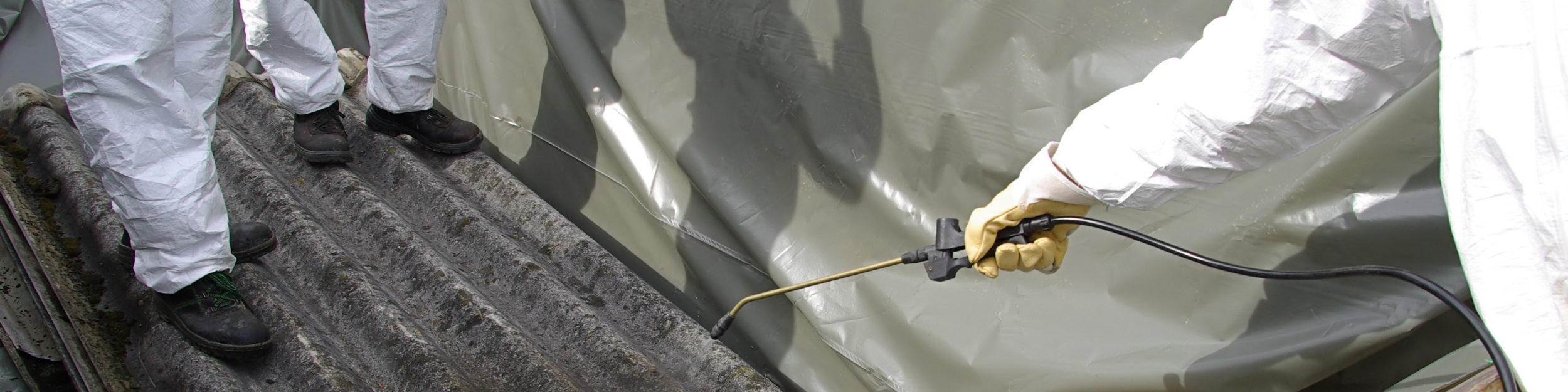
Short answer: In Melbourne and Victoria in 2026, a single NATA-accredited bulk sample typically costs $40 to $80 at the laboratory, and a full licensed inspection for an average pre-2004 home runs $400 to $900 including site attendance, sampling, lab fees and a written asbestos register. Pre-demolition surveys, commercial fit-outs and industrial sites scale up from there based on size, complexity and sample count.
If the figure above is genuinely the only number you needed, you can stop here. If you want to understand exactly where the money goes, what drives the price up or down, what cheap quotes are hiding, and why a $500 test routinely saves $50,000 in remediation — read on. This guide is written for Melbourne and Victorian homeowners, renovators, builders, developers, real-estate investors and commercial property managers planning works in 2026, and it lays out the testing economics with no markup and no marketing fog.
TL;DR — Asbestos Testing Cost in Melbourne and Victoria (2026)
| Scenario | Typical price range (2026) | What’s included |
|---|---|---|
| Single bulk sample (lab only) | $40 – $80 per sample | NATA-accredited lab analysis under AS 5370:2024 |
| Express / 24-hour lab turnaround | $90 – $180 per sample | Same as above, priority queue |
| Single-item home test (e.g. one fence or one ceiling) | $250 – $450 | Site visit + 1–3 samples + brief written report |
| Standard residential pre-renovation inspection | $400 – $900 | Whole-of-house walk-through + 3–8 samples + asbestos register |
| Larger residential / multi-zone renovation | $800 – $1,500 | Detailed walk-through + 6–12 samples + register + removal scope |
| Pre-purchase inspection (pre-1990 home) | $500 – $1,200 | Visual + targeted sampling + due-diligence report |
| Pre-demolition residential survey | $700 – $1,800 | Destructive survey + 8–15+ samples + demolition-grade register |
| Commercial fit-out / strip-out survey | $1,200 – $3,500 | Tenancy walk-through + 10–25+ samples + Division 5 register |
| Industrial / warehouse pre-demolition | $2,500 – $10,000+ | Full destructive Type 3 survey + 20–50+ samples + management plan |
| Air monitoring (separate scope, during removal) | $250 – $600 per day | Independent NATA-accredited analyst, per shift |
| Clearance air monitoring (Reg 297, friable jobs) | $500 – $1,200 per certificate | Post-removal air clearance + certificate |
| Soil testing (industrial or post-fire sites) | $1,500 – $8,000+ | Sample grid + lab analysis + remediation scope |
Every number above is a 2026 Melbourne and Victorian market range based on what licensed assessors and Class B removalists are charging for documented, compliant, NATA-backed work. If a quote sits dramatically below the lower end of these bands, that is not a competitive price — that is a contractor cutting corners on licensing, lab accreditation or the documentation pack. We’ll come back to why that matters.
What “Asbestos Testing” Actually Means in Victoria
The phrase “asbestos testing” gets used to describe several different things, and the cost depends entirely on which one you actually need. In Victoria under the Occupational Health and Safety Regulations 2017 and AS 5370:2024 — Bulk Materials Sampling and Analysis, there are four distinct activities that all get called “testing” in casual conversation.
1. A licensed visual inspection
A trained, licensed assessor walks the property and visually identifies materials that could contain asbestos based on age, appearance, location and known Australian manufacturer patterns (Super Six, Versilux, Wunderlich, Hardiplank, Zelemite, Ausbestos, Lebah, Miscolite and so on). Visual inspection alone is not legally sufficient to confirm or rule out asbestos — but it is the first step, and it determines how many bulk samples need to go to the lab.
2. NATA-accredited bulk sampling and laboratory analysis
A small physical sample of the suspect material is cut, scraped or sectioned using wet sampling technique to minimise fibre release, sealed in a labelled container, chain-of-custody documented and delivered to a NATA-accredited laboratory. The lab analyses the sample under polarised light microscopy with dispersion staining in line with AS 5370:2024 and issues a written result confirming presence of asbestos, type (chrysotile, amosite, crocidolite or mixed) and an approximate concentration band.
This is the only step that legally confirms or rules out asbestos in Victoria. A hardware-store home test kit, a builder’s “I’ve seen this before” call, a previous owner’s recollection or a Google image search are not recognised under the regulations.
3. Field classification of friability
The lab confirms whether asbestos is present and what type. The classification of the material as friable (can be crumbled by hand pressure when dry) or non-friable (bonded in a cement matrix) is a field call made on site by the licensed assessor based on physical condition. This is not a separate test — it is part of the assessor’s site work — but it has very large cost implications downstream, because friable removal requires a Class A licensed removalist and non-friable removal is handled by Class B.
4. Air monitoring
Air monitoring uses calibrated pumps to draw air through a filter cassette over a set period, which is then analysed for airborne fibre concentration under NOHSC:3003 (2005) Membrane Filter Method. This is a separate scope to bulk sampling and is normally only commissioned during or after removal work — particularly Class A removal — not during a routine pre-renovation inspection.
The reason this distinction matters for budgeting: someone asking “what does asbestos testing cost?” sometimes means a single $60 bulk sample and sometimes means a $3,500 commercial fit-out survey, and the answer is wildly different. The rest of this guide assumes you want the realistic all-in cost to know whether your property contains asbestos and what the regulatory documents need to look like.
Per-Sample Lab Fees: The Single Most-Asked Question
Almost every Melbourne homeowner who calls us about testing asks the same question first: what does it cost to send one sample to the lab? Here is the honest 2026 answer.
| Lab service | Typical 2026 price | Turnaround |
|---|---|---|
| Standard bulk sample (AS 5370:2024) | $40 – $80 | 2 – 5 working days |
| Priority / 24-hour turnaround | $90 – $180 | 1 working day |
| Same-day emergency turnaround | $200 – $350 | Same day (where capacity exists) |
| Asbestos in soil (bulk) | $80 – $150 | 3 – 7 working days |
| Asbestos in water | $200 – $400 | 5 – 10 working days |
| Fibre count (air monitoring sample) | $60 – $120 | 24 – 48 hours |
Two things to know about these numbers.
First — the lab fee is not the same as the testing fee. The figures above are what the laboratory charges for the analysis itself. They do not include the assessor’s site visit to take the sample correctly under wet conditions, the chain-of-custody documentation, or the written report you actually receive. A homeowner cannot walk a sample into a NATA-accredited lab in a plastic bag and expect a usable result — labs require documented sampling protocols, and many will not accept samples from members of the public for liability reasons.
Second — NATA accreditation is not optional. Several non-accredited operators and overseas labs offer “asbestos testing” at $20 to $30 per sample. These results are not legally recognised in Victoria for the purposes of:
- An asbestos register under the OHS Regulations 2017
- A pre-demolition survey under Regulation 273
- A clearance certificate under Regulation 297
- An EPA Waste Tracker manifest
- Court evidence in a contamination dispute
- Insurance claim documentation
If the report does not show the NATA stamp and the NATA accreditation number of the laboratory, it is not worth printing.
What Drives the Price of a Full Inspection
For most Melbourne and Victorian properties, the question is not “how much for one sample?” — it’s “how much for a competent assessor to come out and confirm what’s in my house?” The total cost is driven by six factors.
1. Property size and footprint
A 90m² weatherboard in Coburg has fewer sampleable surfaces than a 350m² double-storey extended brick veneer in Camberwell. Larger floor area generally means more wall sheets, more ceiling zones, more wet areas and more roof cavity surfaces to walk and document. Footprint is the single biggest cost driver for residential inspections.
2. Number of distinct material types
The lab fee is per sample, and each visually-different material requires its own sample. A house with one type of fibro sheet on every external wall and the same vinyl tile in every wet area might need 3 samples. A house with five different renovation eras — original 1960s eaves, 1978 bathroom extension, 1985 garage, 1992 carport, 2001 laundry refit — might need 8 to 12 samples to cover every material before the inspector can sign off the register.
3. Build era and renovation history
A pre-1990 property with no documented renovation history needs the most thorough investigation, because every wall cavity, every patch repair and every retrofitted wet area is potentially a different material from a different decade. A 2001 build needs targeted sampling of the specific products known to have contained asbestos right up to the December 2003 ban — primarily imported cement sheet and certain switchboard panels.
4. Access difficulty
Roof cavities, subfloors, switchboards behind furniture, eaves at second-storey height, garage rafters and rooftop chimney flues all add time. An inspection with comfortable access throughout sits at the bottom of the price band. An inspection requiring scaffolding, harness work or confined-space entry sits at the top.
5. Document deliverable
A short note confirming “the fence is asbestos” is cheaper than a full asbestos register and management plan with photographs, sample maps, condition assessments and removal scopes by area. The deliverable should be tailored to what the next stakeholder — your builder, your buyer, your council, your insurer or your demolition contractor — actually needs to read.
6. Lab turnaround
A standard 2 to 5 working day lab turnaround is included in baseline pricing. A 24-hour or same-day turnaround costs $50 to $200 extra per sample and is usually only worth paying for if a critical path on the renovation or demolition program is genuinely at risk.
Cost by Property Type: 2026 Melbourne Pricing in Detail
Here is the realistic 2026 cost for the most common testing scenarios we see across Greater Melbourne and regional Victoria, broken out by what’s actually included.
Single-item residential test ($250 – $450)
A homeowner has one specific item they want confirmed — a fence panel, a single eave sheet, a textured ceiling in one bedroom, a vinyl floor in a laundry. The assessor attends, takes 1 to 3 samples, ships them to the NATA-accredited lab and issues a short written report.
Included: site attendance, 1–3 samples, lab fees, written summary report, chain-of-custody.
Not included: whole-of-house register, removal scope, council documentation.
Typical use case: small repair job, isolated suspect material, low-stakes decision.
Standard residential pre-renovation inspection ($400 – $900)
This is the inspection most Melbourne renovators actually need. The assessor walks the entire property — house, eaves, roof cavity, switchboard, wet areas, garage, sheds and fences — and takes 3 to 8 samples covering every distinct material identified on the walk-through. The output is a written Asbestos Register identifying every ACM, its location, condition and friability classification, plus a recommended scope for removal before renovation works begin.
Included: whole-of-house walk-through, 3–8 samples, NATA lab fees, written register, removal scope, friability classification.
Not included: WorkSafe notification, ARCP/SWMS (these come later from the removalist), clearance certificate.
Typical use case: any kitchen, bathroom, extension or whole-house renovation on a pre-2004 home.
Larger residential / multi-zone renovation inspection ($800 – $1,500)
For double-storey extended properties, multi-renovation-era homes, large period homes (Brighton, Hawthorn, Kew, Toorak) or properties where the works are spread across multiple zones with different ACMs, the sample count typically lifts to 6–12 and the documentation set is more detailed. The register usually includes a sample map and removal sequencing by zone.
Typical use case: large period-home renovation, two-storey extension, dual-occupancy build on cleared land.
Pre-purchase asbestos inspection ($500 – $1,200)
A pre-purchase inspection runs in the window between offer and unconditional contract — usually 5 to 10 business days — and provides the buyer with a documented asbestos position before they commit. The assessor walks the property, samples conservatively (typically 4–8 samples covering the most likely ACMs), and writes a due-diligence report sized for a property lawyer and a buyer’s accountant.
Typical use case: pre-1990 home being purchased anywhere in Melbourne or regional Victoria, particularly where the building inspection has flagged “suspect material” or “asbestos-containing material likely.”
Pre-demolition residential survey ($700 – $1,800)
A pre-demolition survey under Regulation 273 of the OHS Regulations 2017 must be conducted before any demolition work begins on a pre-2004 structure. This is a more invasive survey than a renovation inspection — the assessor will physically open up wall cavities, lift floor coverings, access concealed spaces and sample any material that will be disturbed by mechanical demolition. Sample count typically lifts to 8–15+ and the register is structured to feed directly into the demolition contractor’s removal scope.
Typical use case: any residential demolition, any knock-down-rebuild, any partial demolition where heavy machinery will engage with pre-2004 structure.
Commercial fit-out / strip-out survey ($1,200 – $3,500)
For commercial tenancies — retail strips, office floors, industrial sheds, hospitality fit-outs — the survey must cover the suspended ceiling void, the riser shafts, all wall linings, all wet areas, the switchboards, the fire-rated doors, the floor finishes and the rooftop plant. The sample count typically runs 10–25+ and the deliverable is sized to feed into the principal contractor’s site-specific safety plan and the Asbestos Management Plan required under Division 5 of the OHS Regulations 2017.
Typical use case: any pre-2004 commercial strip-out, any new tenancy works in a pre-2004 building, any landlord-driven make-good or refurbishment.
Industrial / warehouse pre-demolition survey ($2,500 – $10,000+)
Heavy industrial sites — factories, warehouses, processing plants, power stations, hospitals, schools, cool stores — typically require a Type 3 destructive survey in line with the principles of the international HSG264 framework adopted in Australian practice. This is structurally invasive, often involves working at height under scaffold, frequently identifies friable materials (sprayed limpet, pipe lagging, millboard, gaskets), and produces a documentation package suitable for tendering the demolition to multiple contractors.
Typical use case: factory or warehouse demolition, large-format commercial demolition, infrastructure decommissioning, post-fire industrial remediation.
The Four-Step Inspection Process: Where the Money Goes
If you’ve ever wondered why a $500 inspection is not just $60 in lab fees plus a quick walk-through, this is the underlying work that gets done in 2026 Melbourne to AS 5370:2024 standard.
Step 1 — Desktop review and booking
Before attending site, a competent assessor reviews the property’s build year, available council records, any prior asbestos register, the agent’s marketing material (which sometimes flags renovations), Section 32 disclosures, building permit history and aerial imagery. For commercial sites, asset registers and any prior management plans are reviewed. This is unglamorous office time, but it determines whether the field visit takes two hours or six.
Step 2 — On-site visual inspection
The assessor attends the property and walks the entire footprint — house, garage, sheds, fences, eaves, roof, switchboard, wet areas, subfloor, roof cavity. Every material that could contain asbestos is identified, photographed, measured and assessed for condition. Suspect items are listed for sampling.
Step 3 — NATA-accredited bulk sampling
Where materials cannot be unambiguously identified visually (which is most of the time), small bulk samples are taken using a wet-sampling technique that minimises fibre release. Each sample is sealed in a labelled container, the sample location is photographed, the chain-of-custody is documented, and the samples are delivered to a NATA-accredited laboratory for analysis under AS 5370:2024. Lab cost is typically $40 to $80 per sample, with 2–5 working day turnaround.
Step 4 — Written Asbestos Register and Removal Scope
The deliverable is what you actually pay for. A competent inspection report includes:
- A written Asbestos Register listing every ACM, its location, condition and friability classification.
- A sample map correlating photographs and laboratory results.
- A removal scope identifying what must be removed by a licensed Class B contractor before renovation or demolition.
- Identification of any Class A scope (friable material, switchboard panels, fire/flood damage).
- Notes on any air monitoring or soil testing required during subsequent works.
- A management recommendation for any ACM that can stay in place.
This document is what your builder, plumber, electrician, tiler, demolition contractor, insurer, council and any future buyer will rely on for the next 10 to 50 years.
Hidden Line Items Most Quotes Don’t Mention
The headline inspection fee covers the inspection. There are several adjacent costs that are not part of the inspection but very commonly turn up on the same project, and an honest contractor mentions them up front rather than at variation time.
Air monitoring during removal ($250 – $600 per day)
For Class A removal — friable material, textured ceilings, pipe lagging, sprayed limpet — air monitoring is mandatory and runs continuously through the works. Class B removal usually does not require continuous air monitoring, but some site situations (work near occupied buildings, sensitive neighbouring uses like childcare or aged care) attract it.
Clearance air monitoring ($500 – $1,200 per certificate)
After Class A removal, a clearance certificate under Regulation 297 of the OHS Regulations 2017 is mandatory before the area can be re-occupied. The certificate is issued by an independent competent person — not the removal contractor — and is based on post-removal air sample results showing fibre concentrations below the clearance threshold. This sits separate to the inspection budget but always sits in the project budget.
Soil testing ($1,500 – $8,000+)
A standard pre-renovation inspection covers the structure itself. Soil testing is a separate scope and is usually only commissioned where there is evidence of past illegal dumping, fire-damaged debris on the ground, a demolition history with missing documentation, or where buried fragments have surfaced during landscaping. On industrial sites, post-fire sites and many regional Victorian sites with rural sheds of unknown demolition history, soil testing is standard.
Asbestos management plan ($800 – $3,500)
For commercial workplaces, an Asbestos Management Plan is required under Division 5 of the OHS Regulations 2017 in addition to the asbestos register. The management plan documents how identified ACM will be controlled, who is responsible, how the register will be updated, and what trigger events will require new inspections. This is a separate deliverable to the inspection report.
Express lab turnaround ($50 – $200 extra per sample)
Where the project program cannot absorb a 2–5 day lab wait, priority turnaround is available. This is usually only worth paying for if your demolition crew is already mobilised or your builder’s program critical path is genuinely at risk.
Re-inspection / scope expansion ($150 – $400)
If the initial inspection identifies an area that needs further sampling — for instance, the assessor opens a wall and finds an unexpected secondary layer of fibro behind the visible sheet — there may be a small re-attendance fee plus additional lab samples. A good assessor will quote the variation transparently rather than absorb it and reduce the depth of the inspection.
Why the Inspection Pays for Itself: The Cost of Skipping It
It is genuinely impossible to overstate this. In every Victorian renovation prosecution and insurance dispute we’ve seen over the past five years, the project that skipped the inspection paid between 30 and 300 times the cost of the inspection in remediation, legal fees, delay damages and insurance claim denials.
| Decision | Typical 2026 cost |
|---|---|
| Pre-renovation inspection on a 1965 weatherboard | $500 – $900 |
| Remediation after a tradesperson cuts an asbestos eave sheet on the same house | $30,000 – $80,000 |
| Pre-demolition survey on a small commercial site | $1,500 – $3,500 |
| EPA prosecution after illegal asbestos disposal from the same site | $50,000 – $400,000 + remediation |
| Pre-purchase inspection on a $1.4M pre-1990 home | $700 – $1,200 |
| Post-settlement discovery of switchboard ACM + buried fragments | $15,000 – $250,000 |
| Air monitoring during Class B works | $250 – $600 per day |
| WorkSafe Notice + stop-work after a complaint from an unmonitored job | Project delay $20,000+ per week |
The pattern is identical every time: the inspection is the cheapest line item on the project, and skipping it is the single most expensive decision an owner can make.
Why Cheap Quotes Are Almost Always Wrong
The Melbourne asbestos market has a long tail of underpriced operators offering testing at half the band figures quoted above. They have to be cutting something to do it, and what they are cutting almost always falls into one of these five buckets.
1. Non-NATA labs
The single most common shortcut is sending samples to a non-NATA-accredited laboratory — sometimes overseas, sometimes a back-room operator who lost accreditation. The lab fee drops to $15–$25 per sample, the quote gets dressed up, and the result is not legally usable. Always ask for the NATA accreditation number on the lab report.
2. No site attendance
A handful of operators offer “mail-in” testing where the homeowner is invited to collect their own sample, post it in, and receive a result. This is illegal to rely on for regulatory purposes in Victoria — the OHS Regulations require sampling by a competent person — and exposes the homeowner to direct fibre risk during the sampling process. It also voids most insurance positions on the subsequent removal.
3. Visual-only “inspections”
Some operators provide a written report based purely on visual identification, with no lab sampling at all. This is fine for general triage but not legally sufficient for a register, a removal scope, a pre-demolition survey or a buyer’s due diligence. A $200 “inspection” with zero lab samples is a $200 opinion, not a test result.
4. No friability classification
A lab result alone does not tell you whether the material is friable or non-friable. That field call must be made by the licensed assessor on site. Quotes that skip the on-site classification leave the homeowner unable to scope the removal correctly — and often result in Class B contractors being engaged for what turns out to be Class A work, which is illegal under the OHS Regulations.
5. No written register
A verbal result over the phone, a text message, or a one-line email is not a register. The Victorian regulations require the register in writing, dated and signed, and it must be maintained for the life of the building. Quotes that produce no formal written document are saving themselves the half-hour of reporting time and leaving the owner without the documentation that protects the property.
The honest rule of thumb in 2026 Melbourne: if the quote is more than 30% below the price bands in this guide, ask exactly which of the five items above are missing, and budget for the inspection you actually need.
Compliance Reasons to Test: The Regulatory Backbone
Beyond the financial logic, there are specific Victorian regulations that effectively force testing for any pre-2004 property where works are planned. These are the trigger points.
Occupational Health and Safety Regulations 2017 (Vic)
- Regulation 269 — duty to identify asbestos in workplaces. Any building that will host tradespeople is a workplace.
- Regulation 271 — requirement for a written asbestos register.
- Regulation 273 — pre-demolition identification: asbestos must be identified and removed before demolition begins.
- Regulation 274 — pre-refurbishment identification: same principle for major refurbishment.
- Regulation 297 — clearance certificate before re-occupation after removal work.
Environment Protection Regulations 2021 (Vic) and the EPA Waste Tracker
Asbestos waste from any removal must be transported under the EPA Waste Tracker system to an EPA-licensed landfill. The waste classification depends on what the test result says — chrysotile vs amosite vs crocidolite has different downstream handling requirements. No test, no defensible waste classification, no manifest.
Building Act 1993 (Vic) and council requirements
Many Melbourne councils — including the City of Melbourne, Yarra, Boroondara, Whitehorse, Knox, Casey, Wyndham, Hume, Maribyrnong, Moonee Valley, Glen Eira, Stonnington, Kingston and Melton — require evidence of asbestos identification and removal as part of building permit conditions or demolition approvals.
Residential Tenancies Act 2021 (Vic)
Rental providers in Victoria have specific duties around the safety of the rented premises. Pre-1990 properties offered for rent should have a documented asbestos position, particularly where any maintenance, repair or refurbishment is planned.
Sale of Land Act 1962 (Vic) and Section 32 disclosure
Known material defects — including known asbestos conditions and any past asbestos works — should be disclosed on the Vendor’s Statement (Section 32). Hiding a known asbestos condition from a buyer creates direct exposure under both the Section 32 obligations and general misrepresentation principles.
Frequently Asked Questions: Asbestos Testing Cost in Melbourne and Victoria
What is the cheapest legitimate way to test for asbestos in Melbourne?
The cheapest legitimate test is a single NATA-accredited bulk sample taken by a licensed assessor during a brief site attendance. For a homeowner with one specific item of concern — one fence panel, one eave sheet, one vinyl floor — total cost typically lands in the $250 to $450 range including the site visit, the sample, the lab fee and a short written report. Anything dramatically below that is either non-NATA, no site attendance, or no written result.
Can I take my own sample and send it to a lab?
In practice, no. Most NATA-accredited laboratories in Victoria will not accept samples from members of the public, both for liability reasons and because untrained sampling commonly releases fibres into the home during collection. A small number of labs do accept walk-in samples from the public, but the result will not be usable as part of a Victorian asbestos register, a pre-demolition survey, a clearance pathway or any other regulatory document. The cost saving against a licensed site attendance is also marginal once the practical risks are factored in.
Does testing cost vary by Melbourne suburb?
Slightly. Inner-Melbourne suburbs (Brunswick, Northcote, Fitzroy, Carlton, South Yarra, Richmond) attract a modest travel and parking premium relative to standard residential rates. Outer-growth corridors (Wyndham, Casey, Cardinia, Whittlesea, Hume) and regional travel to Geelong, Ballarat, Bendigo, the Mornington Peninsula or the Yarra Valley may add a small mobilisation fee for the assessor’s travel time. The lab fees themselves are the same regardless of where the property sits — they are charged by the laboratory, not the assessor.
How long does asbestos testing take in Melbourne?
A standard residential inspection is a single half-day site visit, with the lab returning results in 2 to 5 working days. The written register typically lands in your inbox within a week of the site visit. Express turnaround is available for an additional fee where the project program requires it.
Is asbestos testing tax deductible?
For investment properties, asbestos testing and inspection costs are generally deductible as part of property management or repair costs in the year incurred. For owner-occupied homes, they are generally not deductible. For commercial property, asbestos testing forms part of the property’s compliance and capital works documentation. We are not tax advisers — confirm the position with your accountant for your specific circumstances.
What’s the difference between asbestos testing and an asbestos inspection?
“Testing” usually refers to the laboratory analysis of a bulk sample. “Inspection” refers to the broader site work — the visual walk-through, the sampling, the friability classification and the written register. A test gives you a yes/no on a single material. An inspection gives you the full picture for the property. Most pre-renovation and pre-demolition projects need an inspection, not just a test.
Does my insurance cover the cost of asbestos testing?
For routine renovations and pre-purchase inspections, no — testing is your cost. For post-fire, post-flood and post-storm rebuilds, the testing cost is usually covered by the property insurer as part of the make-safe and rebuild scope, because the disturbance event has changed the asbestos condition (often pushing previously non-friable material into friable). Always confirm with your insurer before commissioning the works.
How many samples do I need?
The honest answer is “as many as it takes to cover every visually-distinct material that could be disturbed by the works.” For most Melbourne homes, that’s 3 to 8 samples. For a complex multi-renovation property, 8 to 12. For a commercial fit-out, 10 to 25. For an industrial pre-demolition, 20 to 50+. A competent assessor will recommend the sample plan after the site walk — and a good rule of thumb is to spend the extra $50 per sample at testing stage rather than discover an untested material at removal stage.
What if my building was built after 2004?
Buildings constructed entirely after the 31 December 2003 national asbestos ban are generally not expected to contain asbestos in any locally-manufactured material. Testing is usually not required for these properties unless there is reason to suspect imported product (some imported construction materials have been found to contain trace asbestos despite the ban). The risk profile is genuinely low. Always cross-check the build year against the council records — owners and agents are sometimes off by several years.
Is testing required for asbestos in soil?
Soil testing is its own scope, separate to the structural inspection. It is typically commissioned for industrial sites, post-fire sites, properties with a known illegal-dumping history, buildings demolished decades ago without documentation, and rural Victorian properties where past sheds or garages were demolished informally. Soil testing typically runs $1,500 to $8,000+ depending on site size and sample grid density.
Will my asbestos test result be valid forever?
The lab result for a specific sample is valid indefinitely as evidence of what that sample contained at the time of testing. However, the asbestos register for the property is a living document — it must be updated when materials are removed, when new ACM is discovered, when condition changes, or when the building is renovated. For commercial workplaces, the register must be reviewed at least every five years under the OHS Regulations 2017.
Is this just a Melbourne thing, or does it apply across regional Victoria?
It applies right across Victoria. The Occupational Health and Safety Regulations 2017 (Vic), the Environment Protection Regulations 2021 (Vic) and AS 5370:2024 are state-wide instruments. Asbestos Gone and Clean services Greater Melbourne and travels throughout regional Victoria for inspection, testing and removal work — including Geelong, Ballarat, Bendigo, Shepparton, Warrnambool, the Mornington Peninsula, the Yarra Valley, the Latrobe Valley and the Goulburn Valley.
Do you bundle the inspection cost into your removal quote?
Yes — like most reputable Class B removalists in Melbourne, Asbestos Gone and Clean bundles the site inspection into the quote process. If the inspection identifies ACM and you proceed with the removal, the inspection cost is generally either credited against the removal price or absorbed entirely into the fixed-price quote. If no ACM is found, or you decide not to proceed, you typically pay only the cost of any lab samples actually taken.
The Bottom Line: 2026 Asbestos Testing Cost in Melbourne and Victoria
For most Melbourne and Victorian property owners in 2026, the honest answer to “how much does asbestos testing cost?” is this:
- A single NATA-accredited bulk sample costs $40 to $80 at the laboratory.
- A standard residential pre-renovation inspection with site attendance, 3–8 samples and a written register costs $400 to $900.
- A pre-demolition survey costs $700 to $1,800 for residential and $2,500 to $10,000+ for commercial and industrial.
- The cost is invariably between 1% and 3% of the renovation or demolition budget, and routinely between 30x and 300x cheaper than the remediation cost of skipping it.
The work itself is fast, the documentation is permanent, the regulatory protection is comprehensive, and the financial logic is genuinely one-sided. If your Melbourne or Victorian property was built before 2004 and you are planning any works that disturb the structure, the inspection is not a cost — it is the cheapest insurance policy you will ever buy on the project.
Get a Compliant Asbestos Inspection and Class B Removal Quote in Melbourne or Victoria
Asbestos Gone and Clean is a Melbourne-based WorkSafe Victoria licensed Class B (non-friable) asbestos removalist and demolition contractor servicing all metropolitan Melbourne suburbs and regional Victoria — from the inner-north (Brunswick, Northcote, Coburg, Preston, Reservoir) through the inner-east (Hawthorn, Kew, Camberwell, Balwyn), inner-west (Footscray, Yarraville, Sunshine, Maribyrnong), bayside (St Kilda, Brighton, Sandringham, Mentone), south-east (Glen Iris, Malvern, Caulfield, Bentleigh, Cheltenham), outer-growth corridors (Wyndham, Casey, Cardinia, Whittlesea, Hume) and out to Geelong, Ballarat, Bendigo, Shepparton, the Mornington Peninsula, the Yarra Valley and the Latrobe Valley.
When you call us for a testing or inspection quote, here is what you receive:
- A free, no-obligation on-site inspection by a licensed assessor.
- NATA-accredited bulk sampling under AS 5370:2024 where required.
- A written Asbestos Register and Removal Scope identifying every ACM, its location, condition and friability classification.
- A fixed-price written quote for any removal work, covering survey, sampling, ARCP, SWMS, WorkSafe Victoria notification, licensed Class B removal, EPA-tracked transport to an EPA-licensed landfill, independent Regulation 297 clearance certificate and full documentation pack.
- A copy of our current WorkSafe Victoria Class B asbestos removal licence and Certificate of Currency for public liability and asbestos-specific insurance.
- If anything on site looks friable, we’ll tell you on day one — not on demolition day — and coordinate a Class A specialist for that portion of the work.
For builders, developers and owner-builders, we run integrated asbestos inspection + soft strip + demolition services under one ABN, removing the program risk between scopes.
☎ Call us: 0475 143 106
✉ Email: asbestosgoneandclean@gmail.com
???? Contact Us: Asbestos Gone and Clean – Contact
Free site inspection. Transparent fixed-price quote. Full documentation pack delivered on completion.
Related Reading
- Do I Need an Asbestos Inspection Before Renovating in Melbourne? — the legal trigger points, what an inspection involves end-to-end, and why skipping it is the most expensive decision on the project.
- Friable vs Non-Friable Asbestos: Key Differences Explained (2026 Melbourne & Victoria Guide) — the classification that drives the Class A vs Class B split, with the hand-pressure test and common Melbourne examples.
- Class A vs Class B Asbestos Licence in Melbourne: What’s the Difference? — what each licence covers, when you need which, and why the cheapest quote is usually the wrong licence.
- Signs Your Building May Contain Asbestos: A Visual Checklist for Melbourne Properties — what to look for in pre-2004 Melbourne and Victorian buildings before you book the inspection.
- How to Choose a Licensed Asbestos Removalist in Australia (2026 Melbourne & Victoria Guide) — the seven things every licensed removalist must prove and the 12 questions to ask before signing.
- Asbestos Removal for Older Homes (Pre-1990 Buyers in Melbourne) — the pre-purchase inspection pathway, common Melbourne ACM patterns by decade and the hidden costs that catch buyers out.