
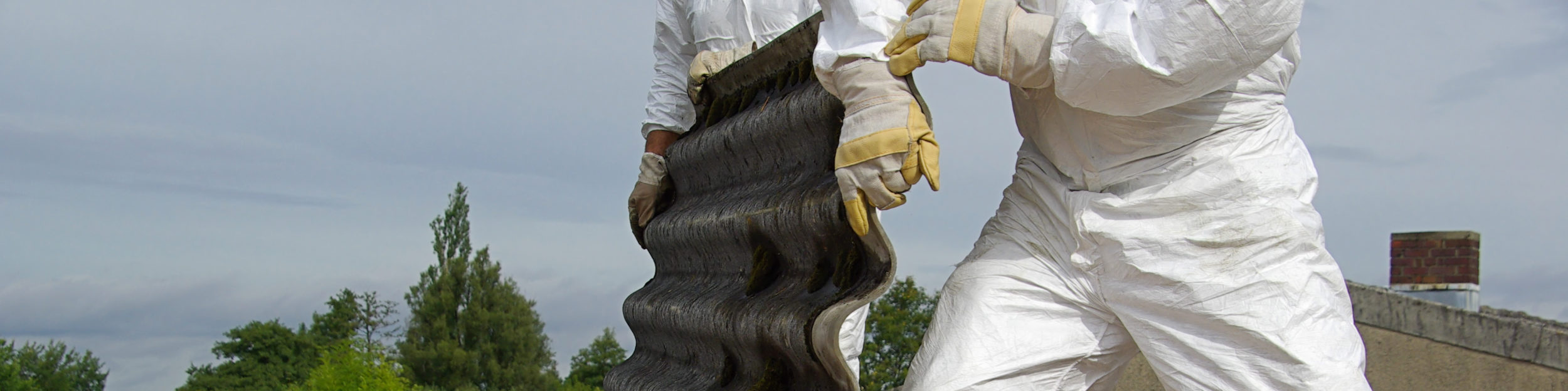
Quick answer: A compliant asbestos removal quote in Melbourne starts with a free on-site assessment by a licensed Class B (or Class A) removalist — typically 30 to 90 minutes on site — followed by NATA-accredited bulk sampling under AS 5370:2024 where any material is not unambiguously identifiable, and culminates in a written fixed-price quote that itemises every regulated step. A legitimate fixed-price quote must include: the survey and sampling, the site-specific Asbestos Removal Control Plan (ARCP), the Safe Work Method Statement (SWMS), the WorkSafe Victoria five-day notification, the licensed removal labour and equipment, EPA Waste Tracker transport, EPA-licensed landfill disposal, the independent Regulation 297 clearance certificate, and the full documentation pack. If any of those eleven items is missing from the line items, the headline price is misleading — and the deferred cost almost always lands at the property owner’s legal door. This guide walks you through exactly what to expect from your assessment, what each line item in the quote actually pays for, what drives the price up or down, and how to compare three competing quotes apples-to-apples in 2026 Melbourne.
Asbestos removal is one of the few trades in Victoria where the quote is a compliance document, not just a price. The numbers on the page tell you what the work costs. The line items tell you whether the work will actually be done. This guide is the honest, no-spin walkthrough of what your assessment should look like and what a compliant quote should contain.
TL;DR — The Assessment-to-Quote Pathway in 60 Seconds
| Phase | What happens | Typical timing (Melbourne residential) |
|---|---|---|
| Phone enquiry | Scope captured, property age confirmed, site visit booked | Same day or next day |
| Free on-site assessment | Licensed Class B representative walks the property, identifies suspect ACM, measures quantities, photographs every item | Day 1–3 |
| NATA-accredited sampling | Wet-method bulk samples taken under AS 5370:2024 where required | During the assessment |
| Laboratory analysis | Samples analysed at NATA-accredited lab using polarised light microscopy | 2–5 working days (express available) |
| Asbestos register issued | Written register documenting every confirmed ACM, location, condition, friability | Day 5–8 |
| Fixed-price written quote | Itemised line-by-line quote including all 11 regulated steps | Day 5–8 |
| Quote review window | You compare with other licensed quotes and ask questions | As long as you need |
| Acceptance | Signed acceptance triggers ARCP, SWMS and WorkSafe notification | Day 8–10 |
The whole assessment-to-acceptance phase typically runs 5 to 10 days for a standard Melbourne residential job. Pre-demolition surveys for commercial and industrial sites extend this to 2 to 4 weeks depending on the scope.
Why the Assessment Is Free — and What That Actually Means
Almost every reputable WorkSafe Victoria licensed Class B removalist in Melbourne offers a free, no-obligation on-site assessment. This is not a marketing gimmick — it reflects the structural reality of compliant asbestos quoting.
Asbestos removal cannot be quoted accurately over the phone, by email, or from photographs. The factors that determine the price — site access, material condition, hidden ACM, friability classification, proximity to neighbours, disposal distance, scaffold or edge-protection requirements, the presence of services like overhead power lines or live tenancies — can only be assessed on site. A phone quote is, at best, an indicative range and, at worst, a bait-and-switch tactic that triggers variations once the contractor is on site.
The trade-off is straightforward:
- The contractor invests 1 to 2 hours of licensed-assessor time in the inspection.
- The property owner gets a fixed-price written quote with no surprises later.
- Both parties enter the engagement with the scope clearly defined and documented.
A “free assessment” is therefore not free — it is prepaid by the eventual project margin of the jobs that proceed. That is why some unlicensed or fly-by-night operators charge for the inspection (because they need to be paid for the visit whether or not the job proceeds), and why most legitimate Class B operators absorb it as a cost of doing honest business.
Reality check: Be cautious of any contractor who offers a written quote without attending the site. Either they are guessing at the scope, copying another contractor’s site visit, or planning to charge variations the moment the work begins.
For the underlying mechanics of what an inspection involves, our deep-dive on Do I Need an Asbestos Inspection Before Renovating in Melbourne? breaks down the regulatory trigger points and the four-step inspection process in detail.
What Happens at Your On-Site Assessment: The Six-Step Walkthrough
A competent on-site assessment in 2026 Melbourne follows a defined sequence. The duration depends on the property size and complexity, but the structure is consistent across residential, commercial and industrial scopes.
Step 1 — Pre-arrival desktop review
Before the assessor arrives, a competent removalist reviews the property’s known characteristics: build year, council records, any previous asbestos register, the agent’s marketing material (which can flag prior renovations), Section 32 disclosures, and historical aerial imagery for outbuildings, additions and extensions. For commercial sites, asset registers and any prior management plans are reviewed.
This unglamorous office work determines whether the on-site visit takes 30 minutes or three hours. A house built in 1965 with no prior register, an unpermitted carport extension and a fibro garage out the back will need substantially more sampling time than a 1995 brick veneer with a single asbestos eave run.
Step 2 — Initial walk-around and scope confirmation
When the assessor arrives, the first 10 to 15 minutes are about confirming what you actually want quoted. Are you replacing a fence, renovating a kitchen, demolishing the entire structure, replacing a Super Six roof, stripping a commercial fit-out? The scope of the planned works determines which materials need to be quoted for removal — and which can be managed in place under an Asbestos Management Plan.
This conversation matters because asbestos removal is scope-driven, not building-driven. A 1960s weatherboard home may contain a dozen separate asbestos-containing materials, but the quote only needs to cover what the planned works will disturb plus any item already in poor condition.
Step 3 — Systematic visual inspection of every suspect material
The assessor then walks the entire property and systematically identifies every material that could contain asbestos based on age, appearance, location and known Australian manufacturer patterns. In a typical pre-1990 Melbourne home this includes:
- External cladding — fibro sheeting, weatherboards over backing
- Roofing and roof linings — corrugated cement (Super Six), ridge cappings, flashings
- Eaves, soffits, fascia and barge boards
- Internal wall and ceiling sheets, including textured “popcorn” ceilings
- Wet-area substrates behind tiles in bathrooms, laundries and kitchens
- Vinyl floor tiles, sheet vinyl, bitumen adhesives and lino backing
- Electrical switchboards (Zelemite, Lebah, Ausbestos backing panels)
- Plumbing — asbestos cement water and stormwater pipes, flue pipes
- Fences, sheds, garages, outbuildings and chook houses
- Industrial items where relevant — pipe lagging, gaskets, fire doors, rope seals
Each item is photographed, measured and assessed for condition (intact, weathered, damaged, friable) and accessibility (single-storey, two-storey, scaffold required, edge protection required, confined space).
Step 4 — NATA-accredited bulk sampling
Where material cannot be unambiguously identified visually — which is the case for the majority of suspect items — the assessor takes a small bulk sample using a wet sampling technique that minimises fibre release. The sample is sealed in a labelled container, the location is photographed, the chain-of-custody is documented, and the samples are delivered to a NATA-accredited laboratory for analysis under AS 5370:2024.
- Sample cost: typically $40 to $80 per sample, bundled into the inspection or quoted separately.
- Turnaround: 2 to 5 working days standard, 24-hour express available where the program is tight.
- Output: a written lab report confirming presence, asbestos type (chrysotile, amosite, crocidolite or mixed) and approximate concentration band.
The number of samples taken is driven by the scope, not by the building. A simple fence quote may need zero samples (cement sheet fences with the classic six-mil profile are visually unambiguous to a licensed assessor). A full pre-renovation survey of a 1965 weatherboard with extensions in 1972 and 1989 may need 15 to 25 samples to cover all visible materials, sub-floor debris and concealed substrates.
For a full breakdown of the testing cost mechanics, see our companion guide How Much Does Asbestos Testing Cost in Melbourne and Victoria?.
Step 5 — Friable / non-friable classification call
This is the most important field call the assessor makes, because it determines whether the job is a Class B scope (non-friable, which we are licensed to do) or a Class A scope (friable, which requires a different licence class, enclosures, negative air units, decontamination units, continuous air monitoring and a much higher cost base).
The lab report confirms whether asbestos is present and what kind. The friability classification is a field call based on the material’s physical behaviour — can it be crumbled to powder under hand pressure? Has weathering, fire damage, water damage or rodent damage degraded what would otherwise be a non-friable material into a friable one?
A material that looks non-friable but has been weather-, fire- or flood-damaged often gets reclassified as friable on inspection. This is the single most common cause of program slippage on older Melbourne buildings — and the single most common shortcut taken by unscrupulous quotes that misclassify friable material as non-friable to stay within a cheaper Class B price band.
For the full classification framework, our guide on Friable vs Non-Friable Asbestos: Key Differences walks through the hand-pressure test and common Melbourne examples.
Step 6 — Discussion of access, services, neighbours and constraints
Before leaving site, the assessor will walk through the practical project constraints with you:
- Vehicle access for the skip bin, the truck and the decontamination unit.
- Power supply for HEPA vacuums, negative air units (if Class A scope) and decontamination equipment.
- Water supply for wet methods.
- Proximity of neighbouring properties — fence-line work and roof work need neighbour notification courtesy calls.
- Overhead power lines, underground services and tree clearance issues.
- Heritage overlays, body corporate approvals, council permits.
- Any live tenancies or occupied buildings adjacent to the work zone.
- Working hours restrictions on your street.
These details rarely change the scope but routinely change the price — sometimes materially. A simple roof replacement in a quiet suburban street is fundamentally a different job to the same roof replacement on a three-storey walk-up in Carlton with no off-street parking, a shared driveway and a heritage overlay.
What a Compliant Fixed-Price Quote Must Include: The 11 Line Items
Once the assessment is complete and any lab results are in, a compliant Melbourne asbestos removal quote should arrive in writing — typically by email — within 3 to 5 working days. It should be itemised line by line. A single lump-sum figure with no breakdown is not a compliant quote. It is a price tag.
Here are the eleven line items every legitimate fixed-price quote should contain:
1. Survey, sampling and asbestos register
The cost of the site attendance, the bulk samples, the NATA lab fees, and the written asbestos register that documents every ACM identified. Even if the inspection was “free,” the lab and reporting work should appear as a line item in the quote (often shown at zero cost or “included”) to confirm it has been done.
2. Asbestos Removal Control Plan (ARCP)
A site-specific document — not a generic template with the address swapped in — required under the OHS Regulations 2017 (Vic). The ARCP documents the type and quantity of asbestos, the control measures (wet methods, PPE, enclosures, signage, barriers), decontamination procedures, and the waste disposal pathway. Should be a named line item.
3. Safe Work Method Statement (SWMS)
The high-risk construction work documentation that sits alongside the ARCP. Required for any asbestos work and any work above 2 metres. Should be a named line item.
4. WorkSafe Victoria five-day notification
The legally required notification lodged with WorkSafe Victoria at least five calendar days before removal works commence. Should be a named line item — and the quote should make clear that the notification will be lodged on your behalf.
5. Licensed removal labour
The cost of the trained, licensed removalists doing the work. This line item is driven by the quantity of material, the access conditions, the height, and the days on tools. It should clearly identify how many removalists, how many days, and which class of licence is being applied.
6. PPE, RPE and equipment
P2/P3 respiratory protection (RPE), disposable Type 5 coveralls, gloves, boot covers, H-class HEPA vacuums, 200-micron polyethylene sheeting, decontamination unit, signage, barriers. PPE is consumed during the job and bagged as asbestos waste at the end of each shift, so it is a genuine line cost. For a deeper look at the protection system, see our guide How Do Asbestos Removalists Protect Themselves?
7. Scaffold, edge protection or height equipment (if required)
For any roof work, eaves work, or work above 2 metres. This line varies enormously by scope — a single-storey eave run may need just a step platform; a Super Six roof replacement on a two-storey home needs perimeter scaffold and edge protection that often costs as much as the asbestos removal itself.
8. EPA-tracked transport
Asbestos waste must be transported under the EPA Waste Tracker electronic manifest system. The waste truck must be authorised to carry prescribed industrial waste, and the manifest must be lodged before the load leaves your property. Should be a named line item.
9. EPA-licensed landfill disposal
Disposal at an EPA-licensed landfill, charged per tonne or cubic metre. This is the line item that is most often quietly skipped or replaced with “we’ll handle disposal” — which in practice can mean illegal dumping in general waste, a non-licensed landfill, or a remote bush block. The quote should name the disposal facility or at least confirm the EPA-licensed pathway.
10. Independent Regulation 297 clearance certificate
Required under Regulation 297 of the OHS Regulations 2017 (Vic) before any cleared area can be re-occupied. The clearance certificate must be issued by an independent competent person — not by the removal contractor or any related party. A reputable quote will name the independent assessor’s cost as a separate line item, often passed through at cost.
11. Documentation pack on completion
The final deliverable. On project close-out you should receive: a copy of the contractor’s WorkSafe Victoria licence, the Certificate of Currency for insurance, the ARCP and SWMS, the WorkSafe notification confirmation, the NATA lab reports, the EPA Waste Tracker manifests, the landfill tip receipts, and the independent clearance certificate.
Reality check: The documentation pack is the asset. The removal itself is the means of producing it. Twenty years from now, when you sell the property, the buyer’s solicitor will ask for this pack. The contractor who didn’t issue it will be long gone — and the missing paperwork will be your problem.
What Drives the Quote Up or Down
For two physically identical homes in two different Melbourne suburbs, the quote can vary by 30 to 60% based on factors that have nothing to do with the asbestos itself. Understanding these drivers helps you read your own quote and compare competing quotes accurately.
Material type and friability
Non-friable bonded materials (fibro sheeting, cement roofing, vinyl tiles, fences) are the cheapest scope per square metre. Friable materials (sprayed insulation, pipe lagging, fire-damaged sheeting, switchboard millboard) cost 2 to 4 times more per square metre because of the enclosure, negative air, continuous air monitoring and Class A licensing required.
Quantity
Quantity scales the on-site labour but does not scale the regulatory steps. A 30m² job and a 300m² job both need the same ARCP, the same SWMS, the same five-day notification, the same clearance certificate, and the same documentation pack. This is why very small jobs sometimes look “expensive” on a per-square-metre basis — the fixed compliance costs are spread over a smaller scope.
Access and height
Ground-floor, vehicle-accessible scope is the cheapest. Roof work needs scaffold and edge protection. Two- and three-storey work needs full perimeter scaffold. Tight inner-city sites with no skip access add labour for double-handling waste to the kerb. Heritage properties with restricted access add complexity to almost every line item.
Site complexity
Live tenancies in adjoining buildings, body corporate approval requirements, overhead power lines, underground services, trees needing clearance, narrow shared driveways, after-hours work requirements (common in commercial CBD scopes), traffic management — all of these layer cost into the quote.
Disposal distance
Disposal is charged per tonne at the EPA-licensed landfill, plus the trucking cost. For inner Melbourne jobs, the round trip to the nearest licensed facility is typically 60 to 100 kilometres. For regional Victorian jobs, it can be 200 to 400 kilometres, which materially affects the disposal line.
Discovery risk and contingencies
Older buildings routinely conceal asbestos that wasn’t visible on day-one inspection — vinyl tiles under carpet, switchboard backing panels behind closed doors, fibro behind tiled splashbacks. Good quotes price this with a named variation clause (“if additional ACM is identified during the works, the variation rate is $X per m² for non-friable and $Y per m² for friable, with prior written approval”). Bad quotes leave it open-ended, which becomes a wedge for unbounded variations later.
Class A subcontracting
If your job involves any friable material — or any material that may be friable — a Class B contractor will coordinate a Class A subcontractor under their project management. Look for this as a clearly named line item with the subcontractor identified. The honest version of this is “Class A specialist coordinated and project managed under our single ABN.” The dishonest version is the friable scope being silently misclassified as Class B to keep the headline price down.
For the full Class A vs Class B framework, our guide on Class A vs Class B Asbestos Licence explains the licensing distinction and which class applies to which material.
Indicative Pricing Ranges in 2026 Melbourne
We do not publish fixed numbers for specific jobs in a public guide — every site is different and an honest quote follows a site inspection. But for property owners trying to sanity-check a quote they have already received, here are the indicative bands for common Melbourne residential and light-commercial scopes in 2026. These are not promises; they are working benchmarks.
| Scope | Indicative 2026 range | What’s included |
|---|---|---|
| Asbestos fence (boundary panel replacement) | A few thousand dollars depending on length and access | Survey, removal, EPA-tracked disposal, replacement Colorbond panels, clearance, documentation pack |
| Asbestos garage roof or wall sheeting | Mid-thousands, driven by roof area and height | Survey, removal, EPA-tracked disposal, clearance, documentation pack (replacement sheeting quoted separately) |
| Eaves / soffit removal during renovation | Quoted with the broader builder package or as a stand-alone scope of low-to-mid thousands | Survey, removal, EPA-tracked disposal, clearance, documentation pack |
| Single fibro garage demolition | Mid-to-high thousands | Asbestos removal, mechanical demolition of structure, slab removal, site grading, all disposal, clearance, documentation pack |
| Full house Super Six roof replacement | High-thousands to low five-figures | Scaffold, edge protection, asbestos removal, EPA-tracked disposal, clearance, replacement roofing quoted separately or bundled |
| Pre-renovation kitchen / bathroom strip | Mid-thousands depending on substrates | Survey, sampling, ARCP, SWMS, removal of wet-area substrates, vinyl, switchboard backing if present, clearance, documentation pack |
| Full pre-demolition house clearance | Mid five-figures depending on size, materials, two-storey vs single, scaffold needs | Full Type 3 destructive survey, ARCP, SWMS, WorkSafe notification, all Class B removal, coordinated Class A if required, EPA-tracked disposal, clearance, documentation pack, mechanical demolition if bundled |
| Pre-demolition commercial warehouse | Five-to-six figures depending on size, complexity, friable scope | Type 3 survey, ARCP, SWMS, all Class B removal, coordinated Class A friable scope, scaffold, EPA-tracked disposal, clearance, documentation pack, mechanical demolition if bundled |
A useful sanity check: three or four legitimate licensed quotes for the same job will usually land within 15–25% of each other. A quote that is 40–60% below the rest of the market is a red flag, not a bargain. The maths of compliance is fixed, and a contractor cannot meaningfully undercut that floor without quietly omitting one of the eleven line items above.
For a deeper look at how this plays out on a real Melbourne job, our case study on the Full Asbestos Removal of a 1970s Weatherboard Home in Melbourne walks through the end-to-end pricing and documentation pack on an actual residential scope.
Red Flags in a Quote: How to Spot a Cheap-and-Nasty Operator
Every Melbourne asbestos removalist works within the same regulatory framework. The costs are largely fixed at the level of compliance. When a quote is dramatically cheaper than the rest of the market, something is being omitted. The shortcuts almost always fall into one of these eight buckets — and they all sit on your legal exposure once the contractor has been paid and moved on.
1. No licence number or expiry date on the quote
A genuine WorkSafe Victoria licensed Class B (or Class A) removalist will print the licence number, the licence class, and the expiry date directly on the quote header. If it is missing, ask for it. If the answer is evasive, walk away. The licence is verifiable on the WorkSafe Victoria public register and there is no good reason to omit it.
2. No mention of NATA-accredited sampling
Visual identification alone is not sufficient under AS 5370:2024 or the Victorian regulations. A quote that does not reference NATA-accredited sampling — either as a completed step or as a quoted variation — is a quote based on guesswork.
3. No site-specific ARCP and SWMS
These are mandatory under the OHS Regulations 2017. A quote that does not list them, or that includes them but cannot produce them on request, is operating outside the regulatory framework.
4. No WorkSafe Victoria five-day notification
Removal work cannot legally begin until five calendar days after notification has been lodged. A contractor offering to “start tomorrow” is either not licensed or not notifying. Both are red flags.
5. Vague disposal language
“We’ll handle disposal.” “All disposal included.” “Disposed of at an approved facility.” None of these are EPA-compliant statements. A legitimate quote will reference the EPA Waste Tracker system and identify the EPA-licensed landfill or the EPA-licensed pathway.
6. Self-issued clearance certificate
The clearance certificate must come from an independent competent person — not the removal contractor. If the contractor offers to “issue the clearance” themselves, the document they hand you will not survive scrutiny by your insurer, your council, your solicitor or any future buyer.
7. No documentation pack on completion
A removal job is the means of producing a documentation pack. If the quote does not list the documentation pack as a deliverable, the contractor is selling you the day-of-removal photo opportunity without the paperwork that protects the property for the next two decades.
8. “Cash discount” pricing
Cash pricing means the job is unlikely to be insured, unlikely to be notified, and unlikely to be disposed of through the EPA Waste Tracker. The “saving” is the cost of compliance being deferred to the property owner.
For the full red-flag framework and the 12 verification questions every Melbourne homeowner, builder and developer should ask before signing, see our companion guide How to Choose a Licensed Asbestos Removalist in Australia.
How to Compare Three Competing Quotes Apples-to-Apples
The single most common mistake Melbourne property owners make is comparing the headline price across three quotes without normalising the scope behind each price. A quote that is 30% cheaper but excludes scaffold, the clearance certificate and the documentation pack is not 30% cheaper — it is a different product entirely.
Here is the simple normalisation framework that takes 15 minutes and saves an enormous amount of grief:
Step 1 — Lay the three quotes side by side
Create a simple comparison table with rows for each of the eleven line items above. For each quote, mark whether the item is explicitly included, explicitly excluded, or silent.
Step 2 — Highlight every “silent” cell in yellow
A “silent” line item is the most dangerous category — it usually becomes a variation later. Email each contractor and ask: “Is this item included in the headline price? If not, what is the variation rate?”
Step 3 — Look at the licence class assumed by each quote
If your job involves anything that might be friable — pipe lagging, weathered roof sheeting, damaged switchboard backing, fire-damaged eaves, anything that crumbles to powder under hand pressure — at least one of the three quotes should explicitly identify a Class A scope or a coordinated Class A subcontractor. If only one quote does and the other two are silent, the other two have either misclassified the material or skipped the inspection step that would have caught it.
Step 4 — Compare the variation clauses
Discovery risk on older Melbourne buildings is real. The honest quote will identify a named variation rate ($X per m² for non-friable, $Y per m² for friable) with a written approval clause. The dishonest quote will leave the variation clause open-ended.
Step 5 — Compare the documentation pack contents
Ask each contractor: “What documents will I receive on completion?” The compliant answer is the full eleven-item pack listed above. Anything less is incomplete.
Step 6 — Price is the last filter, not the first
Once all three quotes have been normalised to the same scope, the same licence class, the same variation framework and the same documentation pack — then compare prices. In our experience across thousands of Melbourne residential and commercial jobs, three properly normalised quotes will land within 15–25% of each other. The remaining differential is genuine market variation in labour, equipment, project management overhead and proximity to the licensed landfill — and that is the right thing to compare on.
What Happens After You Accept the Quote
Once you have signed acceptance of the fixed-price quote, the project moves into the regulatory and operational phase. The honest Melbourne residential timeline is:
- Day 0 — Signed acceptance received.
- Day 0–2 — ARCP and SWMS finalised and shared with you.
- Day 1–3 — WorkSafe Victoria five-day notification lodged. Insurance Certificate of Currency provided. Independent clearance assessor booked.
- Day 1–8 — Five-day notification window runs. You can use this time to coordinate with your builder, electrician, plumber or demolition contractor.
- Day 6–8 — On-site removal begins (most non-friable residential scopes complete in 1 to 3 days).
- Day 7–9 — EPA-tracked transport and EPA-licensed landfill disposal. Tip receipts retained.
- Day 8–10 — Independent Regulation 297 clearance inspection.
- Day 9–12 — Clearance certificate issued. Documentation pack delivered.
For a full timeline breakdown across residential, commercial and pre-demolition scopes, see our companion guide How Long Does Asbestos Removal Take in Melbourne?.
Frequently Asked Questions
Is the on-site assessment really free?
For reputable Melbourne licensed Class B removalists, yes — the assessment is genuinely free and no-obligation. The cost is absorbed into the eventual project margin on the jobs that proceed. Be cautious of contractors who charge for inspections or refuse to attend the site before quoting.
How long does the on-site assessment take?
For a typical Melbourne residential job — a fence, garage, eaves, single material scope — expect 30 to 60 minutes on site. For a full pre-renovation or pre-demolition survey of a pre-1990 home, expect 90 minutes to 3 hours. For commercial and industrial sites, the on-site assessment may run across multiple visits.
How quickly will I receive the written quote?
For scopes where no laboratory sampling is required, the written quote typically arrives within 2 to 3 working days of the on-site visit. For scopes requiring NATA-accredited sampling, the quote follows the lab turnaround — typically 5 to 8 working days total. Express lab turnaround is available where the program is tight.
Is the quote really fixed-price, or are variations likely?
A compliant Melbourne quote should be fixed-price on the scope identified during the inspection. Variations are reserved for genuine scope changes — for example, additional ACM discovered behind a wall during the works that was not visible at inspection. A reputable quote will identify a named variation rate ($X per m² for non-friable, $Y per m² for friable) and require written approval before any variation is performed.
Can I get an indicative quote over the phone?
A licensed removalist can give you an indicative range over the phone based on the property type and scope description — useful for early budget planning. A binding fixed-price quote requires a site inspection. Any contractor offering a binding price without attending the site is either guessing or planning to charge variations once the work starts.
Do I need three quotes, or is one enough?
For straightforward scopes — a single fence, a small eaves run, a fibro garage — one or two quotes from a verified licensed removalist is usually sufficient. For larger scopes — a full house demolition, a pre-renovation strip-out, a commercial site clearance — three quotes is the prudent benchmark. The point of three quotes is to normalise the scope and verify the price band, not to win a race to the bottom.
What if my builder gives me an asbestos removal quote?
A builder is not licensed to perform asbestos removal in Victoria unless they hold a separate WorkSafe Victoria asbestos removal licence and the work is performed by trained licensed removalists. If your builder has included asbestos removal in their quote, ask for the licensed asbestos removalist’s name, licence number and Certificate of Currency. If they are subcontracting the asbestos scope, you have the right to see the sub-quote.
What if the assessor finds friable material when I was expecting non-friable?
The honest assessor will tell you on day one — not on demolition day. The friable scope will need to be coordinated under a Class A licence, either by a Class A-licensed removalist directly or by a Class B contractor managing a Class A subcontractor under one ABN. This usually adds 1 to 3 weeks to the program and increases the cost on that portion by 2 to 4 times. It is not a bait-and-switch — it is the regulatory reality. Quotes that suppress this finding to keep the headline price down are setting up a WorkSafe prohibition notice the first time the work is inspected.
Can I negotiate the quote?
The compliance components — survey, ARCP, SWMS, notification, EPA disposal, clearance certificate, documentation pack — are not negotiable. The maths of compliance is fixed. The negotiable components are typically the scheduling, the bundling (if you are combining multiple scopes under one project), and any integrated demolition or make-good works that sit alongside the asbestos scope. The honest conversation is about scope, not about cutting compliance corners.
How long is the quote valid for?
Most Melbourne licensed removalists hold their quotes open for 30 to 90 days. Beyond that window, the contractor may need to re-confirm material prices (disposal fees and PPE costs move with the broader market), labour availability and any change in regulatory fees.
Can I get the quote in writing only — no follow-up calls?
Absolutely. A reputable licensed removalist will provide a written, itemised, fixed-price quote with no obligation to call back. Some operators apply heavy follow-up pressure — that style is more common at the unlicensed end of the market. You should never feel rushed into accepting an asbestos removal quote.
Does the assessment cover the soil and the ground around the building?
A standard pre-removal assessment covers the structure itself. Soil and buried fragment investigations are a separate scope, typically required for pre-demolition full site clearances, post-fire properties, or any site with a history of asbestos cement debris being broken up and buried. If you suspect ground contamination, mention it during the assessment so it can be quoted as a separate line.
What if my property is in regional Victoria, not Melbourne?
The regulatory framework — the OHS Regulations 2017 (Vic), the Environment Protection Regulations 2021 (Vic), the WorkSafe Victoria licensing scheme — applies across the entire state. Quotes for regional Victorian work will reflect the additional travel and disposal-trucking costs, but the eleven line items and the compliance framework are identical. We service all of regional Victoria from Geelong and Ballarat through Bendigo, the Mornington Peninsula, the Yarra Valley, the Latrobe Valley and beyond.
The Bottom Line on Asbestos Removal Quoting in Melbourne
A compliant asbestos removal quote is a compliance document with a price attached — not a price tag with some paperwork stapled to the back. The eleven line items above are not optional, not flexible, and not negotiable in any quote you should sign. They are the regulatory backbone that protects you — the property owner — from the legal, financial and health consequences of non-compliant work that the regulator will pursue against the landowner, not just the contractor.
The honest takeaways for any Melbourne property owner, builder, developer, landlord or facility manager preparing to receive an asbestos quote in 2026 are simple:
- The on-site assessment is free with any reputable licensed Class B operator. Use it.
- Ask for the quote in writing, itemised, with a clear scope and a named variation rate for discovery risk.
- Verify the WorkSafe Victoria licence number and Certificate of Currency before signing anything.
- Compare three quotes by normalising the scope, not by comparing headline prices.
- The documentation pack is the asset. The removal is the means of producing it.
- The cheapest quote is almost always the most expensive decision in the medium-to-long term. The right comparison is “fixed-price compliant vs deferred liability with no documentation.”
A well-run quote process turns asbestos removal from a source of project anxiety into one of the most predictable and well-documented line items in any pre-2004 renovation, demolition or property transaction in Melbourne or Victoria.
Get a Free On-Site Assessment and Fixed-Price Quote Anywhere in Melbourne or Victoria
If you are planning a renovation, strip-out, roof replacement, fence replacement, garage demolition, full house demolition, commercial fit-out, pre-purchase due diligence, or any project that may disturb asbestos anywhere in Melbourne or Victoria, Asbestos Gone and Clean can provide:
- A free, no-obligation on-site assessment by a licensed Class B representative.
- NATA-accredited bulk sampling under AS 5370:2024 where required, with 2–5 working day lab turnaround (express available).
- A written, itemised, fixed-price quote covering all eleven compliance line items — survey, sampling, ARCP, SWMS, WorkSafe Victoria notification, licensed Class B removal, PPE/RPE/equipment, scaffold or edge protection where required, EPA-tracked transport, EPA-licensed landfill disposal, independent Regulation 297 clearance certificate and full documentation pack.
- A copy of our current WorkSafe Victoria Class B asbestos removal licence and Certificate of Currency for public liability and asbestos-specific insurance, supplied with the quote.
- Coordinated Class A subcontracting under one ABN where any friable material is identified — one accountable contact, one consolidated quote, one consolidated documentation pack.
- Integrated demolition under one ABN where required, removing the program risk between asbestos clearance and mechanical demolition.
- A complete documentation pack delivered on completion, for your insurer, your council, your solicitor, your lender and any future buyer due diligence.
☎ Call us: 0475 143 106
✉ Email: asbestosgoneandclean@gmail.com
???? Contact Us: Asbestos Gone and Clean – Contact
We service every Melbourne metropolitan suburb — inner-north (Brunswick, Northcote, Coburg, Preston, Reservoir), inner-east (Hawthorn, Kew, Camberwell, Balwyn), inner-west (Footscray, Yarraville, Sunshine, Maribyrnong), bayside (St Kilda, Brighton, Sandringham, Mentone), south-east (Glen Iris, Malvern, Caulfield, Bentleigh, Cheltenham), outer-growth corridors (Wyndham, Casey, Cardinia, Whittlesea, Hume) — and travel throughout regional Victoria for residential, commercial, industrial, rural and demolition projects, including Geelong, Ballarat, Bendigo, Shepparton, Warrnambool, the Mornington Peninsula, the Yarra Valley and the Latrobe Valley.
Free on-site assessment. Itemised fixed-price written quote. Full WorkSafe Victoria and EPA Victoria compliance pack delivered on completion.
Related Reading
- How to Choose a Licensed Asbestos Removalist in Australia (2026 Melbourne & Victoria Guide) — the seven things every licensed removalist must prove and the 12 questions to ask before signing.
- How Much Does Asbestos Testing Cost in Melbourne and Victoria? (2026 Pricing Guide) — a transparent breakdown of per-sample lab fees, full inspection pricing by property type, and what drives the cost up.
- Do I Need an Asbestos Inspection Before Renovating in Melbourne? — the legal trigger points and the four-step inspection process explained.
- Friable vs Non-Friable Asbestos: Key Differences Explained (2026 Melbourne & Victoria Guide) — the classification that drives the Class A vs Class B split, with the hand-pressure test and common Melbourne examples.
- Class A vs Class B Asbestos Licence in Melbourne: What’s the Difference? — what each licence covers and when you need which.
- How Long Does Asbestos Removal Take in Melbourne? — the realistic day-by-day timeline from first enquiry to final clearance certificate.
- Asbestos Removal During Demolition in Melbourne — the full pre-demolition-survey-to-clearance-certificate sequence for builders and developers.
- DIY vs Professional Asbestos Removal: Risks, Laws & Costs (2026 Melbourne & Victoria Guide) — the honest breakdown of the 10m² rule and the real cost of doing it yourself.
- How to Read an Asbestos Clearance Certificate (2026 Melbourne Guide) — what every section of the clearance certificate means and how to spot a non-compliant one.
- What Happens to Asbestos After Removal in Melbourne? — the full disposal chain from kerb to EPA-licensed landfill.
- Signs Your Building May Contain Asbestos: A Visual Checklist for Melbourne Properties — what to look for in pre-2004 Melbourne and Victorian buildings before you book the assessment.
- Case Study: Full Asbestos Removal of a 1970s Weatherboard Home in Melbourne — the end-to-end pricing, scope and documentation pack on a real residential job.
- Asbestos Removal in Melbourne: Local Regulations and Licensed Teams (2026 Guide) — the full Melbourne-specific regulatory and licensing framework.