
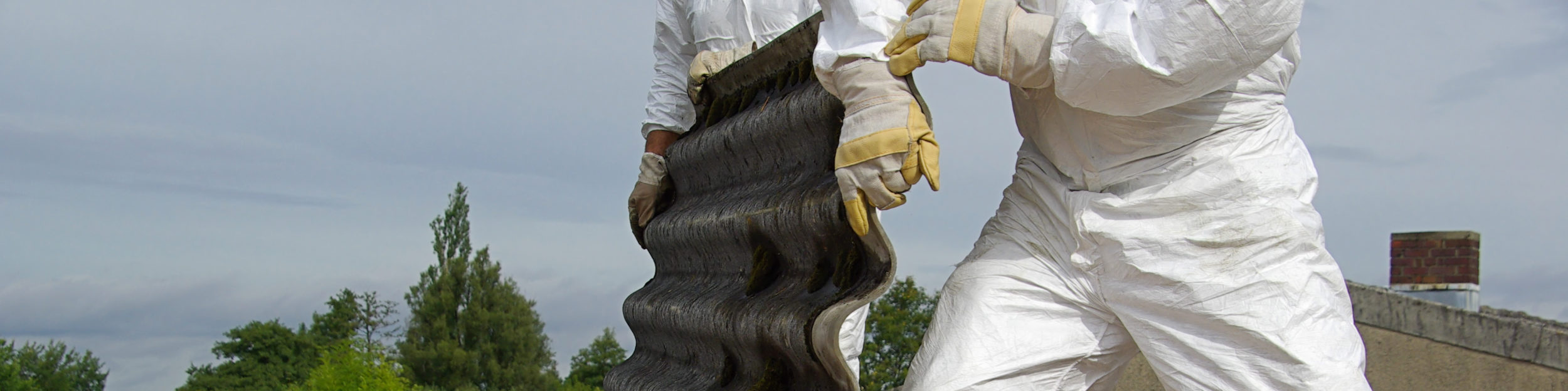
Quick answer: Asbestos is safely disposed of in Australia through a strictly regulated, end-to-end chain of custody designed around permanent containment, not destruction. In Victoria, every gram of removed asbestos is double-wrapped at source in 200-micron polyethylene, sealed and labelled “CAUTION ASBESTOS”, classified as Reportable Priority Waste (RPW) under the Environment Protection Regulations 2021, logged into EPA Victoria’s Waste Tracker before transport, moved in covered vehicles by EPA-permissioned operators, and buried in engineered, GPS-mapped cells at an EPA-licensed landfill authorised to receive asbestos. The cells are immediately covered with clean fill, eventually capped, and monitored long after the landfill stops accepting waste. Disposal is never at general transfer stations, household tips, recycling centres, or on private land — those pathways are illegal and carry fines exceeding $50,000 plus remediation. At the end of the process, the property owner receives a compliance documentation pack — manifests, tip receipts and an independent Regulation 297 clearance certificate — that should be retained for the life of the property.
If you’re planning a renovation, demolition or strip-out anywhere in Melbourne or Victoria — or you simply want to understand how this country actually keeps asbestos out of the environment in 2026 — this guide walks you through every safety control that makes “safe disposal” mean what it says.
Why “Safely” Is the Most Important Word in the Sentence
Most online content about asbestos disposal answers the question “where does it go?” That’s only half the story. The harder, more important question is “how is it kept safe at every stage between the source and the burial cell?” — because that’s where the failures happen.
Australia banned the manufacture, import and use of all forms of asbestos on 31 December 2003. But the country is still living with roughly 6 million tonnes of legacy asbestos sitting inside walls, roofs, eaves, fences, switchboards, vinyl floors and underground pipes — and approximately 4,000 Australians die every year from asbestos-related disease. Roughly 1 in 3 Australian homes built before 1990 still contains asbestos-containing material (ACM).
The disposal system that Australia has built around this legacy material is not optional and not symbolic. It exists because:
- Asbestos fibres are mineral and effectively indestructible at any normal industrial scale.
- A single brief, intense exposure to airborne fibres — minutes, not years — can be enough to seed mesothelioma decades later.
- There is no medical treatment that removes fibres once they have lodged in lung tissue.
- The latency between exposure and disease is typically 20 to 50 years, meaning today’s disposal shortcut is tomorrow’s diagnosis.
“Safely disposed of” therefore has a very specific meaning in Australian law and engineering practice. It means every fibre that left the property is accounted for, contained, tracked, and buried under controls that will outlive the people who handled it. Anything less is not disposal — it’s deferral.
The Australian Legal Framework Behind “Safe Disposal”
Safe disposal in Australia isn’t a single rule. It’s a stack of overlapping Commonwealth, state and local obligations that together define what compliant disposal looks like — and what it doesn’t.
National framework
- Asbestos and Silica Safety and Eradication Agency (ASSEA) — coordinates national asbestos policy and administers the Asbestos National Strategic Plan (ANSP) 2024–2030 (Phase Three), which has shifted the country’s posture from “manage in place” toward proactive removal of ageing ACM.
- Safe Work Australia — publishes the model Work Health and Safety (WHS) laws and the Code of Practice: How to Safely Remove Asbestos.
- Australian Border Force — enforces the ban on importing ACM (still occasionally found in imported building materials, brake parts and gaskets).
Victorian framework (the one that applies to every Melbourne job)
- Occupational Health and Safety Act 2004 (Vic) — primary safety statute.
- Occupational Health and Safety Regulations 2017 (Vic), Part 4.4 — the asbestos rulebook, including licensing, removal control plans and clearance certificates.
- WorkSafe Victoria Compliance Codes — Managing Asbestos in Workplaces and Removing Asbestos in Workplaces. These are the practical “how-to” documents inspectors measure compliance against.
- Environment Protection Act 2017 (Vic) and Environment Protection Regulations 2021 (Vic) — the disposal-specific legislation. This is where asbestos is classified as Reportable Priority Waste (RPW) and where the EPA Waste Tracker obligation lives.
- EPA Victoria Publication IWRG611.2 — Asbestos Transport and Disposal — the operational guidance every licensed contractor works to.
Local council overlay
Many Melbourne councils — including the City of Melbourne, Yarra, Boroondara, Whitehorse, Knox, Casey, Wyndham, Hume, Maribyrnong, Moonee Valley, Darebin, Banyule, Stonnington, Glen Eira, Kingston and Monash — apply additional permit, notification or waste-tracking conditions before demolition or major renovation. Your removalist should know how the local overlay applies to your suburb.
Together, these layers produce a single integrated answer to the question “how is asbestos safely disposed of in Australia?” — a regulated chain of custody from source to burial, with every step independently auditable.
The Six Safety Controls That Make Disposal “Safe”
The Australian model relies on six overlapping safety controls, applied at six different stages of the disposal chain. Each one is independently designed to prevent fibre release. If any single control fails, the next one is meant to catch it. This is the same defence-in-depth logic used in nuclear waste management, biosecurity and aviation safety — and for the same reason: the consequence of failure is irreversible.
| # | Stage | Primary safety control | Regulator |
|---|---|---|---|
| 1 | At source | Wet methods, double-wrapping, labelling | WorkSafe Victoria |
| 2 | Pre-transport | EPA Waste Tracker manifest | EPA Victoria |
| 3 | Transport | Covered, secure vehicle by permissioned operator | EPA Victoria |
| 4 | Landfill receipt | Weighbridge, manifest verification, dedicated cell | EPA Victoria |
| 5 | Burial | Immediate clean-fill cover, GPS recording, engineered cell | EPA Victoria |
| 6 | Long-term | Cap, post-closure monitoring, land-use controls | EPA Victoria |
Below we walk through what actually happens at each stage — and what “safe” looks like in practice.
Stage 1 — Safe Containment at the Source
This is where most fibre-release incidents either happen or are prevented. By the time material leaves the property, the outcome is essentially locked in.
Wet methods, not power tools
A licensed Class B removalist working with non-friable asbestos cement sheeting — fibro, Super Six, Hardiplank, corrugated roofing, eaves and fences — uses wet methods throughout. The material is misted continuously with water (often with a surfactant) to suppress airborne fibres. Sheets are removed whole wherever possible, unscrewed rather than cut, and lifted off rather than dropped.
What you will never see on a compliant Australian asbestos job:
- Angle grinders, circular saws, demolition saws, or any high-speed cutting tool.
- Power washers (which atomise contaminated water).
- Sanding, scraping or drilling of bonded sheets.
- Dropping material from height.
- Sweeping with a domestic broom.
- Domestic vacuums (only H-class HEPA vacuums are compliant).
These are not stylistic preferences. Each one is a known fibre-release pathway and is explicitly prohibited under the WorkSafe Victoria Compliance Code.
Double-wrapping in 200-micron polyethylene
Once removed, every item of asbestos waste is double-wrapped in heavy-duty 200-micron polyethylene sheeting. The wrapping is sealed with quality cloth or duct tape across every seam. There are no compromises on this — 100-micron or “single-wrap” approaches are non-compliant and unsafe.
The wrapping serves two purposes: it physically contains any loose fibres or dust generated by handling, and it survives the transport, tipping and burial stages without splitting. EPA Victoria’s guidance specifies that bags should be filled to no more than half capacity to prevent tearing under load.
Labelling
Every wrapped bundle is labelled “CAUTION ASBESTOS” in clearly visible text before it leaves the work zone. This isn’t decorative — it’s how the landfill operator, the EPA inspector and any third party in the chain can verify at a glance that the load matches the manifest.
Decontamination at the boundary
Workers exit the work zone through a decontamination process — wet-wiping or H-class vacuuming of PPE, removal of disposable coveralls into bags that themselves become asbestos waste, and showering where the job warrants it. The work zone itself is wet-wiped and H-class vacuumed before being released.
This whole stage — wetting, wrapping, labelling, decontamination — is the single highest-impact safety control in the entire disposal chain. Everything downstream depends on the material being properly contained before it goes anywhere.
Stage 2 — The Paper Trail: EPA Waste Tracker
Australia’s “safe disposal” model would collapse without one specific control: end-to-end electronic tracking of every load. In Victoria, this is EPA Waste Tracker, the online system that every licensed contractor uses.
What gets logged
Before the truck leaves the property, a manifest is created and lodged in Waste Tracker recording:
- Source — the property address where the asbestos was generated.
- Generator — the person who commissioned the work (you, the property owner).
- Transporter — the EPA-permissioned operator moving the load.
- Vehicle details — including registration.
- Waste classification — Reportable Priority Waste, with the specific asbestos sub-code.
- Estimated quantity — in tonnes or cubic metres.
- Receiving facility — the specific EPA-licensed landfill the load is bound for.
This manifest is the spine of the entire chain of custody. It cannot be created by an unlicensed operator. It cannot be backdated. It cannot be redirected mid-journey without an audit trail. And critically, it cannot be closed until the receiving landfill confirms the load arrived and matches the manifest.
Why this matters for property owners
If your contractor is moving asbestos without a Waste Tracker manifest, the legal liability flows back to you. Under Victorian law, the “generator” of the waste — the person who commissioned the work — carries enforceable duties for compliant disposal. You don’t transfer that risk just because a contractor put a sticker on the side of a ute.
The manifest is the documentary proof that you discharged that duty correctly. Keep it forever.
Stage 3 — Safe Transport
The transport stage is the most public-facing part of disposal. It’s also where the most visible illegal-dumping prosecutions originate.
Requirements under the Environment Protection Regulations 2021
A compliant asbestos transport movement in Victoria requires:
- A covered, secure vehicle — typically a tipper, truck or trailer with hard or tied-down covering that prevents wind-driven fibre release.
- An EPA-permissioned transporter — the operator must hold the appropriate Reportable Priority Waste permissions.
- The manifest lodged and live in Waste Tracker before the vehicle moves.
- A direct route to the booked landfill — no informal stop-offs, no transfers to other vehicles, no holding yards that aren’t licensed for asbestos.
What a safe asbestos transport looks like
In practice, it looks like a covered tipper or truck pulling out of your driveway with wrapped, labelled bundles secured under cover, driven by a trained operator to a pre-booked weighbridge slot at a licensed facility. Same-day disposal is the norm for residential jobs in Melbourne. Where the removal finishes late, next-morning disposal under secure overnight storage at the contractor’s yard is acceptable — provided the yard itself is EPA-compliant.
What it does not look like: an open trailer towed by a passenger car. A ute with a tarp flapping in the wind. A waste handler “in the area anyway” picking up loose ends for a few hundred dollars cash. These are the visual signatures of the prosecutions that EPA Victoria publishes.
Stage 4 — Receipt at an EPA-Licensed Landfill
In 2026, Victoria has a small number of EPA-licensed landfills authorised to receive asbestos waste. They are concentrated around Greater Melbourne, with limited regional capacity. Standard transfer stations, council tips, household waste centres and recycling depots are not authorised and will refuse the load.
What happens at the gate
A compliant arrival looks like this:
- Pre-booked slot. The contractor booked the delivery window before the truck left your property — landfills do not accept walk-up asbestos loads.
- Weighbridge in. The vehicle is weighed full. The reading is logged against the manifest.
- Manifest verification. The site operator checks the EPA Waste Tracker manifest against the load. Source, transporter, classification and estimated quantity must reconcile.
- Visual inspection. The load is inspected to confirm everything is properly double-wrapped, labelled, and free of contaminated co-mingled waste (e.g. general construction waste mixed in).
- Direction to the cell. The vehicle is directed to the dedicated asbestos cell — a specific, engineered area of the landfill set aside exclusively for asbestos waste.
If the load fails any of these checks, the receiving facility refuses it. The truck has to return, and the contractor has to remedy the issue — which is one reason why properly licensed operators take their pre-departure compliance seriously.
Weighbridge out
Once tipped, the vehicle is weighed empty. The difference is the net weight of asbestos delivered, which is recorded on the manifest and on the tip receipt issued to the contractor. Both documents end up in your compliance pack.
Stage 5 — Burial in Engineered Cells
This is the moment of actual disposal — and the engineering behind it is what allows Australia to call the process “safe” rather than “delayed.”
What an asbestos cell looks like
A licensed asbestos cell is a designed, lined excavation in the landfill — not a corner of the general working face. It typically features:
- An engineered base liner to prevent leachate migration (in line with modern Victorian landfill standards).
- Defined boundaries so the location can be GPS-mapped and recorded indefinitely.
- A dedicated working face isolated from general waste streams.
- Controlled access — only authorised vehicles and personnel enter.
The wrapped asbestos is tipped directly into the cell, not crushed, not compacted with high-impact machinery, and not exposed to the open air for any longer than strictly necessary.
Immediate clean-fill cover
Within minutes of tipping, the load is covered with clean fill — typically soil or other non-hazardous inert material — to a depth that suppresses any fibre release and prevents wind, water or wildlife disturbance. This immediate-cover requirement is one of the defining features of the Australian model. It’s why you’ll never see asbestos sitting exposed at a licensed cell.
GPS mapping and long-term records
The location of every load — down to the metre — is recorded against the manifest. Decades from now, if anyone needs to know what’s buried where and in what quantity, the records exist. This is what permanent containment looks like in practice: not just burial, but documented, mapped, retrievable burial.
Stage 6 — Long-Term Containment and Monitoring
The asbestos cell doesn’t stop being managed when it stops accepting waste. Under Victorian regulation, it transitions into a post-closure phase that lasts indefinitely.
Capping
Once a cell is at capacity, it is sealed with a multi-layer engineered cap — typically combining low-permeability material (clay or geosynthetic clay liner), a drainage layer, and a topsoil layer that supports vegetation. The cap is designed to prevent water infiltration, fibre release through erosion, and unauthorised excavation.
Long-term monitoring
After closure, the site is monitored for years or decades. Monitoring typically includes:
- Groundwater testing at boreholes around the cell to detect any contamination signal.
- Surface inspections for erosion, settling or damage to the cap.
- Methane and gas monitoring where the asbestos cell sits alongside general municipal waste.
- Cap maintenance — re-vegetation, repair of storm or fire damage, fencing integrity.
Land-use controls
Closed asbestos landfills carry planning overlays that restrict future development. Many former landfill sites in Victoria are now public open space — recreational reserves, golf courses, solar farms — precisely because their long-term containment obligations preclude residential or commercial development. The land remains usable for low-impact purposes; the asbestos cell beneath stays sealed indefinitely.
This is the conceptual answer to “how is asbestos safely disposed of?” — the country accepts that the material will outlast every contractor, every regulator and every property owner involved in the original removal, and engineers the disposal accordingly.
Why Australia Buries Asbestos Rather Than Destroying It
A common question from environmentally conscious property owners: “Why doesn’t Australia have asbestos recycling? Why bury it forever?”
The honest answer in 2026 is that no commercial-scale asbestos destruction facility operates in Australia — or, frankly, in most of the world. The science exists, but the engineering economics don’t.
What’s been tried
- Thermal denaturation — heating asbestos above approximately 1,000–1,250°C transforms it into a non-fibrous glassy material. Works in the laboratory; the energy cost, throughput and gas-handling demands make it commercially impractical.
- Chemical treatment — strong acids can dissolve some asbestos forms; the acid volumes and downstream waste streams make it impractical at scale.
- Microwave, plasma and mechanochemical processing — promising in research settings, commercially unproven.
The structural reason
The properties that made asbestos commercially attractive in the 20th century — extreme heat resistance, chemical inertness, mechanical durability — are precisely the properties that make it almost impossible to safely destroy at industrial scale. Asbestos doesn’t biodegrade, doesn’t react with normal industrial chemicals, doesn’t burn in conventional incinerators, and survives almost any process you can apply to it economically.
The result is that engineered burial in licensed landfills is the safest, most reliable, most cost-effective and most scalable disposal pathway available in Australia today. ASSEA and EPA Victoria both monitor international research; the assessment as of 2026 remains that burial is the right answer.
Beware “asbestos recycling” claims
If you see an operator advertising “asbestos recycling” in Australia in 2026, they are almost certainly either:
- Mischaracterising what they actually do — the waste is still going to a landfill, with extra handlers and extra contamination opportunities in the chain — or
- Operating outside the regulated framework, which means you do not want your project’s name attached to whatever paperwork (or absence of paperwork) they produce.
Compliant safe disposal in Australia means the EPA-licensed landfill pathway. There are no shortcuts.
What Happens to PPE, Wrapping and Contaminated Tools
A frequent question from homeowners watching the disposal process: “What about the gloves, the suits, the tarps and the vacuums?”
The principle is simple: anything that touched the asbestos is treated as asbestos.
- Disposable coveralls, gloves, boot covers and respirator cartridges — all bagged at the end of shift, double-wrapped, labelled and consigned to the same landfill load as the structural ACM.
- Drop sheets, plastic protection and tape used in the work zone — treated as contaminated and disposed of with the load.
- Reusable tools — H-class vacuums, scaffolding, lifting equipment — decontaminated on site with wet methods and H-class vacuuming, then bagged-and-tagged for reuse on the next job. The decontamination process itself generates small quantities of contaminated rinse water and wipes, which become asbestos waste.
- Respirators and reusable PPE — disposable filters removed and bagged; masks themselves wet-wiped, separated and stored for re-use after thorough decontamination.
This is why the volume of asbestos waste generated by a job is typically two to three times the visible volume of asbestos that came off the building. All of it travels under the same manifest and to the same landfill.
Illegal Disposal: What “Unsafe” Looks Like — and What It Costs
The Australian safe-disposal model exists in contrast to a long history of illegal dumping. Recent enforcement in Victoria has hardened significantly, and the prosecution patterns are publicly indexed.
The recurring failure modes
- Fly-tipping on public land — roadsides, reserves, river banks, vacant lots.
- Co-mingling asbestos with general construction waste and tipping at a non-licensed transfer station.
- Burial on private rural land — explicitly illegal under the Environment Protection Act 2017, regardless of property size.
- Burning — explicitly prohibited; asbestos doesn’t burn in any meaningful sense, but informal “clean-up fires” still happen on rural Victorian properties and they are a fast track to prosecution.
- “Cash” disposal through unlicensed operators who skip the manifest.
The penalties
- Illegal dumping under the Environment Protection Act 2017 — fines can exceed $50,000 for serious breaches, plus the cost of remediation (which routinely runs into six figures for residential-scale dumps).
- Operating without an asbestos removal licence — fines well in excess of $30,000 for individuals, significantly more for companies.
- Failure to obtain a Regulation 297 clearance certificate — 100 penalty units for individuals, 500 for body corporates.
- Aggravated offences involving reckless conduct endangering workers or the public — up to five years imprisonment under the OHS Act 2004.
- Publication of prosecutions on the WorkSafe Victoria and EPA Victoria websites — indexed by every major search engine, with reputational cost that typically dwarfs the fine.
The chain of liability that catches property owners
This is the part most homeowners don’t see coming: under Victorian law, when a contractor illegally dumps the asbestos that was removed from your property, the legal exposure can flow back to you — the person who commissioned the work. EPA Victoria can pursue:
- The dumper (the contractor or driver).
- The landowner where the dumping occurred.
- The original generator — you — particularly if you can’t produce a manifest and tip receipt proving compliant disposal.
This is why the documentation pack matters. It is the documentary chain that demonstrates you contracted a licensed pathway. Without it, you are exposed to enforcement action over an act you did not personally commit.
The cheap, off-the-books quote that “saves” you a few thousand dollars on disposal is not cheap when this enforcement chain activates. It is the most expensive option on the table — it just defers the cost.
How the Disposal Phase Looks on a Typical Melbourne Job
Putting the six controls together, here’s the disposal journey on a typical residential job in Melbourne — a 1960s or 1970s home in Northcote, Coburg, Reservoir, Footscray, Sunshine, Box Hill, Glen Iris, Caulfield, Bentleigh, Oakleigh, Frankston, Brunswick, Preston, Heidelberg, Pascoe Vale or Dandenong — with an asbestos garage, eaves and back fence being removed.
| Step | What happens | Where it happens |
|---|---|---|
| 1 | Material removed whole, wet-method, double-wrapped in 200-micron poly, sealed, labelled “CAUTION ASBESTOS” | Your property |
| 2 | EPA Waste Tracker manifest created and lodged before transport | Online, before vehicle moves |
| 3 | Wrapped bundles loaded into covered, secure vehicle | Your property / kerbside |
| 4 | Direct transport to pre-booked slot at an EPA-licensed landfill | Greater Melbourne |
| 5 | Weighbridge in, manifest verified, load visually inspected | At the landfill |
| 6 | Vehicle directed to the dedicated asbestos cell | Landfill working face |
| 7 | Load tipped under supervision into the engineered cell | Landfill working face |
| 8 | Clean fill applied within minutes to cover the load | Landfill working face |
| 9 | Weighbridge out, net weight calculated, tip receipt issued | At the landfill |
| 10 | Manifest closed in EPA Waste Tracker with receiving signature | Online |
| 11 | Cell continues to fill with subsequent loads; capped at capacity | Landfill, over months/years |
| 12 | Long-term monitoring and land-use controls applied | Landfill, indefinitely |
| 13 | Documentation pack delivered to the property owner | Your records, forever |
From the moment the first sheet is wrapped on your property to the moment the documentation lands in your inbox, every step is recorded, every handler is licensed, and every load can be traced backwards from the burial cell to the source address. That is what “safely disposed of in Australia” actually means.
Geographic Considerations: Melbourne and Regional Victoria
The disposal model is uniform across Victoria, but the logistics differ meaningfully by region.
Greater Melbourne
For removals in inner, middle and outer-ring Melbourne — City of Melbourne, Yarra, Boroondara, Whitehorse, Knox, Casey, Wyndham, Hume, Maribyrnong, Moonee Valley, Glen Eira, Stonnington, Kingston, Melton, Brimbank, Banyule, Darebin, Manningham, Monash, Frankston and surrounds — the nearest EPA-licensed asbestos landfill is generally within a reasonable drive. Single-vehicle, same-day disposal is the norm for residential jobs.
Outer-metropolitan growth corridors
For removals in Melton, Wyndham, Hume, Casey, Cardinia and Whittlesea, distances to licensed landfills can be longer, particularly for larger industrial removals associated with greenfield site preparation. This is sometimes reflected transparently in the disposal portion of the quote.
Regional Victoria
For removals in Geelong, Ballarat, Bendigo, Shepparton, the Mornington Peninsula, the Yarra Valley, the Latrobe Valley and further afield, the disposal logistics often involve longer transport runs to one of the metropolitan-fringe EPA-licensed sites. A licensed regional removalist will factor the transport distance into the disposal price transparently — and will never solve the problem by tipping somewhere closer that isn’t authorised.
Rural properties
A common question on rural Victorian properties: “Can I just bury the asbestos on my own land?” The answer is no. Under the Environment Protection Act 2017, burial of asbestos on private land is illegal regardless of property size, distance from neighbours, or remoteness. The same applies to burning, which is explicitly prohibited. Fines exceed $50,000 plus remediation. Rural property owners are not exempt from the licensed landfill pathway.
The Documentation Pack: Your Proof That Disposal Was Safe
By the end of a compliant job, the disposal phase has generated a stack of paperwork that a reputable Class B removalist will compile into a single documentation pack and hand to you on completion. This is the single most important deliverable of the entire job.
What a complete pack contains
- A copy of the removalist’s current WorkSafe Victoria Class B (or Class A) asbestos removal licence.
- The site-specific Asbestos Removal Control Plan (ARCP).
- The site-specific Safe Work Method Statement (SWMS).
- The WorkSafe Victoria five-day notification (lodged before work commenced).
- NATA-accredited laboratory sample results where sampling was conducted under AS 5370:2024.
- The EPA Waste Tracker manifest for every load transported.
- The landfill tip receipt for every load, identifying the receiving site.
- The independent clearance certificate issued under Regulation 297 of the OHS Regulations 2017.
- Photographs of the site before, during and after the work (where part of the standard handover).
Why you keep it forever
- Insurance. Insurers routinely request proof of compliant asbestos works after any loss event on a property.
- Sale. A future buyer’s solicitor will ask for it as part of due diligence on any pre-2004 property.
- Council. Some Melbourne councils request it before issuing occupancy or change-of-use approvals.
- Audit defence. If WorkSafe Victoria or EPA Victoria ever audits the site for any reason, this pack is your legal shield.
The cost of regenerating this pack later — assuming the contractor still exists, which is not always the case for cheap operators — is far higher than the cost of keeping the original. Retain it indefinitely, digitally and in hard copy.
How Asbestos Gone and Clean Handles Safe Asbestos Disposal in Melbourne and Victoria
We are a WorkSafe Victoria licensed Class B (non-friable) asbestos removalist and demolition contractor based in Melbourne, servicing all of Greater Melbourne and regional Victoria — from the inner-north (Brunswick, Northcote, Coburg, Preston, Reservoir) through the inner-east (Hawthorn, Kew, Camberwell, Balwyn), inner-west (Footscray, Yarraville, Sunshine, Maribyrnong), bayside (St Kilda, Brighton, Sandringham, Mentone), south-east (Glen Iris, Malvern, Caulfield, Bentleigh, Cheltenham), outer-growth corridors (Wyndham, Casey, Cardinia, Whittlesea, Hume) and out to Geelong, Ballarat, Bendigo, the Mornington Peninsula, the Yarra Valley and the Latrobe Valley.
Because we run asbestos removal and demolition under one ABN, the disposal phase is handled in-house under the same compliance framework — you don’t have to worry about what happens to the material after it leaves your kerb.
Every job we take on follows the same backbone:
- Free site inspection and fixed-price written quote — including survey, sampling, ARCP, SWMS, WorkSafe notification, removal, transport, EPA-tracked disposal, clearance certificate and documentation pack. No hidden tip fees, no compliance variations bolted on later.
- NATA-accredited sampling under AS 5370:2024 where required, with laboratory results provided.
- Site-specific ARCP and SWMS prepared before mobilisation.
- WorkSafe Victoria five-day notification lodged on your behalf, with a copy in your pack.
- Wet-method removal, double-wrapping in 200-micron poly, sealed and labelled before anything leaves the work zone.
- EPA Waste Tracker manifest prepared and lodged for every load.
- Covered, secure transport to a pre-booked slot at an EPA-licensed landfill, by a permissioned operator.
- Same-day disposal wherever possible, with weighbridge tip receipts retained.
- Independent Regulation 297 clearance certificate coordinated with an assessor who is independent of our removal works.
- Complete documentation pack — digital and hard copy — delivered within 1 to 3 working days of project close-out.
For builders, developers and owner-builders, we also run integrated soft strip and demolition services so your asbestos removal and demolition dovetail under one project manager. That removes the single biggest cause of program slippage on pre-2004 demolition sites: the gap between “asbestos removalist finishes” and “demolition contractor starts.”
Frequently Asked Questions
How is asbestos safely disposed of in Australia?
By a regulated chain of custody from source to burial. The material is double-wrapped in 200-micron polyethylene at the source, labelled “CAUTION ASBESTOS”, classified as Reportable Priority Waste, logged into EPA Waste Tracker, transported in a covered, secure vehicle by an EPA-permissioned operator, and buried in a dedicated, engineered cell at an EPA-licensed landfill — covered immediately with clean fill, GPS-mapped, eventually capped, and monitored indefinitely. The property owner receives a documentation pack proving the chain.
Where is asbestos legally disposed of in Melbourne?
At a small number of EPA-licensed landfills around Greater Melbourne that are specifically authorised to receive asbestos waste. Standard council tips, transfer stations, recycling centres and household waste depots are not authorised and will refuse the load. Most authorised landfills require pre-booked slots.
Can I dispose of asbestos at my local council tip?
No. Council and municipal tips are not authorised to accept asbestos waste under the Environment Protection Regulations 2021. Asbestos disposal is only legal at an EPA-licensed landfill that holds the specific authorisation. Your licensed removalist will book the slot and transport the waste directly.
Can I take asbestos to a transfer station or recycling centre?
No. Transfer stations and recycling centres are not licensed to receive asbestos. Attempting to dispose of asbestos through these pathways is illegal under the Environment Protection Act 2017 and exposes you to fines exceeding $50,000 plus remediation costs.
Is asbestos recycled in Australia in 2026?
No. There is no commercial-scale asbestos recycling or destruction facility operating in Australia in 2026. Every tonne of compliantly removed asbestos in Victoria is disposed of by safe burial at an EPA-licensed landfill. Any operator claiming to “recycle” asbestos rather than landfill it should be treated with extreme caution — the waste is almost certainly still going to a landfill, with extra handlers in the chain, or the operator is outside the regulated framework entirely.
Can asbestos be destroyed or broken down?
In laboratory and small pilot conditions, yes — high-temperature thermal denaturation above approximately 1,000°C can transform asbestos into a non-fibrous glassy material. Chemical, microwave and plasma processes are also under research. None of these is commercially viable at scale in Australia. Safe disposal in 2026 means engineered burial under controlled conditions.
How is asbestos safely transported in Australia?
In covered, secure vehicles operated by EPA-permissioned transporters, with a live EPA Waste Tracker manifest lodged before the vehicle moves. The route is direct, no informal stop-offs, no transfers to other vehicles, and the destination is a pre-booked slot at an EPA-licensed landfill authorised to receive asbestos. The driver is trained and the load is double-wrapped and labelled.
What is “Reportable Priority Waste” and why is asbestos classified as RPW?
Reportable Priority Waste (RPW) is the highest-risk waste category under Victoria’s Environment Protection Regulations 2021. Asbestos is classified as RPW because of its severe health hazard and the consequences of any release into the environment. The RPW classification triggers mandatory Waste Tracker logging, covered-vehicle transport, EPA-permissioned operators and disposal only at licensed facilities.
What documentation should I receive after asbestos disposal?
A complete compliance pack including: the removalist’s WorkSafe Victoria licence, the site-specific ARCP and SWMS, the WorkSafe Victoria notification, any NATA-accredited laboratory sample results under AS 5370:2024, the EPA Waste Tracker manifest for each load, the landfill tip receipt for each load, and the independent clearance certificate under Regulation 297. Retain this pack indefinitely for insurance, sale and audit purposes.
How long does asbestos stay safe at a landfill?
Indefinitely, when buried in an engineered, capped and monitored cell. The Australian disposal model is permanent containment, not destruction. Landfill cells are monitored long after they cease accepting waste, and land-use controls prevent future development that could disturb the burial layer.
What happens if my asbestos waste is illegally dumped by the contractor I hired?
Under Victorian law, the legal exposure for illegal dumping can flow back to the person who commissioned the work — particularly if they cannot produce a manifest and tip receipt proving compliant disposal. EPA Victoria can pursue the dumper, the landowner where the dumping occurred, and the original commissioning party. This is the central reason why retaining the documentation pack matters: it is the documentary chain that proves you contracted a licensed pathway.
Can I bury asbestos on my own rural property in Victoria?
No. Under the Environment Protection Act 2017, burial of asbestos on private land — including large rural properties — is illegal regardless of remoteness or property size. Burning is also explicitly prohibited. Fines exceed $50,000 plus remediation costs. Rural property owners must use the licensed landfill pathway.
How much does safe asbestos disposal cost in Melbourne?
Disposal is charged per tonne or cubic metre at the EPA-licensed landfill, with rates varying by site. For a typical residential removal in Melbourne, the disposal portion is built into the licensed removalist’s fixed-price quote — you do not pay it separately. Quotes that appear dramatically below the market are usually a sign that the disposal cost is being avoided, which is where illegal dumping cases originate.
Do I need a licensed removalist to dispose of asbestos in Victoria?
If the total area of non-friable asbestos exceeds 10m² or the work takes more than one hour over any seven-day period, yes — a Class B (or Class A) licensed removalist is legally required for both removal and disposal. Even within the narrow DIY exemption, WorkSafe Victoria recommends using a licensed removalist, because the disposal pathway still has to go through an EPA-licensed landfill and the manifest, transport and clearance requirements still apply.
Get a Compliant Class B Asbestos Removal and Disposal Quote in Melbourne or Victoria
If you are planning a renovation, roof replacement, strip-out or demolition anywhere in Melbourne or Victoria — and you want to know that every fibre of asbestos generated from your property is safely contained, tracked, transported and buried under controls that will outlive the building you removed it from — that is exactly what we do, every day.
Asbestos Gone and Clean is a Melbourne-based WorkSafe Victoria licensed Class B (non-friable) asbestos removalist and demolition contractor servicing every Melbourne metropolitan suburb and regional Victoria.
We deliver:
- A free, no-obligation site inspection and fixed-price written quote — survey, sampling, ARCP, SWMS, WorkSafe notification, removal, EPA-tracked disposal, independent clearance certificate and documentation pack, all included.
- A copy of our current WorkSafe Victoria Class B asbestos removal licence.
- A Certificate of Currency for our public liability and asbestos-specific insurance.
- A site-specific ARCP and SWMS before mobilisation.
- NATA-accredited sampling under AS 5370:2024 where required.
- Five-day WorkSafe Victoria notification lodged on your behalf.
- EPA Waste Tracker disposal at a licensed facility, with manifest and tip receipt provided.
- Independent Regulation 297 clearance certificate before re-occupation.
- A complete documentation pack delivered on project close-out.
If your job is non-friable, we will complete it end-to-end. If any portion of the material is friable, we will tell you on day one — not on demolition day — and coordinate a Class A specialist for that scope under our project management.
☎ Call us: 0475 143 106
✉ Email: asbestosgoneandclean@gmail.com
???? Contact Us: Asbestos Gone and Clean – Contact
We service all Melbourne metropolitan suburbs and travel throughout Victoria for residential, commercial, industrial and rural projects.
Related Reading
- What Happens to Asbestos After It’s Removed From a Property? (2026 Melbourne & Victoria Guide) — the step-by-step disposal journey from kerb to burial cell.
- Asbestos Regulations and Legal Requirements in Australia: The 2026 Compliance Guide for Melbourne & Victoria — the deep-dive on the Victorian regulatory framework, licensing, registers and penalties.
- Asbestos Removal During Demolition: What You Need to Know (2026 Melbourne & Victoria Guide) — the full pre-demolition-survey-to-clearance-certificate sequence for builders, developers and owner-builders.
- Class A vs Class B Asbestos Licence: What’s the Difference? (2026 Melbourne & Victoria Guide) — which licence is needed for which job.
- How to Choose a Licensed Asbestos Removalist in Australia (2026 Melbourne & Victoria Guide) — the seven things every licensed removalist must prove and the 12 questions to ask before signing.
Sources and Further Reading
- WorkSafe Victoria — Compliance Code: Removing Asbestos in Workplaces
- WorkSafe Victoria — Compliance Code: Managing Asbestos in Workplaces
- Occupational Health and Safety Act 2004 (Vic)
- Occupational Health and Safety Regulations 2017 (Vic), Part 4.4 (including Regulations 273 and 297)
- EPA Victoria — Publication IWRG611.2: Asbestos Transport and Disposal
- Environment Protection Act 2017 (Vic) and Environment Protection Regulations 2021 (Vic)
- Asbestos and Silica Safety and Eradication Agency (ASSEA) — Asbestos National Strategic Plan 2024–2030
- Standards Australia — AS 5370:2024 Air Quality — Bulk Materials
- Safe Work Australia — Code of Practice: How to Safely Remove Asbestos
Disclaimer: This article is general information only and is current as at May 2026. It is not legal advice. For advice on a specific project, contact WorkSafe Victoria, EPA Victoria, your local council, or speak directly with Asbestos Gone and Clean.