
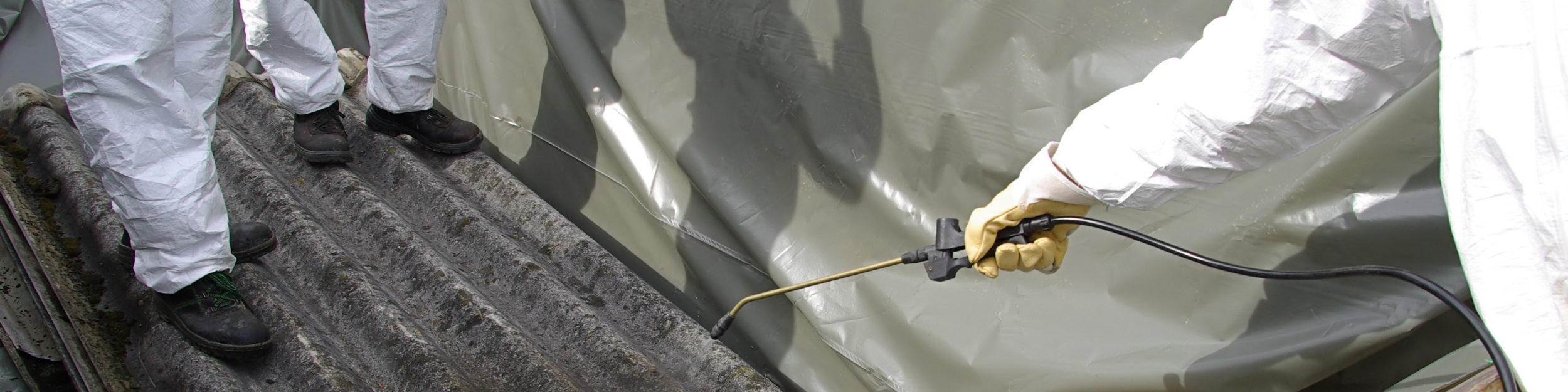
Quick answer: A Class A asbestos removal licence authorises the holder to remove both friable and non-friable asbestos — every type of asbestos legally present in Australia. A Class B asbestos removal licence authorises the holder to remove non-friable (bonded) asbestos only — fibro cement sheeting, corrugated roofing, eaves, fences, switchboards, vinyl tiles, and similar materials where the fibres are locked inside a hard matrix. In Victoria, both licences are issued by WorkSafe Victoria under the Occupational Health and Safety Regulations 2017 (Vic), are valid for up to five years, and require evidence of nationally recognised training (CPCCDE3014 for removalists, CPCCBC4051A for supervisors), medical fitness, compliant equipment, insurance, and documented safe work systems. Class B is the licence that covers the overwhelming majority of residential and light commercial asbestos work in Melbourne — fences, garages, eaves, fibro sheds, roof replacements on pre-2004 homes. Class A is the licence required for sprayed limpet insulation, pipe lagging, asbestos rope, millboard, and any asbestos material that crumbles to powder under hand pressure (or has been damaged by fire, water or aggressive impact to the point that it does). A Class B licensee is legally prohibited from undertaking Class A work under any circumstances — there is no flexibility, no homeowner waiver, no “just this once.” This guide explains exactly what each licence covers, how to read a WorkSafe Victoria licence document, which one your project actually needs, and how to verify what’s been put in front of you before you sign anything.
If you own, renovate, demolish, develop or manage property in Melbourne or anywhere in Victoria, the Class A / Class B distinction is the single most important piece of regulatory plumbing you’ll ever interact with in an asbestos job. Get it right at the quote stage and the project runs cleanly. Get it wrong — or let an unlicensed operator gloss over it — and you’ve just made yourself the legal defendant in any future enforcement action, contamination claim, or property sale dispute.
Why There Are Two Licence Classes in the First Place
Australia banned the manufacture, supply, use and reuse of all forms of asbestos on 31 December 2003. What remained — and what every state and territory regulator now spends its time managing — is the legacy asbestos already locked into the built environment. In Victoria alone, an estimated one in three pre-2004 buildings still contains asbestos somewhere: in cement sheet eaves, in vinyl tile underlays, in switchboard backing, in old internal walls, in roof flashings, in pipe insulation, in sprayed coatings in older industrial buildings.
The risk that material poses depends almost entirely on one thing: whether the asbestos fibres are bound inside a hard, stable matrix, or whether they can become airborne. WorkSafe Victoria and Safe Work Australia have built the entire licensing system around that single physical property.
- If the fibres are bound (non-friable / bonded), the controls required to remove the material safely are real but manageable: P2/P3 respiratory protection, wet methods, hand tools, sealed waste bags, an EPA-licensed disposal route.
- If the fibres are unbound (friable), the controls required jump several orders of magnitude: full enclosures, negative-pressure HEPA filtration, air-fed respirators, three-stage decontamination units, NATA-accredited air monitoring before, during and after the work.
Two different risk profiles. Two different control regimes. Two different licences. The Class A / Class B split is not bureaucratic neatness — it’s a straight reflection of the physics of how asbestos fibres behave once you touch the material.
Class B Asbestos Removal Licence — The Full Definition
A Class B asbestos removal licence is the licence that covers non-friable asbestos only. In Victoria, this is the licence held by most asbestos removal businesses, including Asbestos Gone and Clean, because non-friable asbestos accounts for the vast majority of legacy ACM (asbestos-containing material) found in Melbourne homes and light commercial sites.
What a Class B licence covers
A Class B licensee can lawfully remove any quantity of non-friable (bonded) asbestos, regardless of area or duration. There is no upper limit. A Class B holder can remove:
- Fibro cement sheeting — internal and external wall sheet, ceiling sheet, soffit sheet, Super Six and similar profiled products.
- Corrugated asbestos cement roofing — typical of pre-1990 sheds, garages, carports and outbuildings.
- Asbestos cement eaves and soffit linings — extremely common on weatherboard and brick veneer homes built between roughly 1945 and 1990.
- Asbestos cement fencing — the classic 1.8m grey fibro fence found across older Melbourne suburbs.
- Vinyl floor tiles and the bitumen-bound underlay used to glue them down.
- Asbestos cement water and drainage pipes (where being cut, not just disturbed in passing).
- Switchboard backing boards (often Zelemite or Ausbestos).
- Window putty containing asbestos.
- Hardiplank, Versilux, Tilux and other branded sheet products manufactured before the 2003 ban.
If the material is bonded and intact, Class B is the correct licence. Full stop.
What Class B does NOT cover
A Class B licence does not authorise the holder to remove any of the following, even where the quantity is small or the work appears straightforward:
- Sprayed limpet asbestos (a soft, fluffy insulation typically found on structural steelwork in older commercial and industrial buildings).
- Pipe and boiler lagging (asbestos insulation wrapped around hot pipes and boilers).
- Asbestos millboard (used as a heat shield behind old wood heaters and industrial equipment).
- Asbestos rope and gasketing.
- Asbestos textiles (fire blankets, theatre curtains, lab bench protectors).
- Any non-friable material that has been damaged by fire, water, weathering or aggressive mechanical impact to the point where the fibres are no longer locked in the matrix — this is the trap that catches more Melbourne demolition jobs than any other.
A Class B holder who undertakes any of the above is committing a prosecutable offence under the OHS Act 2004 (Vic), regardless of how the job is invoiced, who authorised it, or how small the quantity.
How a business obtains a Class B licence in Victoria
To be granted a Class B licence by WorkSafe Victoria, the business — not the individual operator — must demonstrate:
- Trained removalists holding the nationally recognised unit of competency CPCCDE3014 — Remove non-friable asbestos.
- A nominated site supervisor holding CPCCBC4051A — Supervise asbestos removal (or the equivalent earlier code).
- Compliant respiratory protective equipment — P2 or P3 half-face / full-face respirators, fit-tested for each removalist.
- Class H hazardous-dust vacuum cleaners with HEPA filtration, used for cleaning and never substituted with general-purpose vacuums.
- Disposable protective clothing — Type 5/6 coveralls, gloves and over-boots.
- Medical fit-for-work certificates for each removalist, updated every two years.
- A documented Safe Work Method Statement (SWMS) and Asbestos Removal Control Plan (ARCP) for every job.
- Public liability insurance that specifically covers asbestos work (generic builder policies usually exclude it — the policy must be endorsed back in).
- A record of compliance with EPA Victoria waste tracking and Regulation 297 clearance certificate obligations.
The licence is issued for up to five years and must be renewed before expiry. WorkSafe publishes a free, public Asbestos Removal Licence Holder Register, which is searchable by business name or licence number.
Reality check: Holding the CPCCDE3014 training certificate is not the same as holding a Class B licence. The training is for the individual operator. The licence is for the company. An operator can have completed the training but be working for a business that does not hold a removal licence — in which case the company is not authorised to perform paid asbestos removal work. Always confirm both.
Class A Asbestos Removal Licence — The Full Definition
A Class A asbestos removal licence is the highest-level asbestos removal authorisation issued in Victoria. It covers both friable and non-friable asbestos — every legally encountered asbestos type in the country.
What a Class A licence covers
A Class A licensee can lawfully remove all asbestos, including:
- Everything a Class B licensee can remove (non-friable bonded materials).
- Sprayed limpet asbestos insulation on structural steel.
- Pipe and boiler lagging in industrial, institutional and older commercial buildings.
- Asbestos millboard behind heaters and inside ovens.
- Asbestos rope and gasket material in old pipework, boilers and door seals.
- Asbestos textiles (fire blankets, curtains, woven sleeves).
- Loose-fill asbestos (rare in Victoria but found in some imported ceiling insulation in other jurisdictions — Mr Fluffy is the well-known NSW/ACT example).
- Fire-damaged or weather-damaged cement sheeting that has reverted to friable status.
- Severely weathered or impact-damaged ACM at the powder-or-fragment stage.
The additional requirements behind a Class A licence
A Class A licence requires everything that a Class B licence requires, plus a substantially heavier compliance load:
- An external, third-party-certified Occupational Health and Safety (OHS) Management System certificate issued by an accredited certification body. This is not a self-assessment — it is an audited system.
- Mandatory on-site supervision throughout the works. Class B requires a nominated supervisor; Class A requires a supervisor physically on site for the duration of the removal.
- Full enclosures sealing the work area from the rest of the building or site using polythene sheeting and timber framing.
- Negative air units running HEPA filtration to maintain the work zone at lower air pressure than the surrounding areas — so any leak draws into the enclosure rather than out.
- Three-stage decontamination units (dirty change, shower, clean change) through which every worker must pass on every entry and exit.
- Air-fed respiratory protection (PAPR or supplied-air) for higher-risk friable scopes.
- Air monitoring before, during and after the removal, with samples analysed at NATA-accredited laboratories to AS 5370:2024 standards.
- Mandatory clearance certificate from an independent licensed asbestos assessor — not just a competent person — for friable jobs.
The capital cost, training cost, ongoing audit cost and operational overhead of holding a Class A licence are materially higher than Class B, which is why Class A holders are a smaller proportion of the licensed market in Victoria.
Key insight for builders and developers: If your project involves any material that might be friable — sprayed coatings on steelwork, pipe lagging in a plant room, a fire-damaged shed, an old industrial site — the Class A vs Class B question must be answered at the survey stage, not on demolition day. The reclassification, if it happens late, can add one to three weeks to the program and meaningful cost to the budget.
Side-by-Side: Class A vs Class B Asbestos Licence
For quick reference, here is the Class A vs Class B comparison in a single table.
| Feature | Class B Licence (Non-Friable) | Class A Licence (Friable + Non-Friable) |
|---|---|---|
| Asbestos types covered | Non-friable (bonded) only | Friable AND non-friable |
| Typical materials | Fibro sheeting, corrugated roofing, eaves, fences, vinyl tiles, switchboards | All of Class B PLUS sprayed limpet, pipe lagging, millboard, asbestos rope, fire-damaged ACM |
| Issued by (Victoria) | WorkSafe Victoria | WorkSafe Victoria |
| Licence duration | Up to 5 years | Up to 5 years |
| Required training (removalist) | CPCCDE3014 — Remove non-friable asbestos | CPCCDE3014 PLUS CPCCDE3015 — Remove friable asbestos |
| Required training (supervisor) | CPCCBC4051A — Supervise asbestos removal | CPCCBC4051A — Supervise asbestos removal |
| Medical fitness certificates | Required, 2-yearly | Required, 2-yearly |
| OHS Management System certificate | Not required | Required — third-party audited |
| On-site supervision | Nominated supervisor | Mandatory full-time on-site supervision |
| Enclosures | Not required | Required (sealed work zone) |
| Negative air units | Not required | Required (HEPA-filtered, monitored) |
| Decontamination units | Not required | Required (three-stage) |
| Respiratory protection | P2 / P3 half- or full-face | Air-fed / PAPR for higher-risk work |
| Air monitoring | Generally not required | Required before, during and after |
| Clearance assessor | Independent competent person | Independent licensed asbestos assessor |
| WorkSafe notification | 5 days minimum | 5 days minimum + additional controls |
| DIY threshold | <10m² AND <1hr/7 days (Vic residential only) | None — no DIY permitted ever |
| Typical job profile in Melbourne | Residential fence, garage, eave, roof, fibro shed, bathroom strip-out | Industrial plant rooms, hospital strip-outs, fire-damaged sites, derelict ACM |
| Relative cost / day | Baseline | Materially higher |
| Typical program impact | Standard | Often 1–3 weeks longer end-to-end |
| Holder count (Victoria) | Larger pool | Smaller, specialist pool |
Which Licence Do You Actually Need?
For nine out of ten Melbourne and Victorian residential and light commercial jobs, the answer is Class B. Here’s the practical decision framework.
You need a Class B licensed removalist if your job involves any of the following
- A typical pre-2004 weatherboard, brick veneer or fibro home with cement sheet eaves, fibro under a tiled bathroom, an asbestos cement garage or shed, or an old fibro fence.
- A roof replacement on a pre-2004 home with corrugated asbestos cement roofing.
- A bathroom or laundry strip-out in a pre-1990 home where the wet areas were sheeted with fibro behind the tiles.
- An internal renovation of a 1950s–1980s home where the wall sheet is intact, dry and undamaged.
- A shed or garage demolition where the cladding is asbestos cement but is structurally intact.
- A fence replacement on an older property where the existing fence is asbestos cement.
- A commercial fit-out of a building constructed before the 2003 ban where the only ACM present is bonded cement sheet, vinyl tile, eaves or switchboard backing.
If the material is bonded, the structure is intact, and there has been no fire / flood / aggressive impact damage, a Class B licensed contractor — like Asbestos Gone and Clean — is the correct choice.
You need a Class A licensed removalist if your job involves any of the following
- Sprayed limpet asbestos on structural steel beams (common in commercial and industrial buildings from the 1960s and 1970s).
- Pipe lagging wrapped around hot water, steam or process pipes in plant rooms, factories, schools or hospitals.
- Asbestos rope, gaskets, woven textiles in older boilers, ovens or industrial equipment.
- Millboard or insulation board behind a wood heater, oven or old industrial appliance.
- Fire-damaged asbestos cement sheeting — once the fire has degraded the matrix, the material is no longer non-friable.
- Severely weather-damaged or impact-damaged ACM — corroded roofing that’s been left for decades, sheeting that’s been hit by storm debris, demolition rubble where the cement has been pulverised.
- Derelict or partially collapsed structures where the condition of any remaining ACM cannot be confirmed as non-friable.
- Any material that crumbles, dusts or releases visible fibres under hand pressure when dry.
Mixed-scope projects — when both licences are needed
Plenty of larger Melbourne projects involve both. A pre-2004 commercial building scheduled for demolition might have:
- Bonded fibro sheeting throughout the partitions (Class B work).
- Asbestos cement roof (Class B work).
- Sprayed limpet on the steel beams (Class A work).
- Pipe lagging in the plant room (Class A work).
In these cases, the friable scope is removed first by the Class A specialist, the site is cleared and certified, and the remaining non-friable scope is then completed by the Class B team — or by the Class A holder, if they choose. The sequence matters: friable always comes off before non-friable, because the controls needed for friable would otherwise have to be maintained for the entire project rather than for the part that needs them.
Reality check for owners receiving cheap quotes: A contractor who quotes a fire-damaged shed, an industrial plant room or a long-derelict site as a straight “Class B” job is either not licensed for Class A work and hoping you won’t notice, or hasn’t actually inspected the material properly. The reclassification has to happen on quote day, not on demolition day. If you’re not sure, ask a NATA-accredited laboratory to sample under AS 5370:2024 before you sign anything.
How to Read a WorkSafe Victoria Asbestos Removal Licence
Every legitimate Victorian asbestos removal business will be able to email you a PDF copy of their licence inside an hour of asking. The document is one page. Read it for the following:
- Licence class — clearly stated as “Class A” or “Class B.” If the licence says “Class B” and your job involves friable material, you have the wrong contractor for the wrong scope.
- Licence holder name — must match the business name on the quote, contract and invoice. Beware contractors who quote under one trading name but hold the licence under a different entity.
- Licence number — a unique WorkSafe Victoria reference. Use it to cross-check the public licence holder register.
- Issue date — when the licence was first granted (or last renewed).
- Expiry date — must be current. If the expiry falls before your project ends, ask in writing how that’s being managed (most reputable removalists renew 6–12 months before expiry).
- Conditions — sometimes licences carry specific conditions (e.g. limits on the type of work, audit requirements, supervisor restrictions). Read them.
- WorkSafe Victoria letterhead and signature — the licence is a regulator-issued document, not a privately-printed certificate.
Verification takes under five minutes:
- Visit the WorkSafe Victoria website.
- Navigate to the public asbestos removal licence holder register.
- Search by business name or licence number.
- Confirm the licence is current, the class matches your scope, and the business name matches your quote.
If anything doesn’t match, ask the question. A legitimate operator will answer it without hesitation.
Other Australian States: How the Licensing System Compares
If you’re managing a project across state lines, the structure of the licensing system is broadly consistent across Australia — but the regulators and some of the detail differ.
| State / Territory | Regulator | Class A equivalent | Class B equivalent |
|---|---|---|---|
| Victoria | WorkSafe Victoria | Class A | Class B |
| New South Wales | SafeWork NSW | Class A | Class B |
| Queensland | Workplace Health and Safety Queensland | Class A | Class B |
| South Australia | SafeWork SA | Class A | Class B |
| Western Australia | WorkSafe WA | Unrestricted | Restricted (non-friable) |
| Tasmania | WorkSafe Tasmania | Class A | Class B |
| Northern Territory | NT WorkSafe | Class A | Class B |
| Australian Capital Territory | WorkSafe ACT | Class A | Class B |
The underlying training units (CPCCDE3014 for non-friable removal, CPCCDE3015 for friable removal, CPCCBC4051A for supervision) are nationally recognised and portable. The licence, however, is issued by each state’s regulator and is generally state-specific — a Victorian Class B holder operating in NSW will need to satisfy SafeWork NSW’s requirements, and vice versa. For Melbourne and broader Victorian projects, the WorkSafe Victoria licence is the one that matters.
Common Mistakes Property Owners Make Around Class A vs Class B
Eight years of running residential and commercial Class B jobs across Melbourne has surfaced the same handful of mistakes again and again. Avoiding them is straightforward once you know what to look for.
Mistake 1 — Assuming the cheapest quote is using the right licence
Asbestos removal is one of the few trades where the cheapest quote is almost always the most expensive decision. The cheapest quote is usually cheapest because the contractor is:
- Cutting corners on disposal (illegal dumping at a regular landfill instead of an EPA-licensed asbestos facility).
- Skipping the five-day WorkSafe notification.
- Not preparing a site-specific ARCP and SWMS.
- Holding only the training certificate, not the company licence.
- Not actually insured for asbestos work.
- Misclassifying a Class A job as a Class B job to dodge the cost of proper enclosures and air monitoring.
The difference between a properly priced Class B job and a too-cheap one is usually a few hundred dollars on a small residential job — and tens of thousands of dollars on the back end if the work has to be redone, contamination cleaned up, or a regulator engaged.
Mistake 2 — Trusting “we’re licensed” without seeing the document
“Licensed” is one of the most over-used words in the trades. Always ask for the licence number and the PDF of the licence document. Five-minute verification through the WorkSafe Victoria register confirms whether what you’ve been told is true. If a contractor pushes back, that’s the answer.
Mistake 3 — Letting fire-, flood- or storm-damaged ACM be quoted as Class B
This is the single most common Class A / Class B trap in Victoria. Bonded cement sheeting that has been fire-damaged, flood-damaged or severely weathered is no longer non-friable. The matrix has degraded; the fibres are no longer locked. WorkSafe Victoria treats fire-damaged cement sheeting as Class A work — even though the same sheeting before the fire was Class B work.
If the contractor is quoting fire-damaged or long-derelict material as a Class B job, ask them to put that classification in writing on letterhead. A legitimate operator will either (a) reclassify it on the spot, or (b) sub the friable scope to a Class A specialist.
Mistake 4 — Forgetting the independent clearance certificate
Under Regulation 297 of the OHS Regulations 2017 (Vic), the person who commissioned Class A or Class B asbestos removal work must obtain a clearance certificate from an independent competent person before the area is re-occupied. The clearance assessor cannot be the removal contractor. This separation is mandatory — it prevents the contractor signing off on their own work. Always ask who is providing the clearance and confirm they are independent.
Mistake 5 — Hiring a Class A specialist for a small Class B residential job
The flip side of the most common mistake. A Class A contractor can legally do Class B work, but the controls they’re set up to run — full enclosures, negative air, decon units — are priced into their day rate whether you need them or not. For a typical 40m² residential fence, a 100m² fibro garage, or a standard set of asbestos eaves, you do not need (and should not be paying for) Class A overheads. A properly licensed Class B contractor like Asbestos Gone and Clean will deliver the same compliance outcome at a materially lower cost.
How Asbestos Gone and Clean Approaches the Class A / Class B Question
Every job we quote in Melbourne starts with a free site inspection. On that inspection, our supervisor — who holds CPCCBC4051A — Supervise asbestos removal — assesses three things:
- The material itself — is it bonded cement sheet, profiled roofing, eaves, fence panel, vinyl tile, switchboard backing? If yes, this is Class B work, and we can complete it end-to-end.
- The condition of the material — is it intact, dry, structurally sound? If the sheeting is fire-damaged, water-damaged, severely weathered or has been pulverised by previous demolition, the friable scope is handed to a Class A specialist before our Class B scope begins.
- Any concealed or assumed ACM — under the OHS Regulations, materials whose composition cannot be confirmed visually must be treated as containing asbestos (or sampled under AS 5370:2024 by a NATA-accredited laboratory). We’ll always be transparent about what is confirmed and what is assumed.
If the job is unambiguously non-friable Class B work — and 95% of the Melbourne residential and light commercial work we see is — you’ll receive a fixed-price quote, a copy of our WorkSafe Victoria Class B licence, a Certificate of Currency for our public liability insurance, a site-specific Asbestos Removal Control Plan, and a clear timeline through to your independent Regulation 297 clearance certificate.
If the job turns out to involve friable scope, we’ll say so on day one — not on demolition day — and we’ll either coordinate the Class A sub-contractor or hand the job to a specialist directly. There’s no incentive for us to push a Class A job through a Class B licence: the only person who carries the legal exposure for getting that wrong is the contractor and, by extension, the property owner.
Frequently Asked Questions: Class A vs Class B Asbestos Licence
What is the main difference between a Class A and Class B asbestos licence?
A Class A licence authorises the holder to remove both friable and non-friable asbestos. A Class B licence authorises the holder to remove non-friable (bonded) asbestos only. Class B holders are legally prohibited from undertaking Class A work under any circumstances.
Which asbestos licence do I need for a Melbourne home renovation?
For the vast majority of residential renovations in Melbourne — fences, eaves, garages, fibro sheds, vinyl tile removal, switchboard upgrades, intact bathroom strip-outs in pre-1990 homes — a Class B licensed asbestos removalist is the correct choice. Class A is only required where friable or damaged friable material is present.
Can a Class B licence holder ever remove friable asbestos?
No. Under the OHS Regulations 2017 (Vic), a Class B holder cannot perform Class A work regardless of quantity, area, time taken, or homeowner permission. The legal prohibition is absolute. A Class B contractor encountering friable material on site must stop work, isolate the area, and engage a Class A specialist.
How long does a Victorian asbestos removal licence last?
Up to five years. Licences are renewable, and reputable holders renew well before expiry. You can verify any current licence on the WorkSafe Victoria Public Asbestos Removal Licence Holder Register.
Who issues asbestos removal licences in Victoria?
WorkSafe Victoria, under the Occupational Health and Safety Regulations 2017 (Vic). Equivalent regulators in other states are SafeWork NSW, Workplace Health and Safety Queensland, SafeWork SA, WorkSafe WA, WorkSafe Tasmania, NT WorkSafe and WorkSafe ACT.
What training is required for a Class B licensee in Australia?
Removalists must hold the nationally recognised unit CPCCDE3014 — Remove non-friable asbestos. The site supervisor must hold CPCCBC4051A — Supervise asbestos removal. These are accredited Vocational Education and Training (VET) units delivered by registered training organisations. The training is in addition to — not a substitute for — the company licence.
What training is required for Class A on top of Class B?
Class A removalists must hold CPCCDE3015 — Remove friable asbestos in addition to the Class B-level training. The company must also hold a third-party-audited OHS Management System certificate, run mandatory on-site supervision, and operate enclosures, negative air, decontamination and air monitoring.
Can a homeowner ever remove asbestos themselves in Victoria?
Only if all of the following apply: the asbestos is non-friable, the total area is less than 10m², and the total work takes less than one hour over any seven-day period. Above any of those thresholds, a Class B (or Class A) licensed removalist is mandatory. Even within the exemption, WorkSafe Victoria strongly recommends engaging a licensed professional. Friable asbestos cannot be removed by a homeowner under any circumstances.
How do I verify a Class A or Class B licence in Victoria?
Visit the WorkSafe Victoria website, navigate to the public asbestos removal licence holder register, and search by business name or licence number. Confirm the licence is current, the class matches the scope of work, and the business name on the licence matches the business name on the quote.
Does a Class B licensed contractor cost less than a Class A?
Yes — for non-friable work, materially less. A Class A contractor’s day rate includes the overhead of enclosures, negative air units, decontamination units, air monitoring and mandatory on-site supervision. Those controls are necessary for friable work but unnecessary for routine non-friable jobs. For Class B-suitable work, paying Class A rates is paying for compliance you don’t need.
Is there a Class C asbestos licence in Victoria?
No. WorkSafe Victoria issues two classes — Class A and Class B. There is also a separate licensed asbestos assessor classification, which is the qualification required to perform air monitoring and clearance inspections on friable asbestos removal. Class A and Class B licences cover the removal work itself; the assessor licence covers independent clearance work.
What happens if a Class B contractor undertakes Class A work?
The contractor is committing an offence under the OHS Act 2004 (Vic), with significant penalties for both the business and the responsible individuals. The property owner can be issued a separate remediation notice by EPA Victoria, and any insurance covering the property is highly likely to deny claims arising from the work. WorkSafe Victoria publishes prosecutions on its public register.
How long does a Class B asbestos removal job take in Melbourne?
For a typical residential job — a fence, a garage, an eave replacement — most Class B jobs are completed in one to three days on site, with the broader timeline (quote, notification, removal, disposal, clearance certificate) running two to four weeks end-to-end. See our separate guide on How Long Does Asbestos Removal Take in Melbourne? for the full timeline.
Does the asbestos licence cover disposal as well as removal?
The removal licence authorises the removal work. Disposal is regulated separately by EPA Victoria under the Environment Protection Regulations 2021, through the Waste Tracker system. A licensed removalist must transport asbestos waste to an EPA-licensed landfill and provide the manifest as part of the compliance pack. Asking for a copy of the disposal manifest is a useful test of whether a contractor is operating end-to-end legally.
Is the Class A / Class B split the same across Australia?
Broadly yes. NSW, Queensland, Victoria, SA, Tasmania, NT and ACT all use the Class A / Class B terminology. Western Australia uses the terms “unrestricted” and “restricted” (non-friable). The underlying training units (CPCCDE3014, CPCCDE3015, CPCCBC4051A) are nationally recognised. The licence itself is issued by each state regulator and is generally state-specific.
The Bottom Line on Class A vs Class B Asbestos Licences
The Class A / Class B distinction is the central piece of plumbing in Australian asbestos law. It exists because the physics of how asbestos fibres behave — bound versus unbound — drives an order-of-magnitude difference in the controls needed to remove the material safely. Class A is the licence for friable and damaged material, with full enclosures, negative air, decontamination and air monitoring. Class B is the licence for bonded, intact, structurally sound non-friable material — which describes 95% of the asbestos found in Melbourne homes and light commercial buildings.
For Melbourne and Victorian property owners, the practical takeaways are simple:
- For a routine non-friable residential or light commercial job, a Class B licensed removalist is the correct choice.
- For friable or damaged-friable material, only a Class A specialist can lawfully undertake the work.
- The licence belongs to the business, not the individual operator. Verify both the licence document and the public WorkSafe Victoria register.
- The licence does not cover disposal — confirm EPA Waste Tracker compliance separately.
- The licence does not cover the clearance certificate — confirm an independent Regulation 297 assessor separately.
- The cheapest quote is usually the wrong licence, the wrong notification, the wrong disposal, or all three.
If you’ve got a Melbourne or Victorian project on the horizon and you want it done under a current WorkSafe Victoria Class B licence, with proper notification, EPA-tracked disposal and a clean independent clearance certificate at the end, that’s what we do every day.
Get a Compliant Class B Asbestos Removal Quote in Melbourne or Victoria
Asbestos Gone and Clean is a Melbourne-based licensed Class B asbestos removalist servicing all metropolitan Melbourne suburbs and regional Victoria — from the inner city through the eastern, southern, western and northern suburbs, the Mornington Peninsula, the Yarra Valley, Geelong, Ballarat, Bendigo and beyond.
We deliver:
- A free, no-obligation site inspection and fixed-price quote.
- A copy of our current WorkSafe Victoria Class B asbestos removal licence.
- A Certificate of Currency for our public liability and asbestos-specific insurance.
- A site-specific Asbestos Removal Control Plan (ARCP) and Safe Work Method Statement (SWMS).
- NATA-accredited sampling under AS 5370:2024 where required.
- Five-day WorkSafe Victoria notification lodged on your behalf.
- EPA Waste Tracker disposal at a licensed facility, with manifest provided.
- Independent Regulation 297 clearance certificate before re-occupation.
If your job is non-friable, we can complete it end-to-end. If anything on site looks friable, we’ll tell you on day one, not on demolition day, and we’ll coordinate a Class A specialist for that portion of the work.
Call Asbestos Gone and Clean today for a free site assessment and a clear, compliant Class B asbestos removal quote anywhere in Melbourne or Victoria.
☎ Call us: 0475 143 106
✉ Email: asbestosgoneandclean@gmail.com
???? Contact Us: Asbestos Gone and Clean – Contact
Related Reading
- Friable vs Non-Friable Asbestos: Key Differences Explained (2026 Melbourne & Victoria Guide) — the underlying classification that drives the Class A vs Class B split, with the hand-pressure test, common Melbourne examples and the AS 5370:2024 sampling pathway.
- How to Choose a Licensed Asbestos Removalist in Australia (2026 Melbourne & Victoria Guide) — the seven things every licensed removalist must prove and the 12 questions to ask before signing.
- Asbestos Regulations and Legal Requirements in Australia: The 2026 Compliance Guide for Melbourne & Victoria — the full Victorian regulatory framework, licensing, registers, penalties and disposal rules.
- DIY vs Professional Asbestos Removal: Risks, Laws & Costs (2026 Melbourne & Victoria Guide) — the 10m² rule, the real DIY costs, and when licensed removal is the cheaper option.
- Asbestos Removal During Demolition: What You Need to Know (2026 Melbourne & Victoria Guide) — the full pre-demolition-survey-to-clearance-certificate sequence for builders, developers and owner-builders.
- How Long Does Asbestos Removal Take in Melbourne? — the end-to-end timeline from enquiry to clearance certificate.
Sources and Further Reading
- WorkSafe Victoria — Asbestos: Safety Basics, Licensing and Compliance Codes
- WorkSafe Victoria — Compliance Code: Removing Asbestos in Workplaces
- WorkSafe Victoria — Compliance Code: Managing Asbestos in Workplaces
- WorkSafe Victoria — Public Asbestos Removal Licence Holder Register
- Occupational Health and Safety Act 2004 (Vic)
- Occupational Health and Safety Regulations 2017 (Vic), Part 4.4 (including Regulations 273 and 297)
- EPA Victoria — Publication IWRG611.2: Asbestos Transport and Disposal
- EPA Victoria — Waste Tracker System
- Environment Protection Act 2017 (Vic) and Environment Protection Regulations 2021 (Vic)
- Asbestos and Silica Safety and Eradication Agency (ASSEA) — Asbestos National Strategic Plan 2024–2030
- Standards Australia — AS 5370:2024 Air Quality — Bulk Materials
- SafeWork NSW, Workplace Health and Safety Queensland, SafeWork SA, WorkSafe WA, WorkSafe Tasmania, NT WorkSafe, WorkSafe ACT — state and territory asbestos removal licence registers.
Disclaimer: This article is general information only and is current as at May 2026. It is not legal, health or financial advice. For advice on a specific project, contact WorkSafe Victoria, EPA Victoria, your local council, or speak directly with Asbestos Gone and Clean.