
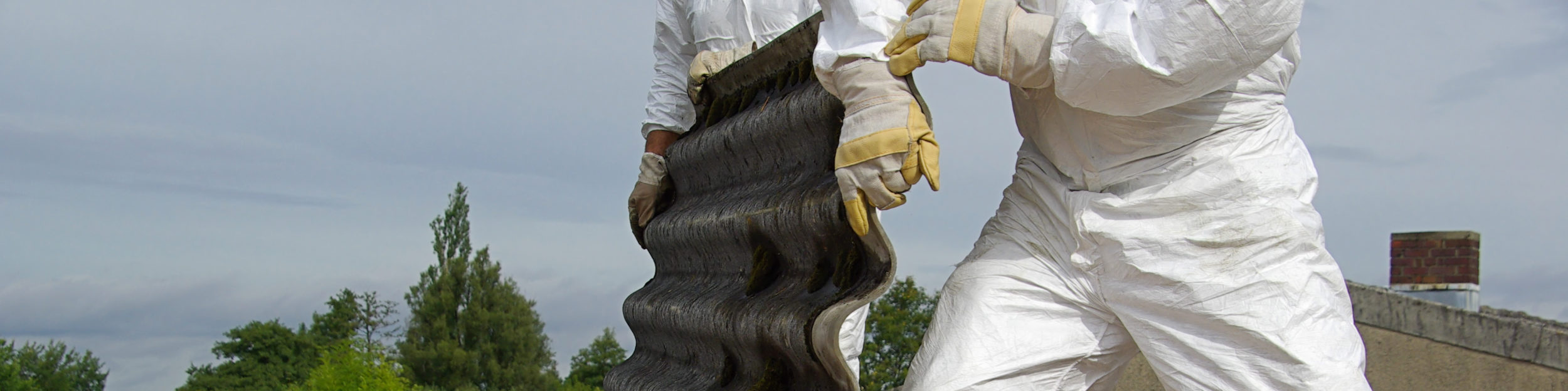
Quick answer: If you are buying a Melbourne or Victorian home built before 1990, you should assume it contains asbestos until a competent inspection proves otherwise. Roughly 1 in 3 Australian homes built before 1990 contains asbestos-containing material (ACM), and in inner and middle-ring Melbourne — Northcote, Coburg, Reservoir, Footscray, Sunshine, Box Hill, Glen Iris, Caulfield, Bentleigh, Oakleigh, Heidelberg, Pascoe Vale, Brunswick, Dandenong, Frankston — that proportion runs higher. The good news: most of it is non-friable, manageable, and removable for a known price by a WorkSafe Victoria licensed Class B contractor. The trap: buyers who skip the pre-purchase asbestos assessment routinely find out the hard way, mid-renovation, that they have under-budgeted by a five-figure sum.
This guide is written for first-home buyers, upgraders, investors, renovators, knock-down-rebuild buyers and developers eyeing pre-1990 Victorian housing stock in 2026. It walks you through where asbestos lives in older Melbourne homes, what it costs, what your legal obligations become the moment you sign, and how to put yourself in the strongest possible position before — not after — the contract goes unconditional.
TL;DR — The Pre-1990 Buyer’s Asbestos Checklist
| Step | What to do | When |
|---|---|---|
| 1 | Confirm the build year and any extension dates | Before making an offer |
| 2 | Read the Section 32 carefully for any asbestos disclosure or prior register | Before signing |
| 3 | Commission a building and pest inspection that explicitly covers asbestos | During cooling-off / pre-offer due diligence |
| 4 | Book a pre-purchase asbestos inspection if any ACM is suspected | Before going unconditional |
| 5 | Get a fixed-price Class B removal quote for any identified ACM | Before settlement, or build into purchase price |
| 6 | Keep all documentation — register, removal contracts, clearance certificate | Indefinitely; passes to the next buyer |
If you’re sitting at Step 1 or 2 right now, the rest of this article is for you.
Why Pre-1990 Is the Real Asbestos Watershed in Victoria
The legal cutoff for the Australian asbestos ban is 31 December 2003. Manufacture, importation, supply, sale, use and reuse of all forms of asbestos have been prohibited nationally since then. That means in 2026, any building work performed after the start of 2004 should, in theory, be asbestos-free.
But the practical watershed for buyers is earlier. Between 1945 and the late 1980s, asbestos cement was the dominant cheap, durable, fire-resistant cladding and roofing product in Australian residential construction. By the early 1990s, the major manufacturers were transitioning to cellulose-fibre cement, and asbestos use in new builds was already declining sharply. The post-1990 transition era still contains some legacy installations — fences put up in 1991, sheds clad in 1993 with old stock, eaves replaced in 1994 with leftover sheets — but the volume drops dramatically.
So the working rules of thumb a Melbourne buyer should carry into an inspection are:
- Built before 1990: assume asbestos is present somewhere in the property until proven otherwise.
- Built 1990 to 2003: lower probability, but still possible — particularly in fences, sheds, eaves and any older outbuildings retained on the site.
- Built 2004 onwards: generally clear, if the original construction documentation is available.
- Any mixed-era property: the inspection scope only needs to cover the pre-2004 portions, but partial-era buildings (a 1965 cottage with a 2010 extension, for example) are very common in Melbourne and need careful scoping.
The crucial buyer insight: a pre-1990 home is not a problem property. It is a known-profile property. Once you know what you’re buying, you can price the asbestos work into the offer and proceed with full information. The buyers who get burnt are the ones who didn’t ask.
The Decade Map: What Pre-1990 Melbourne Homes Typically Contain
Different eras of Melbourne housing throw up different asbestos patterns. The materials below are non-friable in good condition — which is the category a licensed Class B asbestos removalist is specifically authorised to handle.
1945–1960: Post-war boom homes
The post-war rebuilding period saw fibro cement and asbestos cement become standard across new suburbs developing through Reservoir, Pascoe Vale, Heidelberg, Oakleigh, Box Hill, Murrumbeena and the bayside corridor. Buyers should expect:
- External fibro cladding on weatherboard-style cottages and infill panels in brick veneer.
- Eaves and soffits in asbestos cement, often with decorative perforated panels.
- Bathroom and laundry wall sheeting behind tiles — almost universal.
- Backyard garages and sheds clad entirely in fibro and/or roofed in corrugated asbestos cement.
- Asbestos cement fences (Super Six and similar) — the dominant fencing material of the era.
1960–1980: The peak asbestos era
This is the highest-density period for asbestos-containing materials in Victorian residential construction. If the property dates from this window, treat asbestos presence as the default assumption. In addition to everything from the post-war era, expect:
- Vinyl floor tiles in kitchens, bathrooms, laundries and hallways — often with black bituminous adhesive containing asbestos beneath them.
- Textured (“popcorn”) ceilings in some lounges and bedrooms.
- Asbestos cement flues on slow-combustion heaters, kitchen wood stoves and gas hot water units.
- Switchboard backing panels (Zelemite, Ausbestos, Lebah, Miscolite) — almost universal in pre-1985 homes.
- Asbestos cement water pipes and stormwater pipes running underground.
- Asbestos cement ridge cappings and gutter flashings.
1980–1990: The transition decade
Asbestos use was declining but had not stopped. Newer homes from this era may have non-asbestos cement sheeting throughout the main house but still contain asbestos in:
- Fences (older stock used up by builders).
- Garages and outbuildings completed later than the main house.
- Wet-area sheeting behind tiles where leftover product was used.
- Eaves and soffit panels.
- Switchboards carried over from earlier installs.
The defining characteristic of this decade for buyers: you cannot tell by looking. A 1985 home in Glen Iris and a 1985 home in Reservoir can have completely different asbestos profiles depending on which builder used which supplier. The only reliable way to know is a NATA-accredited bulk sample tested under AS 5370:2024.
Where Asbestos Hides That Building & Pest Inspectors Sometimes Miss
A standard building and pest inspection is excellent at finding structural defects and termites. It is not always thorough on asbestos. Inspectors are typically not licensed asbestos assessors, and many reports include only a generic note such as “materials consistent with asbestos cement noted; recommend specialist assessment.” That is a hand-off, not a finding.
The locations Melbourne buyers most commonly underestimate:
- Behind kitchen and bathroom tiles — the substrate sheeting is often asbestos cement, hidden from view.
- Under existing carpet and laminate — vinyl tiles and their bitumen adhesive frequently remain in place under newer flooring.
- Inside roof cavities and subfloors — broken fragments from prior unlicensed work sometimes sit there for decades.
- In switchboards — the black backing panel behind the breakers in any pre-1985 board.
- In flue pipes — particularly slow-combustion heaters, gas hot water and original wood stoves.
- In garage and shed structures treated as “out of scope” by the building report.
- On fence lines shared with neighbours — easy to dismiss as boundary infrastructure but still your removal cost.
- Under the eaves on rear and side elevations — often missed in front-facing inspections.
- In the corners of laundries behind washing machines and dryers.
- In the soil where past unlicensed removals dumped fragments into garden beds or under paving.
The single most expensive surprise for pre-1990 home buyers is buried asbestos contamination from a past undocumented demolition or removal — fragments under paving, lawn or garden beds that surface only when the new owner starts digging for landscaping, a pool, or an extension. The detection of buried ACM almost always triggers a soil testing and remediation scope that runs well beyond a normal residential removal budget.
What a Pre-Purchase Asbestos Inspection Actually Involves
If the building report flags suspect material, or the property is clearly pre-1990 and you want to walk into the contract with full information, the next step is a pre-purchase asbestos inspection. In Victoria in 2026, a competent inspection involves the following.
Step 1 — Desktop review
The assessor reviews the property’s build year, any prior asbestos register or clearance documentation, the agent’s marketing material (which sometimes flags renovations), and any visible Section 32 disclosure regarding ACM. The renovation history matters: a 1968 home that was “renovated in 2018” may have had compliant asbestos removal done — or may not.
Step 2 — On-site visual inspection
A trained, licensed assessor walks the entire property — house, garage, shed, fences, eaves, roof, switchboard, wet areas, subfloor, roof cavity — and identifies every material that could contain asbestos based on age, appearance, location and known manufacturer patterns.
Step 3 — NATA-accredited bulk sampling
Where materials are not unambiguously identifiable on sight (which is most of the time), the assessor takes small bulk samples using wet sampling technique to minimise fibre release. Samples are sealed, labelled, chain-of-custody documented, and sent to a NATA-accredited laboratory for analysis under AS 5370:2024.
- Sample cost: typically $40 to $80 per sample.
- Turnaround: 2 to 5 working days standard.
- Output: a written report confirming presence, type (chrysotile, amosite, crocidolite or mixed), and concentration band.
Step 4 — Friable / non-friable classification
The lab confirms presence and type. The friable vs non-friable classification is a field call made on site by the licensed assessor, based on the physical condition of the material. This classification dictates the licence class of removalist required: Class B for non-friable, Class A for friable.
Step 5 — Asbestos register and removal scope
You receive two written documents:
- An Asbestos Register listing every ACM found, its location, condition, classification, and recommended action.
- A Removal Scope describing exactly what would need to come out (now or later) and on what timeline.
Step 6 — Fixed-price removal quote
A reputable contractor will quote the removal scope on a fixed-price basis — survey, ARCP, SWMS, WorkSafe Victoria notification, removal, decontamination, EPA-tracked transport, EPA-licensed landfill disposal, and independent clearance certificate.
That quote is the number you can use at the negotiation table.
How to Use the Asbestos Inspection at the Negotiation Table
Here is where pre-1990 buyers who have done their homework win.
Once you have a written asbestos register and a fixed-price removal quote in hand, three negotiation pathways open up:
- Price adjustment. The simplest play. The vendor reduces the purchase price by the cost of the identified removal work (or a portion of it, depending on the market). You complete the purchase, then arrange the removal post-settlement at your own pace.
- Vendor-completed removal pre-settlement. The vendor engages a licensed Class B contractor to complete the identified removal before settlement, with the clearance certificate under Regulation 297 of the OHS Regulations 2017 forming a condition of settlement. This is common where finance approvals are sensitive to disclosed defects.
- Renegotiation under a special condition. A contract is signed subject to satisfactory asbestos assessment, with a defined remediation cost cap or a walk-away right above a threshold. This is the strongest buyer position but requires explicit drafting by your conveyancer.
What pre-1990 buyers should not do is sign first and discover the asbestos scope later. By that point the negotiation leverage is gone, and any remediation cost falls entirely on the new owner.
What Pre-1990 Asbestos Removal Actually Costs in Melbourne
Costs vary with material, quantity, access and disposal route, but the broad ranges in 2026 Melbourne for non-friable Class B residential work are predictable.
| Removal scope | Typical fixed-price range (2026) |
|---|---|
| Asbestos cement fence — standard suburban backyard, ~30–60 linear metres | $2,500 – $6,500 |
| Asbestos cement eaves and soffits — full perimeter of a single-storey home | $3,500 – $9,000 |
| Asbestos cement garage — single or double, walls and roof | $4,000 – $12,000 |
| Asbestos cement roof — corrugated, ~150–250m² residential | $9,000 – $25,000 |
| Bathroom strip-out — wet-area sheeting behind tiles | $2,500 – $6,000 |
| Vinyl floor tile removal — kitchen, hallway, laundry, with bitumen substrate | $3,500 – $9,500 |
| Switchboard backing panel (Zelemite/Ausbestos) replacement | $1,200 – $2,800 (often combined with electrical works) |
| Combined pre-1990 home scope — fence, eaves, garage, switchboard | $12,000 – $30,000 typical bundled price |
| Full pre-demolition strip — knock-down-rebuild scenarios | $18,000 – $60,000+ depending on scale |
These ranges include the items most DIY-style operators leave out: independent clearance certificate, EPA-licensed landfill disposal, EPA Waste Tracker manifests, full documentation pack, and public liability cover. Quotes substantially below these ranges typically indicate the contractor is skipping one or more of those compliance elements — and on a pre-1990 property you intend to own for years, the missing paperwork is the most expensive omission.
The 10m² Trap: Why DIY Is Almost Never the Answer for New Owners of Pre-1990 Homes
Victorian law allows a homeowner to remove non-friable asbestos themselves only if the total area is less than 10m² and the total work takes less than one hour over any seven-day period. The exemption also applies only to owner-occupied residential property — not rentals, not workplaces, not pre-settlement.
This sounds generous. In practice, it almost never covers a real pre-1990 Melbourne property.
- A standard backyard asbestos fence is typically 30 to 60m² of sheeting once both sides and any returns are counted.
- The eaves on a single-storey 1970s home run 15 to 30m² of perimeter sheeting.
- A single garage clad in fibro is 40m² and up of sheeting on the walls and roof combined.
- A bathroom wet-area strip runs 8 to 15m² behind the tiles alone.
- The vinyl tile area of a kitchen, hallway and laundry combined is regularly 20 to 40m².
Once you measure the asbestos on a typical pre-1990 Melbourne property properly, almost every “DIY” job is a licensed Class B job in disguise. And the moment a property is owned by an investor and rented — even short-term — the OHS Regulations apply because the property becomes a workplace for tradespeople, property managers and inspectors.
The financial and legal consequences of DIY-gone-wrong include WorkSafe prohibition notices, EPA infringements exceeding $50,000 for illegal dumping, voided home insurance, and on resale a price renegotiation that wipes out years of capital gains. Our full breakdown is in our DIY vs professional asbestos removal guide.
What Happens the Moment You Sign: Your Legal Obligations as the New Owner
The day you settle on a pre-1990 home in Victoria, a set of legal obligations under the Occupational Health and Safety Regulations 2017 (Vic) and the Environment Protection Regulations 2021 (Vic) transfers to you in your capacity as the person with management or control of the property.
The full framework is covered in our asbestos regulations and legal requirements guide, but the headline obligations for a pre-1990 home owner are:
- Identify asbestos before any work that could disturb it. On a pre-2004 building this means an inspection by a competent person.
- Maintain a written register for any pre-2004 property used as a workplace — including rental properties, holiday lets, home offices receiving clients, and home-based businesses.
- Never disturb friable asbestos under any circumstances without a Class A licensed contractor.
- Engage a licensed Class B (or Class A) removalist for any removal work exceeding 10m² of non-friable, or any friable material, or any work taking more than one hour over any seven-day period.
- Notify WorkSafe Victoria at least five clear days before any licensed asbestos removal commences — your contractor handles this.
- Obtain a clearance certificate under Regulation 297 from an independent competent person before re-occupying any area where licensed asbestos removal has occurred.
- Use EPA-tracked disposal through a licensed transporter to an EPA-licensed landfill authorised to receive asbestos waste.
- Retain the documentation pack — register, ARCP, SWMS, WorkSafe notification, transport manifests, disposal receipts, clearance certificate — indefinitely. It passes with the property to the next buyer.
This sounds onerous on the page. In practice, a competent Class B contractor delivers the entire compliance backbone as part of a single fixed-price engagement. The owner’s role is to engage the right contractor, sign the scope, and keep the paperwork.
The Smart Renovation Sequence for Pre-1990 Buyers
Most people who buy a pre-1990 Melbourne home intend to renovate it — sometimes immediately, sometimes after a few years of living in. The smart renovation sequence orders the work so the asbestos is handled cleanly, once, and at the front of the project.
The sequence we see working consistently across Melbourne residential projects:
- Pre-purchase inspection — asbestos register and removal scope produced before contract.
- Settlement — purchase completes; asbestos register stored with property documents.
- Renovation design — architect and builder work from the asbestos register so the design accommodates known ACM locations.
- Pre-renovation removal — all asbestos that will be disturbed by the planned works is removed by a licensed Class B contractor, clearance certificate issued, before any other trades enter the site.
- Renovation proper — builder, plumber, electrician, tiler, etc., work in a documented asbestos-free zone.
- Documentation update — clearance certificate added to the property file; remaining ACM (if any) flagged for future works.
This sequence avoids the single most common cause of Melbourne renovation blowouts: a builder cutting into an unidentified ACM on day three of the job, triggering a stop-work order, a contamination assessment, an unplanned licensed removal, and a resequencing of every trade behind it. The full pre-renovation pathway is detailed in our pre-renovation asbestos inspection guide.
Insurance, Resale and the Documentation Pack
This is the long-tail issue that almost nobody talks about at inspection time, and it is where the difference between licensed and unlicensed asbestos work shows up most painfully years later.
Home insurance
Standard Australian home and contents and home building insurance policies overwhelmingly exclude losses arising from unlicensed asbestos work. If a future fibre release event is traced back to undocumented removal — by a previous owner, by a previous tradesperson, or by you — the insurer is highly likely to deny the claim. The financial exposure on a contamination event is uncapped.
Section 32 and resale
Victorian vendor disclosure under Section 32 of the Sale of Land Act does not currently require a positive asbestos declaration. However, purchaser building and pest inspectors routinely look for asbestos on pre-2004 homes — particularly anything pre-1990 — and any evidence of past unlicensed work shows up. Common red flags include broken fragments in roof cavities, fresh patching in known ACM locations without a clearance certificate, mismatched eave panels, or partial fence removals without disposal documentation.
When those flags surface, the typical outcomes are:
- The sale re-prices downwards by a five-figure sum.
- The sale falls over entirely and the property goes back on the market with a stigma.
- The sale proceeds subject to a vendor-funded remediation condition before settlement.
A clearance certificate under Regulation 297 — which only follows from a properly inspected and licensed removal — is the document that closes those questions before they’re asked. Pre-1990 buyers who invest in proper documentation during their ownership are protecting the resale value of the property as much as their own health.
The documentation pack
The documentation pack that should accompany any licensed asbestos removal in Victoria includes:
- Licence copy of the removal contractor (Class B and/or Class A as applicable).
- Asbestos Register and Removal Scope.
- Asbestos Removal Control Plan (ARCP) and Safe Work Method Statement (SWMS).
- WorkSafe Victoria notification confirmation.
- EPA Waste Tracker manifests for every load disposed of.
- Disposal receipts from an EPA-licensed landfill.
- Independent clearance certificate under Regulation 297.
That pack is the single most valuable piece of paperwork attached to a pre-1990 property. Keep it. Pass it to the next buyer. It is worth tens of thousands of dollars at resale.
Pre-1990 Melbourne by Suburb: What to Expect
The following is not legal advice, but a high-level pattern recognition based on what we see across Melbourne and Victoria. Build year matters more than suburb, but the dominant build periods of each area give buyers a useful starting expectation.
Inner-north and inner-west
Northcote, Brunswick, Coburg, Pascoe Vale, Reservoir, Footscray, Yarraville, Sunshine, Maidstone, Maribyrnong. Heavy concentration of 1920s–1980s housing stock. Expect asbestos cement fences as almost universal, eaves and soffits on most pre-1985 builds, fibro garages, wet-area sheeting behind tiles, and switchboard backing panels in pre-1985 homes.
Inner and middle-east
Box Hill, Glen Iris, Camberwell, Surrey Hills, Burwood, Doncaster, Mont Albert, Balwyn, Heidelberg, Ivanhoe. Mix of interwar and post-war stock with substantial 1960s–1980s extensions. Asbestos commonly appears in fences, eaves, garages, bathroom sheeting and ceiling textured coatings.
Bayside and south-east
Caulfield, Bentleigh, Oakleigh, Murrumbeena, Carnegie, Hampton, Sandringham, Mentone, Cheltenham, Mordialloc, Aspendale, Frankston. Strong post-war and 1960s–1980s housing presence. Asbestos cement fences, eaves, corrugated roofing on garages and sheds, wet-area sheeting and vinyl floor tiles are the dominant findings.
Outer east and south-east
Ringwood, Croydon, Bayswater, Knox, Rowville, Dandenong, Endeavour Hills, Berwick. Significant 1970s–1980s growth corridor stock. Expect fences, eaves and garage materials as the dominant pre-1990 asbestos categories.
Outer west and north-west
Werribee, Hoppers Crossing, Altona, Laverton, Caroline Springs (older sections), Sydenham, Broadmeadows, Roxburgh Park. Mixed eras, with older industrial-edge residential pockets containing significant pre-1990 stock. Asbestos cement roofing on older sheds and outbuildings is more common here than further in.
Regional Victoria
Geelong, Ballarat, Bendigo, Shepparton, Warrnambool, the Mornington Peninsula, the Yarra Valley, the Latrobe Valley. Older country housing stock is heavy in asbestos cement, and rural properties almost universally have asbestos cement on shearing sheds, dairies, packing sheds, pump houses, water tanks and stock troughs into the early 1990s. Pre-1990 regional properties almost always have a meaningful ACM scope.
The point is not that any of these suburbs are “asbestos suburbs.” The point is that pre-1990 build year + Melbourne or Victorian location = a working assumption that asbestos is present until inspection proves otherwise.
How Asbestos Gone and Clean Helps Pre-1990 Buyers in Melbourne and Victoria
We are a WorkSafe Victoria licensed Class B (non-friable) asbestos removalist and demolition contractor based in Melbourne, servicing all of Greater Melbourne and regional Victoria.
For pre-1990 home buyers specifically, we offer:
- Pre-purchase asbestos inspections within 24 to 72 hours across Greater Melbourne, with NATA-accredited bulk sampling under AS 5370:2024.
- Written asbestos register and removal scope — the document set you take to the negotiation table.
- Fixed-price removal quotes — survey, ARCP, SWMS, WorkSafe Victoria notification, removal, decontamination, EPA-tracked transport, EPA-licensed landfill disposal, and independent clearance certificate, all in one number.
- Coordination with conveyancers and building inspectors where the removal is conditional on settlement.
- Integrated soft strip and demolition where the property is destined for a knock-down-rebuild — single contractor, single program, no sequencing surprises.
- Complete documentation pack on completion — the asset every future buyer, insurer and council will eventually want to see.
Our quoting is intentionally transparent so you can put a real number on the asbestos scope before you sign the contract, not after.
Frequently Asked Questions
Should I avoid buying a pre-1990 home in Melbourne because of asbestos?
No. Pre-1990 homes are not a problem to be avoided — they are a known-profile property type that needs to be priced and managed correctly. The vast majority of inner and middle-ring Melbourne housing stock is pre-1990, and the same is true across regional Victoria. The buyers who do best are the ones who go in with full information and budget the removal scope into their offer.
Do I have to remove asbestos from a pre-1990 home I’ve bought?
Not necessarily. Non-friable asbestos in good condition, not being disturbed, can legally be left in place (“managed in place”) with a written register. Removal is required when the material is friable, damaged, deteriorating, or when planned works will disturb it. That said, the national policy direction under the Asbestos National Strategic Plan 2024–2030 is increasingly towards proactive removal of ageing asbestos rather than indefinite management in place.
Is asbestos disclosure required on a Victorian Section 32?
Section 32 of the Sale of Land Act 1962 (Vic) does not currently require a positive asbestos declaration. However, vendors must disclose any notices, orders or works affecting the property — which can include outstanding WorkSafe or EPA notices relating to past asbestos work. Buyers should also note that absence of disclosure is not absence of asbestos: it just means the vendor hasn’t been required to volunteer the information.
How much does a pre-purchase asbestos inspection cost in Melbourne?
For a standard residential property, expect $400 to $900 inclusive of 3 to 8 NATA-accredited samples. Larger residential or pre-demolition surveys run $700 to $1,800. On a multi-hundred-thousand-dollar purchase, this is among the lowest-cost, highest-yield pieces of due diligence you can buy.
How long does the inspection take?
The on-site inspection itself typically runs one to three hours for a residential property. Lab sample turnaround is 2 to 5 working days. The full inspection-to-written-report cycle is generally complete inside one week — which fits comfortably inside a standard cooling-off period or unconditional-finance window if commissioned early.
My building and pest inspector said the house “probably” has asbestos. Is that enough?
No. “Probably” is a flag, not a finding. A standard building and pest report is not a substitute for an asbestos register prepared by a licensed assessor. The correct response to a “probably” note in a building report is to commission a dedicated asbestos inspection before the contract goes unconditional.
Can I use the asbestos inspection to negotiate the price down?
Yes — and you should, where the scope warrants it. A written asbestos register paired with a fixed-price removal quote from a licensed contractor is a strong evidence base for a price adjustment, vendor-completed pre-settlement removal, or a special condition in the contract. Your conveyancer can draft the appropriate clauses.
What’s the difference between Class A and Class B asbestos removal, and which one do I need?
Class A removalists are licensed to handle friable asbestos (the type that can be crumbled by hand pressure when dry) and all non-friable asbestos. Class B removalists handle non-friable asbestos only — bonded cement materials like fibro sheeting, roofing, fences, eaves and floor tiles. For the overwhelming majority of pre-1990 Melbourne residential properties, Class B covers the scope. Class A is only needed if friable material (pipe lagging, sprayed insulation, fire-damaged ACM) is present. Our full explainer is in our friable vs non-friable asbestos guide.
Can I remove the asbestos myself to save money after I move in?
Legally, only if the total area is under 10m² and the work takes under one hour over any seven-day period, on owner-occupied residential property. As covered above, on a real pre-1990 Melbourne home the asbestos almost always exceeds those thresholds in combination. The DIY route also produces no clearance certificate, no compliance documentation, voids home insurance for the work, and creates a resale problem in 5 to 10 years. The full cost-comparison breakdown is in our DIY vs professional removal guide.
What about a pre-1990 home with a 2010s extension — do I need to inspect the whole thing?
The inspection only needs to cover the pre-2004 portions of the building, plus any shared structures (roofs, eaves, services) that span both eras. This is a very common Melbourne scenario — a 1965 cottage with a 2015 rear extension, for example — and a competent assessor scopes the inspection accordingly.
What if a previous owner removed asbestos without documentation?
This is one of the most expensive scenarios for a new owner. If a past removal was undocumented and there is no clearance certificate, the building may be carrying residual contamination (broken fragments in roof cavities, subfloors, garden beds) that surfaces during future works. A soil and surface contamination assessment is the only way to determine the actual position, and remediation — if needed — can run significantly higher than a clean removal. This is why the documentation pack matters so much: it answers, in advance, the question every future buyer will eventually ask.
Will home insurance cover asbestos issues on a pre-1990 home?
Standard home insurance generally covers structural damage and contents loss under normal perils. It does not generally cover losses arising from unlicensed asbestos work, undocumented historical removal, or contamination events traced back to non-compliant works. Insurers underwrite on the assumption that any asbestos works on the property were performed by a licensed contractor with a clearance certificate. Maintaining that documentation pack is what keeps the underwriting assumption true.
Is this only relevant to Melbourne, or does it apply to regional Victoria too?
It applies right across Victoria. The Occupational Health and Safety Regulations 2017 (Vic) and the Environment Protection Regulations 2021 (Vic) are state-wide instruments. We service Greater Melbourne and travel throughout regional Victoria — Geelong, Ballarat, Bendigo, Shepparton, Warrnambool, the Mornington Peninsula, the Yarra Valley, the Latrobe Valley and beyond — for residential, commercial, industrial and demolition projects.
The Bottom Line for Pre-1990 Buyers in 2026
A pre-1990 Melbourne or Victorian home is not a property to walk away from. It is a property to walk into with information. The combination of build era, dominant materials of the time, and well-defined Victorian regulatory framework means the asbestos question on a pre-1990 home is one of the most answerable questions in the entire due diligence process — if you ask it before the contract goes unconditional.
The buyers who do best on pre-1990 stock in 2026 share a small set of habits:
- They confirm the build year and any extension dates before making an offer.
- They commission a pre-purchase asbestos inspection the moment a building report flags anything suspect — or proactively on any pre-1990 property they’re seriously considering.
- They use the resulting asbestos register and fixed-price removal quote at the negotiation table.
- They sequence any required licensed Class B removal at the front of the renovation program, not in the middle.
- They retain the full documentation pack indefinitely as a property asset.
Skipping any one of those steps is the single most common pathway from a manageable older home to a five- or six-figure problem. Following them turns a pre-1990 property into one of the most predictable purchases you’ll make.
Get a Pre-Purchase Asbestos Inspection or Fixed-Price Removal Quote in Melbourne or Victoria
If you are inspecting, buying, or planning to renovate a pre-1990 property anywhere in Melbourne or Victoria, Asbestos Gone and Clean can provide:
- A free, fast pre-purchase site inspection — typically within 24 to 72 hours across Greater Melbourne, with priority response inside cooling-off periods.
- NATA-accredited bulk sampling under AS 5370:2024 where required.
- A written asbestos register and removal scope you can take to the negotiation table, the building report, your conveyancer and your insurer.
- A fixed-price written quote for any required Class B (non-friable) removal — including ARCP, SWMS, WorkSafe Victoria notification, removal, decontamination, EPA-tracked transport, EPA-licensed landfill disposal, and independent clearance certificate.
- Integrated soft strip and demolition for knock-down-rebuild buyers.
- A complete documentation pack on completion for your records, your insurer, and any future buyer due diligence.
☎ Call us: 0475 143 106
✉ Email: asbestosgoneandclean@gmail.com
???? Contact Us: Asbestos Gone and Clean – Contact
We service all Melbourne metropolitan suburbs — the inner-north, inner-east, inner-west, bayside, south-east and outer-growth corridors — and travel throughout regional Victoria for residential, commercial, industrial and demolition projects across Geelong, Ballarat, Bendigo, Shepparton, Warrnambool, the Mornington Peninsula, the Yarra Valley, the Latrobe Valley and beyond.
Related Reading
- Do I Need an Asbestos Inspection Before Renovating? (2026 Melbourne & Victoria Guide) — the pre-renovation pathway in detail, including inspection scope, costs, timelines and what happens when owners skip it.
- DIY vs Professional Asbestos Removal: Risks, Laws & Costs (2026 Melbourne & Victoria Guide) — the honest, no-spin breakdown of the 10m² rule and the real cost of doing it yourself.
- Friable vs Non-Friable Asbestos: What’s the Difference? — the classification that drives every other decision in an asbestos project.
- Asbestos Regulations and Legal Requirements in Australia: The 2026 Compliance Guide for Melbourne & Victoria — the full regulatory framework, licensing, registers and penalties.
- How to Choose a Licensed Asbestos Removalist in Australia — the 12-question test that filters out the cheap-and-nasty operators.
- Asbestos Removal During Demolition: What You Need to Know (2026 Melbourne & Victoria Guide) — for buyers planning a knock-down-rebuild on a pre-1990 site.
- Health Risks of Asbestos Exposure (Melbourne & Victoria) — the medical and biological context behind the regulatory caution.
- How Long Does Asbestos Removal Take? (Melbourne Timeline Guide) — for buyers planning settlement-to-renovation programs.
- What Happens to Asbestos After Removal? (Melbourne Disposal Pathway) — EPA-tracked disposal explained for the documentation-conscious buyer.
This article is general information for pre-1990 property buyers in Melbourne and Victoria and is not legal advice. Always engage a WorkSafe Victoria licensed Class B or Class A asbestos removalist and your own conveyancer or solicitor for advice specific to your property and circumstances.