
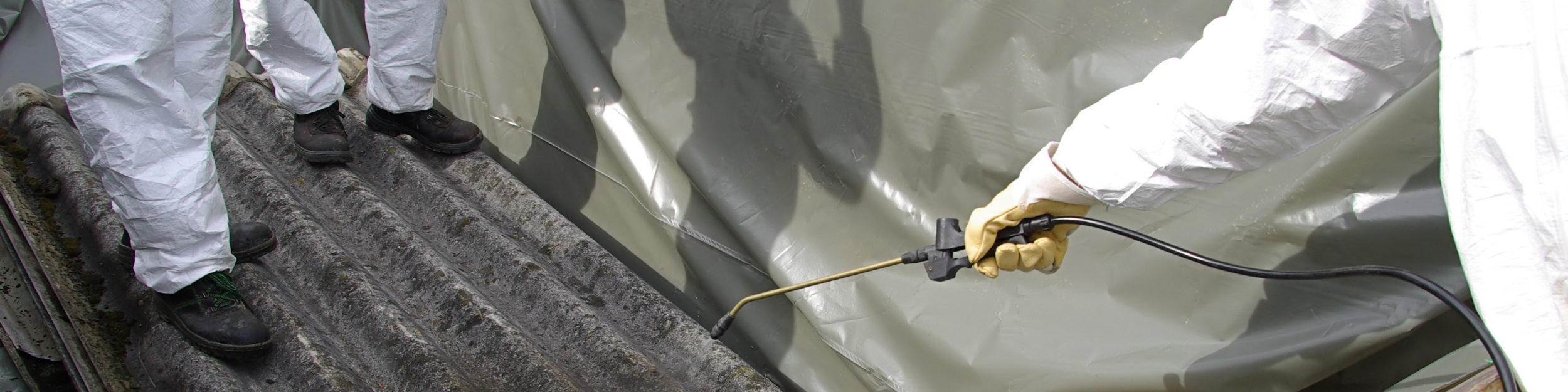
Quick answer: Asbestos pipe lagging — the fibrous thermal insulation wrapped around hot water, steam and process pipes in pre-1985 Australian buildings — is almost always friable. It crumbles to dust under hand pressure, releases respirable fibres into the air with the lightest disturbance, and is classified as Class A asbestos under Victorian law. It cannot be removed by a homeowner, a plumber, a builder, an electrician, an HVAC technician, or any contractor who does not hold a Class A asbestos removal licence issued by WorkSafe Victoria. Even a Class B (non-friable) contractor is not licensed to remove the lagging itself — although a Class B contractor is often the right first call to identify it, project-manage the job, and coordinate the Class A scope alongside any surrounding non-friable removal and demolition. The removal process itself is built around full enclosure, negative-pressure HEPA filtration, three-stage decontamination, wet methods, P3 / air-fed respiratory protection, NATA-accredited air monitoring and an analytical clearance certificate under Regulation 297 of the OHS Regulations 2017.
If you have suspect lagging on a hot water pipe, steam pipe, boiler, calorifier, or industrial process line anywhere in Melbourne or Victoria — in a plant room, a roof cavity, a sub-floor, a basement, a heritage building, an old factory, a school, a hospital, an apartment building or a converted warehouse — stop. Do not touch it. Do not vacuum or sweep anywhere near it. Close the door and call a licensed removalist. This guide explains why, and what happens next.
This article is written for property owners, facility managers, builders, developers, plumbers, electricians, HVAC contractors, school and hospital estates teams, body corporates and demolition clients across Greater Melbourne and regional Victoria in 2026.
TL;DR — The Pipe Lagging Reality in One Table
| Question | Answer |
|---|---|
| Is asbestos pipe lagging friable? | Yes — in essentially all field conditions. |
| Which licence class is needed to remove it? | Class A — Class B is not sufficient for the lagging itself. |
| Can a homeowner remove it under the 10m² DIY exemption? | No. No DIY exemption applies to friable asbestos. Ever. |
| Can a plumber, HVAC technician or builder remove it? | No — not unless they personally hold a Class A licence. |
| Is it more dangerous than fibro sheeting? | Yes — meaningfully more dangerous per minute of exposure. |
| Does it require WorkSafe Victoria notification? | Yes — minimum 5 working days before work begins. |
| Does it require air monitoring? | Yes — before, during and after removal. |
| Does it require an enclosure and negative air? | Yes — full sealed enclosure with HEPA-filtered negative pressure. |
| Does it require an analytical clearance certificate? | Yes — visual clearance alone is not sufficient. |
| Is the disposal pathway different from fibro? | Same EPA pathway. More secondary waste. Same landfill. |
| Roughly how much more does it cost than non-friable removal? | Typically 2 to 4 times the equivalent fibro scope. |
| Who should I call first? | A licensed removalist — ideally one who can project-manage both Class A and Class B scopes. |
What Asbestos Pipe Lagging Actually Is
“Pipe lagging” is the trade term for the thermal insulation wrapped around pipes carrying hot water, steam or process fluids — and around the boilers, calorifiers, valves, flanges and elbows in the same system. The purpose of lagging is to reduce heat loss, protect the surrounding building and improve the efficiency of the heating system. Until the mid-1980s in Australia, the dominant lagging materials contained asbestos.
There are several distinct types that turn up across Melbourne and Victoria, and they look quite different from each other.
Calcium silicate insulation (the “white block” type)
Pre-formed half-round insulation blocks, typically white, off-white or grey, fitted around pipes and then wrapped in canvas, hessian, foil or a painted hard-set finish. Calcium silicate–based asbestos insulation was the workhorse of mid-twentieth-century plant rooms — common on steam mains, condensate returns, hot water flow and return pipes in commercial heating systems, hospital boiler rooms, industrial process plant and pre-1985 institutional buildings.
When intact and painted, it can look almost benign. When cracked, water-damaged or impact-damaged — which by 2026 is nearly all of it — the white powdery core is exposed, and the material is unambiguously friable.
Magnesia (85% magnesia) insulation
A close cousin of calcium silicate, identifiable in many cases only by laboratory analysis. Magnesia insulation was particularly common on higher-temperature steam lines in industrial and institutional buildings. The same physical behaviour applies: a soft, friable core inside a canvas or painted outer skin.
Asbestos rope, woven lagging and tape
Spiral-wrapped asbestos rope, woven asbestos lagging cloth, and self-adhesive asbestos tape used to insulate flanges, valves, elbows, junctions and complex fittings where pre-formed sections could not be fitted. Often combined with calcium silicate or magnesia on the straight runs.
Rope and woven lagging are textile-based asbestos products. They are friable by their very construction — the fibres are not bonded into a matrix at all; they are simply woven.
Asbestos millboard, gaskets and packing
Flat or semi-rigid asbestos board used as insulation behind boiler doors, around flue collars, between hot equipment and adjacent structures, and as gasket material on flanges, manhole covers and inspection plates. Often left in place when a boiler is decommissioned, then forgotten until a plumber or demolition contractor opens the cabinet decades later.
Hard-set “plaster” finishes over lagging
In many Melbourne plant rooms, the original calcium silicate sections were over-coated with a hard-set plaster-like finish — sometimes containing additional chrysotile as a binder — which gives the pipe a smooth white outer surface. This finish is itself often asbestos-containing, even when the underlying section is not. Removal of the outer coat alone has historically caused contamination events that owners thought were “just plaster.”
Sprayed insulation on pipework
Less common than block-and-canvas, but present in some 1960s–1970s industrial installations: sprayed asbestos insulation directly onto pipework, ducting or vessel walls. This is the same family of material as the sprayed limpet insulation used on structural steel — and it is one of the highest-fibre-release materials in the entire asbestos inventory.
Why all of this is “friable” under Victorian law
Under the WorkSafe Victoria Compliance Code: Removing Asbestos in Workplaces, asbestos is friable if it can be crumbled, pulverised or reduced to powder by hand pressure when dry — or if it is already in powdered form. Calcium silicate, magnesia, rope, woven lagging, millboard and sprayed insulation all meet that test in real-world Australian buildings in 2026, because:
- The cement-like matrix in calcium silicate and magnesia is soft and porous, not bound like fibro cement. It crumbles under finger pressure even when undamaged.
- Decades of heat cycling, water leaks, vibration, mechanical impact and trades-people brushing past have degraded the canvas, foil or plaster outer skin on virtually every installation that hasn’t been encapsulated or removed.
- Rope, woven and textile asbestos have no matrix at all — the fibres are exposed by design.
For a deeper explanation of how the friable / non-friable classification works in Victoria — and why it determines the licence class, the removal method, and the price — see our companion guide on Friable vs Non-Friable Asbestos.
Where Pipe Lagging Turns Up in Melbourne and Victoria
A lot of property owners assume pipe lagging is a “factory problem.” It isn’t. Across Greater Melbourne and regional Victoria in 2026, lagged asbestos pipework is regularly encountered in:
Commercial and industrial buildings
- Boiler rooms and plant rooms in pre-1985 commercial buildings, particularly across the CBD and inner-city heritage stock.
- Factories and warehouses across the western and northern industrial belt — Sunshine, Tottenham, Brooklyn, Footscray, Coburg, Preston, Campbellfield, Broadmeadows, Dandenong South, Braeside and Moorabbin.
- Cool stores, dairies, breweries, foundries and processing plants with insulated steam, chilled water or process lines.
- Pre-1990 commercial conversions in inner Melbourne — Collingwood, Fitzroy, Brunswick, Richmond, Cremorne and South Melbourne — where original factory or warehouse plant rooms still contain lagged pipework even after a residential or studio fit-out.
Institutional and public buildings
- Older public schools in Victoria — Department of Education buildings constructed before 1985 frequently have asbestos lagging on heating system pipework in plant rooms, riser shafts and ceiling spaces.
- Pre-1985 hospitals and health facilities with central heating, steam sterilisation or hot water systems.
- Universities and TAFEs with older heating plant.
- Council buildings, town halls, libraries, community centres, churches and church halls of comparable era.
Residential — apartments and older homes
- Pre-1985 apartment buildings with central hot water systems — many older walk-up blocks across St Kilda, Elwood, Caulfield, Toorak, South Yarra, Carlton, North Melbourne, Footscray and Williamstown still have lagged service risers.
- Hot water heaters and storage cylinders in some pre-1985 detached homes, where the original installation included lagged copper or steel pipework in roof cavities, sub-floors or external cupboards.
- Hydronic heating systems in mid-twentieth-century homes — particularly in the inner east and bayside — where the boiler and pipework were originally lagged with asbestos sections.
- Old slow-combustion stoves, kitchen ranges and laundry coppers with flue lagging or millboard heat shields.
Regional and rural Victoria
- Older town halls, schools, churches, hospitals and community buildings across Geelong, Ballarat, Bendigo, Shepparton, Wangaratta, Warrnambool, the Latrobe Valley, the Mornington Peninsula and the Yarra Valley.
- Industrial heritage sites — including former power stations, paper mills, gas works, abattoirs, woollen mills and rail workshops — many of which still contain extensive lagged pipework even after partial demolition.
- Large rural dairies and food-processing facilities with original steam or hot water plant.
The trap nobody plans for
The most common situation we encounter on Melbourne sites is hidden lagging exposed mid-project. A wall comes off, a ceiling is opened, a riser shaft is accessed, a boiler cabinet is dismantled — and what was supposed to be a straightforward fibro strip-out (Class B) suddenly contains a length of lagged pipe that wasn’t on any register. At that point the Class B scope must stop until the lagging is handled by a Class A team. We cover this scenario in detail in our guide on Asbestos Removal During Demolition.
Why Pipe Lagging Is More Dangerous Than Most Other Asbestos
Asbestos disease has the same scientific basis regardless of the source material — there is no safe level of exposure to any form of asbestos, and all asbestos minerals are classified as Group 1 human carcinogens by the International Agency for Research on Cancer (IARC). That core science is covered in detail in our deep-dive on the Health Risks of Asbestos Exposure.
What sets pipe lagging apart is not the fibre. It is the fibre release rate per unit of disturbance.
Fibre release per gram of material
Sound asbestos cement sheet — properly handled, with wet methods, hand tools and intact removal — releases very few airborne fibres. The cement matrix holds them in place. The licensed Class B method is designed around that fact: keep the matrix intact, keep the material wet, lift it off whole, wrap it, dispose of it.
Pipe lagging behaves the opposite way. Touching it releases fibres. Brushing past it releases fibres. Vibration from foot traffic on a floor above releases fibres. A door slamming in the plant room releases fibres. By the time a plumber has spent five minutes leaning over a corroded steam line to read a valve number, they may have already inhaled a fibre dose that no amount of subsequent PPE will undo.
NATA-accredited air monitoring on real Melbourne sites routinely measures airborne fibre counts an order of magnitude higher around uncontrolled friable lagging than around uncontrolled non-friable cement sheet — even with no active work taking place.
The “third wave” risk profile
Australia is now in what the Asbestos and Silica Safety and Eradication Agency (ASSEA) and public-health researchers describe as the “third wave” of the asbestos epidemic: people exposed not in mining or manufacturing (the first wave), nor in primary trades like construction, plumbing, electrical and shipbuilding (the second wave), but in renovation, maintenance and incidental disturbance of legacy asbestos in pre-2004 buildings.
Pipe lagging is one of the single largest third-wave exposure pathways, because:
- The materials sit in places that get routinely disturbed by maintenance work — plant rooms, riser shafts, ceiling cavities, sub-floors.
- The disturbance is often performed by trades who are not asbestos specialists — plumbers chasing a leak, electricians running a new circuit, HVAC technicians replacing a chiller, demolition labourers stripping a fit-out.
- The trade in question is often not aware that lagging is present, because no register was made or the register is incomplete.
- The exposure is often brief, repeated and undocumented — exactly the dose pattern most associated with mesothelioma decades later.
The latency period for mesothelioma is typically 20 to 50 years from first exposure. A plumber who unwittingly disturbed pipe lagging in a Melbourne plant room in 2026 may not present with disease until 2046 to 2076. Approximately 4,000 Australians die every year from asbestos-related diseases as at 2026 — more than the national road toll — and a meaningful share of those deaths trace back to incidental occupational exposures of exactly this kind.
The bystander problem
Friable pipe lagging is not just a hazard for the person disturbing it. Negative-pressure HVAC, stair effect in riser shafts, and ordinary building ventilation will move released fibres around a building in minutes. A contaminated plant room in a basement can deposit measurable fibre concentrations on the top floor of an office building before the end of a working day. This is why the regulatory response to lagging is built around enclosure and negative pressure, not just respiratory protection — the goal is to keep fibres from leaving the immediate work zone in the first place.
The Legal Framework — Why Pipe Lagging Is a Class A Job
Pipe lagging removal in Victoria sits inside a tightly defined legal framework. Every element of it exists because the historical record is full of fatal exposure events caused by ignoring one or more of these rules.
The Occupational Health and Safety Regulations 2017 (Vic), Part 4.4
Part 4.4 of the OHS Regulations 2017 is the operational rulebook for asbestos work in Victoria. The provisions most directly relevant to pipe lagging include:
- Regulation 273 — only the holders of a Class A asbestos removal licence issued by WorkSafe Victoria may remove friable asbestos. Class B licence holders may not. Owner-occupiers may not. There is no DIY exemption for friable asbestos, regardless of quantity, occupier status or material type.
- Regulations 281–284 — minimum competency, training and medical fitness requirements for workers handling friable asbestos, including completion of CPCCDE3015 — Remove friable asbestos (in addition to the non-friable unit CPCCDE3014 required for Class B).
- Regulation 290 — mandatory air monitoring for friable asbestos removal, conducted by an independent licensed asbestos assessor at NATA-accredited sample analysis.
- Regulation 295 — at least five working days’ written notification to WorkSafe Victoria before friable asbestos removal commences.
- Regulation 297 — independent clearance inspection at the end of the job, conducted by a licensed asbestos assessor (not the removalist) and supported by clearance air monitoring for friable work. Visual-only clearance is not sufficient for friable removal.
The WorkSafe Victoria Compliance Code: Removing Asbestos in Workplaces
The Compliance Code sets out the practical engineering controls expected on a friable removal site, including:
- Full enclosures around the work area with critical-barrier polythene, sealed taped joints and inspection windows.
- HEPA-filtered negative pressure maintained continuously inside the enclosure — typically at negative 5 to 10 pascals relative to the surrounding atmosphere, with continuous monitoring.
- Three-stage decontamination units (dirty room, shower, clean room) for workers entering and leaving the enclosure.
- Air-fed respiratory protection (powered air-purifying respirators / PAPRs) or full-face P3 RPE for workers inside the enclosure.
- Wet methods to suppress fibre release at source where compatible with live electrical and mechanical hazards.
- Continuous on-site supervision by a qualified asbestos removal supervisor for the duration of the work.
The Environment Protection Regulations 2021 (Vic)
Asbestos waste — including all lagging, contaminated PPE, decontamination shower water filters, enclosure plastic and any item that touched the friable material — is classified as Reportable Priority Waste (RPW) under the Environment Protection Regulations 2021 and the Environment Protection Act 2017. It must be:
- Double-wrapped at source in 200-micron polyethylene, sealed and labelled “CAUTION ASBESTOS”.
- Logged into EPA Victoria’s Waste Tracker system before transport.
- Transported by an EPA-permissioned operator in a covered, secure vehicle.
- Disposed of at an EPA-licensed landfill authorised to receive asbestos.
Burning, burying, dumping, or disposing at a general transfer station is illegal. Penalties under the Environment Protection Act 2017 can exceed $50,000 for individuals and substantially more for body corporates, plus remediation costs. We cover the full disposal journey in How Asbestos Is Safely Disposed of in Australia.
Why a Class B contractor can’t (and shouldn’t) just “have a go”
A Class B (non-friable) licence legally covers bonded asbestos cement materials: fibro sheeting, corrugated roofing, eaves, vinyl tiles, switchboard backing panels, fences. It does not cover pipe lagging.
A licensed and ethical Class B contractor will refuse to remove friable lagging under a Class B licence — both because it would breach the licence conditions and because the engineering controls required (enclosure, negative air, air monitoring, analytical clearance) are not within a Class B contractor’s authorised scope. Anyone offering to “just rip off the lagging while we’re here” under a Class B quote is operating outside their licence, exposing themselves and the property owner to enforcement action, and almost certainly skipping the air monitoring and clearance steps that exist precisely to confirm the building is safe to re-occupy.
The right model — and the one we use on every job where lagging is identified — is for the Class B contractor to project-manage the job, coordinate a Class A specialist for the lagging scope, and complete any surrounding non-friable removal and demolition under one accountable contact. This is covered in more detail in our guide on Class A vs Class B Asbestos Licence.
The Pipe Lagging Removal Process — Step by Step
A compliant friable pipe lagging removal in Melbourne or Victoria follows a defined sequence. The on-tools portion is rarely the longest part of the job. The pre-work and post-work controls are what make it safe.
Step 1 — Site inspection and identification
A competent assessor — typically from the licensed removal contractor’s team — attends site to:
- Visually inspect the pipework, fittings, plant room layout, ceiling and riser cavities.
- Identify suspect materials and collect bulk samples under controlled conditions, sealing each sample at source.
- Identify any adjacent contamination — debris on the floor, dust on horizontal surfaces, lagging fragments inside HVAC return ducts.
- Sketch the affected lengths and approximate quantities for quoting purposes.
Step 2 — NATA-accredited sample analysis
Bulk samples are submitted to a NATA-accredited laboratory for analysis under AS 5370:2024 — Air Quality — Bulk Materials. Turnaround is typically 24 to 72 hours for standard samples, with priority turnaround available where required.
Step 3 — Asbestos Removal Control Plan (ARCP) and Safe Work Method Statement (SWMS)
The Class A contractor prepares a site-specific ARCP and SWMS covering:
- Scope, materials, quantities and methodology.
- Enclosure design and negative pressure parameters.
- Decontamination unit location and configuration.
- Respiratory protection, PPE, and worker rotation.
- Wet methods, hand tools and removal sequence.
- Waste management, packaging and EPA Waste Tracker arrangements.
- Air monitoring plan — background, in-occupied-space, leak-detection, clearance.
- Emergency procedures including enclosure breach, medical incident, power failure.
Step 4 — WorkSafe Victoria notification
The contractor lodges the mandatory five-day written notification with WorkSafe Victoria, including the ARCP, SWMS, licence details, site address and proposed start date. The five-day clock is a legal minimum and is not compressible for ordinary program convenience.
Step 5 — Building isolation and shutdown
Before any disturbance:
- HVAC systems serving the work area are shut down and isolated to prevent fibre transport through ducting.
- The pipework itself is mechanically and thermally isolated — drained, depressurised, valved off and electrically isolated where applicable. Hot pipe lagging cannot be removed while the pipe is live.
- Adjacent areas that share air with the work zone are vacated or sealed.
Step 6 — Enclosure construction
The work zone is enclosed using critical-barrier polythene (minimum 200-micron) on timber or aluminium framework, with sealed and taped joints. Critical penetrations — ductwork, conduits, drains — are sealed. Inspection windows allow supervision from outside. A three-stage decontamination unit (dirty room, shower, clean room) is installed at the enclosure entry.
Step 7 — Negative pressure and air monitoring setup
HEPA-filtered negative pressure units are installed and run continuously, drawing air from inside the enclosure through HEPA filtration before discharge. The negative pressure differential is monitored with a continuous manometer. Background air monitoring is conducted by the independent licensed asbestos assessor before work begins, establishing the baseline against which all subsequent monitoring is compared. Leak-detection monitoring is set up outside the enclosure at known fibre escape points.
Step 8 — Smoke test / enclosure integrity check
Before any asbestos is disturbed, the enclosure is smoke-tested or otherwise integrity-checked to confirm that the negative pressure is being maintained and that there are no detectable leaks at joints, seams or penetrations. The work does not begin until the integrity check passes.
Step 9 — Removal under wet methods
Inside the enclosure, the removal team in air-fed PAPRs and disposable coveralls:
- Apply a wetting agent and PVA-based suppressant to the lagging surface.
- Carefully score, cut and lift sections of lagging, working in small pieces.
- Place each piece immediately into pre-positioned 200-micron polyethylene waste bags, double-bagged and sealed.
- Use H-class HEPA vacuums to clean the underlying pipework, fittings and surrounding surfaces.
- Wipe and seal the underlying pipe surface with a sealant where it will remain in place.
The bare pipework is left in a condition that an independent assessor can inspect under bright light.
Step 10 — In-progress air monitoring
The independent licensed asbestos assessor conducts periodic air sampling inside and outside the enclosure throughout the works. Results are compared against the WorkSafe Victoria control limit of 0.01 fibres/mL outside the enclosure. Any exceedance triggers an immediate stop-work and investigation.
Step 11 — Internal decontamination
Once the lagging is removed, the inside of the enclosure is decontaminated:
- All horizontal surfaces are wet-wiped and HEPA-vacuumed.
- Tools, equipment and reusable items are decontaminated through the three-stage unit on exit.
- Disposable items — coveralls, gloves, boot covers, plastic, filters — are double-bagged as asbestos waste.
Step 12 — Clearance inspection and clearance air monitoring
A licensed asbestos assessor independent of the removal contractor conducts the formal clearance inspection under Regulation 297 of the OHS Regulations 2017. For friable work, this includes:
- Visual inspection of every surface, fitting and pipework section in the work zone.
- Clearance air monitoring — multiple static and personal samples analysed at NATA-accredited laboratory by phase contrast microscopy.
- Settled dust sampling where appropriate.
- A formal written clearance certificate confirming the area is safe for re-occupation.
The clearance air monitoring must return results below the WorkSafe Victoria clearance criterion of 0.01 fibres/mL, and the visual inspection must find no remaining debris or contamination. The enclosure cannot be removed until clearance is issued.
Step 13 — Enclosure dismantling and final disposal
After clearance is issued, the enclosure itself is dismantled — carefully, because every internal surface is treated as contaminated. Enclosure plastic, framework, decontamination unit components, vacuum filters and PPE are all double-wrapped, labelled and consigned as asbestos waste through EPA Victoria’s Waste Tracker system to an EPA-licensed landfill.
Step 14 — Documentation pack
The owner receives a complete compliance documentation pack:
- Class A licence copy.
- Independent assessor licence copy.
- ARCP and SWMS.
- WorkSafe Victoria notification confirmation.
- Sample analysis certificates.
- Air monitoring reports — background, in-progress, leak-detection, clearance.
- EPA Waste Tracker manifests and landfill receipts.
- Independent clearance certificate under Regulation 297.
This pack is the evidence trail your insurer, your council, your future buyer and (if it ever comes to it) WorkSafe Victoria will want to see. Keep it for the life of the property.
How Much Does Asbestos Pipe Lagging Removal Cost in Melbourne?
The honest answer is that pipe lagging removal is priced per-job, not per-square-metre, because the cost drivers are dominated by the engineering controls and supervision, not the volume of material. A small length of lagging in a complex plant room can cost as much as a much longer run in an open, easily-enclosed space.
The cost drivers
- Enclosure complexity — sealing off a plant room with multiple penetrations, services and access routes is materially more work than sealing off a straight section of pipework in an open ceiling.
- Negative air and HEPA filtration — equipment rental, power supply and continuous monitoring.
- Supervision — a qualified asbestos removal supervisor is required on site continuously for the duration of the friable removal.
- Air monitoring — independent licensed asbestos assessor attendance, NATA-accredited laboratory analysis of multiple samples.
- Decontamination unit — installation, water supply, filtered waste water discharge.
- PPE consumption — air-fed PAPRs, coveralls, gloves, boot covers, all bagged as asbestos waste at the end of each shift.
- Clearance certificate — independent assessor attendance, clearance air monitoring, written report.
- Disposal — the volume of waste leaving the site includes the lagging itself plus the enclosure plastic, the decontamination filters, the contaminated PPE and any items that touched the material.
- Out-of-hours work — if the plant room cannot be shut down during business hours, the work may need to be scheduled overnight or over a weekend, which adds cost.
Indicative ranges
We don’t quote real numbers blind, because every plant room is different. As a working benchmark for 2026 Melbourne pricing, equivalent friable scope typically runs 2 to 4 times the cost of comparable non-friable removal — driven by the controls, not the labour. Smaller, simpler jobs (a few metres of lagged pipe in an accessible roof cavity) sit at the lower end of that multiplier. Larger, more complex jobs (full plant room strip-outs, multi-storey riser shafts, contaminated boiler rooms) sit at the higher end.
For property owners and project managers programming this in 2026, the right approach is:
- Get the inspection done first — pay the small inspection cost to confirm what is actually present, sampled and quantified.
- Quote the lagging and any surrounding non-friable scope together under one project plan — this is where running both classes under one project manager saves cost and time.
- Build the documentation pack into the project program — the clearance certificate is the date that lets you re-occupy or proceed to demolition. Plan around it.
Anyone quoting friable lagging removal at a price that looks the same as standard fibro removal is almost certainly not pricing the engineering controls — which means they are either not licensed to do the work, or planning to skip the controls. Both are problems that end up at the property owner’s legal door.
For a fuller breakdown of what an asbestos quote should and should not include, see our guide on How to Choose a Licensed Asbestos Removalist.
What to Do If You Suspect Pipe Lagging on Your Property
If you have just identified — or suspect you have identified — asbestos pipe lagging anywhere on your Melbourne or Victorian property:
Do this:
- Stop any work in the area immediately, including any work being done by trades you have engaged.
- Close the door or isolate the space if practical.
- Shut down HVAC serving the area if it can be done safely.
- Photograph the material from a safe distance — don’t get close enough to touch it.
- Note the location, approximate length, and any visible damage (cracks, missing canvas, fragments on the floor).
- Call a licensed asbestos removalist for an urgent site inspection. We attend across Melbourne within 24 to 72 hours.
- Tell anyone else who normally enters the space — cleaning staff, maintenance, other trades — to stay out until clearance is issued.
Do NOT do this:
- Do not touch, prod, poke or test the material yourself — even gentle handling releases fibres.
- Do not vacuum the floor near it. A standard household or commercial vacuum will redistribute fibres throughout the building. Only H-class HEPA vacuums are appropriate, and only operated by licensed personnel.
- Do not sweep or brush the area. Dry sweeping is one of the worst-possible disturbance methods.
- Do not “just take a quick sample” yourself. Sampling friable asbestos without controls is a fibre-release event in its own right.
- Do not let a plumber, electrician or HVAC technician work near it until it has been assessed and either removed or properly encapsulated.
- Do not assume the lagging “is probably fine because nothing has been touched” — if it is damaged, cracked, water-affected or in a high-traffic area, fibres are likely already being released. Either way, a competent assessment is the only way to know.
- Do not delay the call to save money. The longer the material sits exposed, the larger the eventual contamination area and the higher the eventual remediation cost.
For a broader visual prompt on identifying suspect materials in any older Melbourne building, see our companion Signs Your Building May Contain Asbestos: A Visual Checklist.
Pipe Lagging in Demolition Projects
A pre-2004 building scheduled for demolition is the single most common scenario in which forgotten pipe lagging causes a major program disruption.
The pre-demolition survey
Victorian law requires a destructive (Type 3) pre-demolition survey for any pre-2004 building before demolition begins. This survey is designed to find precisely the materials that don’t show up in a non-invasive inspection — including hidden lagging behind walls, above ceilings, in riser shafts, in boiler cabinets, and inside service voids.
A proper pre-demolition survey is the single most effective protection against the demolition-day surprise scenario, where an excavator opens a wall cavity and exposes friable lagging that should have been removed under a Class A scope two weeks earlier.
The integrated project approach
For builders, developers and demolition clients, the right project structure is:
- Pre-demolition survey identifies all asbestos — friable and non-friable — at the planning stage.
- Class A lagging scope is removed first, under enclosure and negative pressure.
- Clearance certificate is issued for the lagging scope.
- Class B non-friable scope — fibro, vinyl tiles, eaves, fences — is then completed.
- Final clearance certificate is issued for the whole site.
- Mechanical demolition proceeds against cleared spoil, which is dramatically cheaper to dispose of than contaminated debris.
Running both classes under one project manager — typically the Class B contractor coordinating a Class A subcontractor — is what keeps the program tight and the documentation clean. We cover the full sequence in our deep-dive on Asbestos Removal During Demolition.
The demolition-day catastrophe
The alternative — discovering lagging on day one of the demolition — is the catastrophic scenario every developer wants to avoid. It typically involves:
- An immediate stop-work, with the demolition contractor demobilised at cost.
- A WorkSafe Victoria notification on the contamination event.
- Potential air monitoring of adjacent properties.
- A Class A specialist mobilised on short notice, often at a premium rate.
- A delay of two to four weeks before demolition can resume.
- Soil and slab testing if any debris has hit the ground.
- A documentation gap that follows the property forever in any future due diligence.
Almost all of this is avoidable with a competent pre-demolition survey and a project structure that puts the lagging on the program from day one.
How Asbestos Gone and Clean Handles Pipe Lagging on Melbourne and Victorian Sites
We are a WorkSafe Victoria licensed Class B (non-friable) asbestos removalist and demolition contractor based in Melbourne, servicing all of Greater Melbourne and regional Victoria — from the inner suburbs out to Geelong, Ballarat, Bendigo, the Mornington Peninsula, the Yarra Valley, the Latrobe Valley and beyond.
When pipe lagging is identified on a site we are quoting — or when a project already underway encounters lagging — we run the following compliant sequence:
- Free site inspection within 24 to 72 hours across Greater Melbourne, with a competent assessor on site to physically inspect, sketch and sample suspect materials.
- NATA-accredited sampling of any suspect lagging under AS 5370:2024, with results typically returned within 24 to 72 hours.
- Honest classification of the material — including a frank conversation about which portions of the scope are friable (Class A) and which are non-friable (Class B), and what that means for the program and budget.
- Coordinated Class A subcontracting for the lagging removal — under our project management, one accountable contact, one fixed-price quote and one documentation pack covering both scopes.
- In-house Class B removal of any surrounding non-friable asbestos — fibro sheeting, vinyl tiles, eaves, switchboard panels, fences — using wet methods, hand tools, P2/P3 respiratory protection and H-class HEPA vacuum equipment.
- WorkSafe Victoria notification at least five working days before removal begins on each scope.
- EPA-tracked transport and disposal of all asbestos waste — friable and non-friable — as Reportable Priority Waste to an EPA-licensed landfill, with full Waste Tracker manifests handled in the background.
- Independent clearance certificates under Regulation 297 — analytical with air monitoring for the friable scope, visual for the non-friable scope.
- Complete documentation pack delivered on completion for your insurer, your council, any future buyer due diligence, and (if it ever comes to it) WorkSafe Victoria.
For builders, developers and owner-builders, we also run integrated soft strip and demolition services under one ABN — which removes the single biggest cause of program slippage on pre-2004 demolition sites: the gap between when the asbestos contractor finishes and when the demolition contractor arrives. With both scopes under one project manager, the final clearance certificate is issued and the excavator arrives on the same day.
Frequently Asked Questions
Is asbestos pipe lagging always friable?
In essentially all field conditions in Melbourne and Victoria in 2026, yes. Calcium silicate insulation, magnesia insulation, asbestos rope, woven lagging, asbestos millboard and sprayed pipe insulation are all friable by either matrix type, age-related degradation, or construction (in the case of textile-based materials). A licensed assessor makes the formal call on site after physical inspection, but the working assumption on any pre-1985 lagged pipework should be that it is friable until proven otherwise.
Can I remove pipe lagging myself if it’s only a small amount?
No. The 10m² DIY exemption in the Victorian regulations applies only to non-friable asbestos in owner-occupied residential property. There is no DIY exemption for friable asbestos at any quantity — not even one metre of lagged pipe. Removal must be performed by a holder of a Class A asbestos removal licence issued by WorkSafe Victoria.
Can my plumber or electrician just remove the lagging while they’re on site?
No — unless they personally hold a current Class A asbestos removal licence (which the overwhelming majority of plumbers, electricians and HVAC contractors do not). A trade who is not licensed for Class A removal must stop work in the area, isolate it, and call a licensed removalist. Continuing work near exposed friable lagging without controls is a fibre-release event that can contaminate the rest of the building and creates liability for the trade, the principal contractor and the property owner.
Is a Class B contractor allowed to remove pipe lagging?
No. A Class B (non-friable) licence does not cover friable material. A Class B contractor can coordinate a Class A specialist for the lagging scope and project-manage the job — which is the usual arrangement on mixed-scope projects. But the lagging itself must be physically removed under a Class A licence, with the engineering controls, supervision, air monitoring and analytical clearance that go with it.
How long does pipe lagging removal take?
The on-tools removal portion can range from half a day for a few metres of straightforward pipework to several weeks for a full plant room strip-out. The end-to-end project — including site inspection, sampling, ARCP/SWMS preparation, the mandatory five-day WorkSafe Victoria notification window, enclosure construction, removal, in-progress air monitoring, clearance air monitoring and the final clearance certificate — typically runs 2 to 4 weeks for a small job and 6 to 10 weeks for larger industrial scopes. Our broader guide on How Long Does Asbestos Removal Take? covers the timeline drivers in detail.
Is encapsulation an alternative to removal?
In specific circumstances, encapsulation (sealing the lagging in place with a hard-set bonding agent) can be a managed alternative to removal — particularly where the lagging is in good condition, in a low-disturbance location, and is being placed under an ongoing asbestos management plan. Encapsulation is not a substitute for removal before demolition, before major renovation, or where the material has already degraded. The decision between encapsulation and removal is a competent-assessor call, not a cost-cutting choice.
Does pipe lagging removal require WorkSafe Victoria notification?
Yes, in all cases. The five-day notification window under Regulation 295 applies to friable removal, and there is no exemption for small quantities. Genuine emergencies — for example, a sudden discovery during another scope, with active fibre release into an occupied building — can sometimes be expedited, but the notification is still required.
Will my home or business insurance cover an exposure event from undisturbed lagging?
Most policies will respond to an accidental exposure event arising from properly licensed work performed in compliance with the regulations. Almost none will respond to an exposure event arising from unlicensed work, DIY disturbance, or work performed without a clearance certificate. The single most cost-effective insurance step on a pre-1985 building is the inspection that identifies the lagging before anything is disturbed.
What if pipe lagging is found inside an apartment building wall cavity during a renovation?
This is one of the most common scenarios we attend in inner-Melbourne apartments. The correct response is: stop work, isolate the apartment from the rest of the building (closing the front door is not sufficient — HVAC isolation is required), notify the building manager and body corporate, and call a licensed removalist. The remediation will require enclosure of the affected unit, removal under Class A controls, clearance air monitoring, and a formal clearance certificate before the apartment is re-occupied. Adjoining units may require precautionary air monitoring depending on the configuration.
Is pipe lagging more dangerous than the asbestos in a fibro fence?
Per gram of material disturbed, yes — by a substantial margin. Sound asbestos cement in a fence releases very few airborne fibres under controlled removal. Friable lagging releases fibres almost continuously from the moment it is touched, and in some cases from the moment it is in proximity to airflow. The difference in fibre release is why the regulatory framework treats the two materials so differently, and why the Class A engineering controls exist.
Where does the removed lagging actually go?
The same place all asbestos waste in Victoria goes: double-wrapped at source in 200-micron polyethylene, labelled, logged into EPA Victoria’s Waste Tracker system, transported by an EPA-permissioned operator in a covered secure vehicle, and buried in engineered, GPS-mapped cells at an EPA-licensed landfill authorised to receive asbestos. The full disposal journey is covered in our deep-dive on How Asbestos Is Safely Disposed of in Australia and the post-removal sequence is explained in What Happens to Asbestos After Removal.
Does this apply across regional Victoria too?
Yes. The Occupational Health and Safety Regulations 2017 (Vic), the Environment Protection Regulations 2021 (Vic) and the WorkSafe Victoria Compliance Codes apply state-wide. Asbestos Gone and Clean services Greater Melbourne and travels throughout regional Victoria for larger residential, commercial, industrial and demolition projects.
The Bottom Line on Asbestos Pipe Lagging
Asbestos pipe lagging is not a material to take chances with. It is the most consistently friable asbestos product still in service in Australian buildings in 2026, it sits in exactly the places that get routinely disturbed by maintenance work, and it is one of the largest single contributors to the “third wave” of asbestos-related disease in this country. The regulatory framework around its removal — Class A licensing, enclosures, negative air, air monitoring, analytical clearance — is not bureaucratic overhead. Every element of it exists because the alternative was killing people.
The honest framing for any Melbourne or Victorian property owner who suspects pipe lagging is: stop, don’t touch it, and call a licensed removalist. The inspection is fast and affordable. The removal is tightly controlled but well-understood. The documentation pack you receive at the end protects the property — and your own legal position — for decades. The catastrophic outcomes only happen to owners who try to manage the material informally, hide it from inspections, or hand it to a trade who isn’t licensed for the work.
Get a Compliant, Fixed-Price Quote for Pipe Lagging on Your Melbourne or Victorian Site
If you have identified — or suspect — asbestos pipe lagging on your residential, commercial, industrial or institutional property anywhere in Melbourne or Victoria, Asbestos Gone and Clean can provide:
- A free on-site inspection within 24 to 72 hours across Greater Melbourne, with NATA-accredited sampling where required.
- An honest classification of friable vs non-friable scope before the program is locked in.
- A fixed-price written quote — including survey, sampling, ARCP, SWMS, WorkSafe Victoria notification, removal, transport, EPA-licensed landfill disposal, independent clearance certificate and full documentation pack.
- Coordinated Class A subcontracting for the lagging scope, under our project management — one accountable contact, one quote, one documentation pack.
- In-house Class B removal of any surrounding non-friable asbestos, demolition and soft strip under the same project.
- A complete compliance pack delivered on completion for your insurer, your council, your body corporate and any future buyer due diligence.
☎ Call us: 0475 143 106
✉ Email: asbestosgoneandclean@gmail.com
???? Contact Us: Asbestos Gone and Clean – Contact
We service all Melbourne metropolitan suburbs — including the inner-north, inner-east, inner-west, bayside, south-east and outer-growth corridors — and travel throughout regional Victoria for larger residential, commercial, industrial and demolition projects in Geelong, Ballarat, Bendigo, the Mornington Peninsula, the Yarra Valley, the Latrobe Valley and beyond.
Free site inspection. No-obligation fixed-price quote. Full documentation pack delivered on completion.
Related Reading
- Friable vs Non-Friable Asbestos: Key Differences Explained (2026 Melbourne & Victoria Guide) — the classification that determines licence class, removal method, program and price.
- Class A vs Class B Asbestos Licence: What’s the Difference? (2026 Melbourne & Victoria Guide) — which licence is needed for which job, and how mixed-scope projects are coordinated.
- Asbestos Regulations and Legal Requirements in Australia: The 2026 Compliance Guide for Melbourne & Victoria — the Victorian regulatory framework, licensing, registers and penalties.
- The Health Risks of Asbestos Exposure: What the Science Says (2026 Melbourne & Victoria Guide) — the evidence-based explanation of mesothelioma, asbestosis and Australia’s “third wave.”
- Asbestos Removal During Demolition: What You Need to Know (2026 Melbourne & Victoria Guide) — the full pre-demolition-survey-to-clearance-certificate sequence for builders, developers and owner-builders.
- Signs Your Building May Contain Asbestos: A Visual Checklist (2026 Melbourne & Victoria Guide) — a room-by-room prompt for spotting suspect materials.
- How to Choose a Licensed Asbestos Removalist in Australia (2026 Melbourne & Victoria Guide) — the 12 questions to ask before signing.
- How Asbestos Is Safely Disposed of in Australia (2026 Melbourne & Victoria Safety Guide) — the full disposal journey from kerb to EPA-licensed landfill.
- How Long Does Asbestos Removal Take? A Realistic Timeline (2026 Melbourne & Victoria Guide) — the realistic day-by-day timeline from first enquiry to final clearance certificate.
- DIY vs Professional Asbestos Removal: Risks, Laws & Costs (2026 Melbourne & Victoria Guide) — the honest breakdown of the 10m² rule and the real cost of doing it yourself.
Sources and Further Reading
- WorkSafe Victoria — Compliance Code: Removing Asbestos in Workplaces
- WorkSafe Victoria — Compliance Code: Managing Asbestos in Workplaces
- WorkSafe Victoria — Public Asbestos Removal Licence Holder Register
- Occupational Health and Safety Act 2004 (Vic)
- Occupational Health and Safety Regulations 2017 (Vic), Part 4.4 (including Regulations 273, 281–284, 290, 295 and 297)
- EPA Victoria — Publication IWRG611.2: Asbestos Transport and Disposal
- EPA Victoria — Waste Tracker System
- Environment Protection Act 2017 (Vic) and Environment Protection Regulations 2021 (Vic)
- Asbestos and Silica Safety and Eradication Agency (ASSEA) — Asbestos National Strategic Plan 2024–2030
- Standards Australia — AS 5370:2024 Air Quality — Bulk Materials
- Safe Work Australia — Code of Practice: How to Safely Remove Asbestos
- International Agency for Research on Cancer (IARC) — Monograph on Asbestos (Group 1 Carcinogen)
This article is general information about asbestos pipe lagging in Melbourne and Victoria as at May 2026. It is not legal, engineering or occupational health advice. For advice on a specific site, contact WorkSafe Victoria, EPA Victoria, your local council, or speak directly with Asbestos Gone and Clean.