
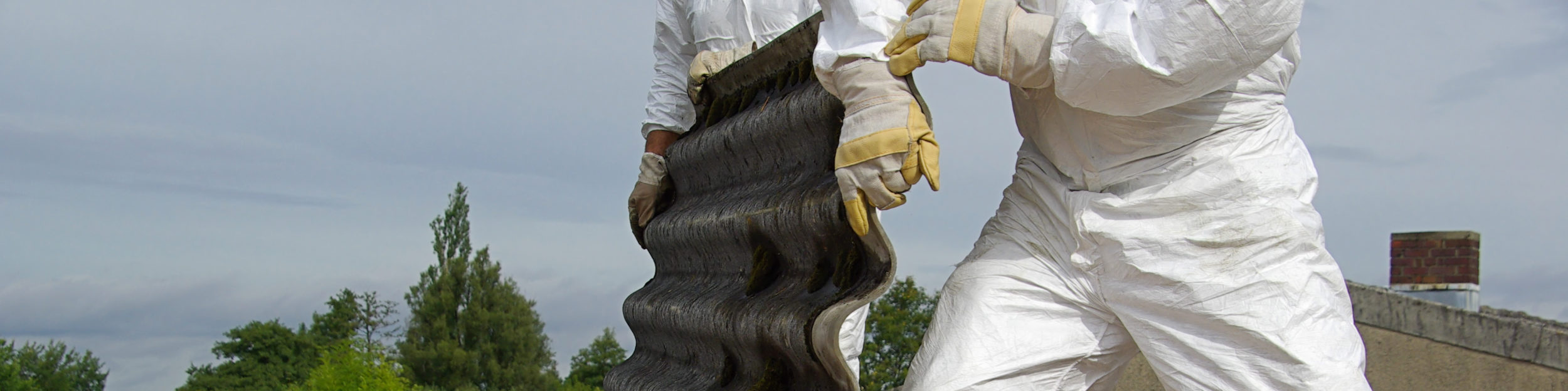
If your Melbourne home, garage, factory, shed or rural outbuilding was built or renovated before the year 2000, asbestos cement sheeting is the single most likely asbestos-containing material on your property. It is on the eaves, the external walls, the garage, the fence, the bathroom substrate, the laundry splashback, the roof of the carport, and the back wall of the chook shed — sometimes painted, sometimes rendered, sometimes hidden under three coats of acrylic and a layer of moss.
Asbestos cement sheeting is also the material most often misidentified, mis-quoted and mis-handled in Melbourne and Victoria. It looks ordinary. It feels ordinary. It is regulated under one of the strictest workplace-safety frameworks in the country.
This guide is written from the perspective of a WorkSafe Victoria licensed Class B (non-friable) asbestos removalist that works on asbestos cement sheeting across Greater Melbourne and regional Victoria every week. It covers what AC sheeting actually is, every place you are likely to find it in a Victorian building, the legal removal options available to you in 2026, and how to make sure the quote you accept is one that will hold up under WorkSafe, EPA, insurer and future-buyer scrutiny.
What Is Asbestos Cement Sheeting?
Asbestos cement sheeting — often called AC sheeting, fibro, fibro cement, fibro sheet, or simply cement sheet — is a composite building product made by binding asbestos fibres (typically chrysotile, amosite or a mix of both) into a Portland cement matrix. The result is a hard, rigid, fire-resistant, rot-proof and termite-proof sheet that was cheap to produce, easy to install, and durable enough to still be in service across Australia 60 years after manufacture.
It was the dominant cladding, lining and roofing product in Australian residential and light commercial construction from the 1940s until the 2003 national ban on the import, manufacture and use of all asbestos-containing materials. The most common Australian brands and product names you will see in Melbourne buildings include:
- Super Six — corrugated AC sheeting with six broad corrugations across a sheet roughly 1,070mm wide. Used as roofing and as fencing.
- Hardiplank, Hardiflex, Versilux, Tilux, Wunderlich — flat sheet products in various thicknesses (typically 4.5mm to 7.5mm).
- Shadowclad, Coverline, Highline and Stria — moulded and patterned cement sheet variants from the 1970s and 1980s.
Because asbestos fibres are locked into a hard cement matrix, AC sheeting in good condition is classified as non-friable (bonded) asbestos — meaning it cannot be crumbled, pulverised or reduced to powder by hand pressure when dry. That classification is what makes it the legal remit of a Class B asbestos removal licence in Victoria. (For the full breakdown of the classification system, see our companion guide on friable vs non-friable asbestos.)
Critical point: “Non-friable” describes the current physical condition of the material, not its history. Weather damage, fire damage, water damage, and aggressive mechanical impact can all push AC sheeting from non-friable into friable — and that reclassification changes the licence class, the removal method, the cost and the program. We come back to this below.
Where Asbestos Cement Sheeting Is Found in Melbourne and Victoria
If your building was constructed or substantially renovated before the year 2000 — and especially before 1990 — asbestos cement sheeting may be present in any of the following locations. This list is structured the way a licensed assessor walks a property: from the outside in, top to bottom.
1. The Roof
Corrugated asbestos cement roof sheeting is one of the single most common AC products still in service across Victoria. Look for:
- Super Six corrugated roofing — six broad, gentle corrugations across each sheet, fixed with galvanised twisted nails or large hex-head screws through the crown of each corrugation, usually with bitumen washers.
- Trimdek and small-corrugation AC roofing — less common, found on commercial and industrial buildings from the 1960s to 1980s.
- AC ridge cappings, hip cappings and gable flashings — thin, often painted, frequently cracked at the screw holes.
- AC penetration flashings around old flues, vent pipes and skylight kerbs.
For the full removal cost breakdown and step-by-step process specific to roofing, see our detailed guide on asbestos in roof sheeting.
2. The Eaves, Soffits and Fascia
Almost universal on weatherboard and brick-veneer homes built between roughly 1945 and 1990:
- Flat cement-sheet panels running along the underside of the roof overhang — typically 4.5mm or 6mm thick.
- Butt-jointed sheets with thin timber moulding strips covering the joins, often painted the same colour as the trim.
- Vent grilles cut into the cement sheet — round or rectangular, sometimes with fine fly mesh behind.
Visual confusion alert: modern fibre-cement eaves (Hardiflex, Villaboard and similar post-2003 products) look almost identical to AC sheeting from below. The differences are subtle — sampling is the only reliable distinguisher on borderline-era buildings.
3. External Walls and Cladding
- Flat fibro cement sheeting used as external cladding on whole walls, or as infill panels in weatherboard and brick veneer cottages — typically 4.5mm to 7.5mm thick.
- Cover-strip systems with vertical timber battens at regular intervals (often around 600mm centres) hiding the sheet joints.
- Imitation weatherboard in cement sheet — moulded to mimic timber weatherboard but rigid and flat to the touch.
- Decorative AC products (Hardiplank, Versilux, Wunderlich Shadowline) on porch ceilings, gable infills and feature walls.
Tap test: AC sheeting sounds dense and dull when tapped, not hollow like timber. Edges are sharp and machined, with no timber grain visible at the corners.
4. Internal Walls and Ceilings
Particularly common in 1950s–1980s housing where plasterboard was uncommon or considered too soft for wet areas:
- AC wall sheet in older laundries, toilets, sleep-outs, sunrooms and beach-shack additions.
- AC ceiling sheet in garages, carports, verandahs, outdoor toilets and back-shed conversions.
- AC partition walls between rooms in early prefab and kit homes.
5. The Fences
Asbestos cement fencing is essentially universal in the pre-1990 backyards of Northcote, Brunswick, Coburg, Pascoe Vale, Reservoir, Footscray, Yarraville, Sunshine, Box Hill, Glen Iris, Caulfield, Bentleigh, Oakleigh, Cheltenham, Mentone, Heidelberg, Ringwood, Croydon, Werribee, Hoppers Crossing and dozens of other Melbourne suburbs. Look for:
- Flat AC fence panels — typically grey, approximately 1,800mm tall by 600mm or 1,200mm wide, set between concrete or timber posts.
- Super Six AC fencing — the corrugated version of the same product.
- Capped tops with a separate cement coping strip running along the top edge.
- Damage at the base of panels where mowers, line trimmers and dogs have impacted the lower edge — a frequent source of fibre release on otherwise non-friable material.
A standard backyard fence is regularly 30 to 60m² of sheeting once both sides and any returns are counted — well over the 10m² DIY exemption threshold.
6. The Garage, Shed and Outbuildings
- Fibro cement walls on freestanding garages, lock-up sheds, dairies, packing sheds and rural outbuildings — flat sheets up to ceiling height, often with timber battens covering the joints.
- Corrugated AC roofing with the Super Six profile.
- AC doors on storage cupboards, dog kennels and chook sheds.
- Old garden outbuildings — backyard dunnies, pump houses, workshops, lean-tos — almost universally fibro on pre-1985 Melbourne properties.
A single fibro garage clad in cement sheeting is typically 40m² and up when walls and roof are combined.
7. Wet Areas — Bathroom, Laundry, Kitchen
This is where buyers and renovators get caught out most often, because the asbestos cement sheeting is usually hidden behind tiles or laminate:
- Wet-area AC sheet behind ceramic tiles — fibro cement sheet up to 6mm thick was the dominant tile substrate from the 1950s into the late 1980s.
- AC splashback panels behind kitchen sinks and laundry tubs, sometimes painted, sometimes laminated.
- AC sheeting around shower bases and bath enclosures.
- AC linings in the original Coolgardie-safe and pantry cupboards of older homes.
A bathroom or laundry strip-out in a pre-1990 Melbourne home is one of the most common asbestos-disturbance projects. The wet-area sheet behind tiles often runs 8 to 15m² in a single bathroom alone — and the AC scope is not the visible front face, it is the substrate the tiler glued the tiles to. (For the full pre-renovation pathway, see our guide on whether you need an asbestos inspection before renovating.)
8. Industrial and Commercial Premises
Asbestos cement sheeting dominates the legacy stock of Melbourne’s industrial belt — Sunshine, Tottenham, Brooklyn, Footscray, Campbellfield, Broadmeadows, Coolaroo, Dandenong South, Bayswater and Kilsyth — and most regional Victorian industrial estates. Common applications include:
- AC wall and ceiling sheet in workshop interiors, factory amenities blocks, and warehouse offices.
- AC roof sheeting on large-span industrial roofs (often combined with translucent fibreglass strip lights that are themselves brittle and asbestos-adjacent).
- AC fire-rated partition walls in older commercial fit-outs.
- AC sheeting in cool-store and packing-shed construction across the Goulburn Valley, Yarra Valley, Mornington Peninsula and Sunraysia regions.
9. Rural Properties
On Victorian farms, hobby blocks and lifestyle properties built between the 1950s and the late 1980s, AC sheeting is typically present on:
- Hay sheds, machinery sheds, dairies, milking sheds and shearing shed extensions.
- Workers’ cottages and bach-style holiday homes in the Mornington Peninsula, Bellarine, Yarra Valley, Macedon Ranges and High Country.
- Roadside pump houses, water-tank stands and bore-pump enclosures.
For pre-1990 buyers walking a property for the first time, our guide on asbestos removal in pre-1990 homes covers the full pre-purchase inspection pathway.
A Quick Map of AC Sheeting by Building Era
| Era | Typical AC sheeting present |
|---|---|
| Pre-1950 | Limited — AC sheeting more common from late 1940s onward. Some early Wunderlich product on inner-city extensions. |
| 1950s–1960s | Heavy use across roofing, eaves, external walls, fencing and outbuildings. Common in post-war housing estates. |
| 1970s | Peak residential use. Almost universal in fences, eaves, garages, bathroom substrates and outbuildings on weatherboard and brick veneer homes. |
| 1980s | Continued widespread use until late in the decade. AC product gradually displaced by cellulose fibre-cement from 1987 onward. |
| 1990–2003 | Reducing but still possible. Australia did not fully ban asbestos until 31 December 2003. Pre-existing stock continued to be installed during this period. |
| Post-2003 | Importation, manufacture and use of asbestos materials prohibited nationally. New-build AC sheeting should not be present, but existing AC sheeting remains in service on every pre-2004 building until removed. |
Working rule of thumb: Pre-2000 + Melbourne or Victorian location = assume asbestos cement sheeting is present somewhere on site until a licensed inspection proves otherwise.
For a more detailed visual walk-through, see our visual asbestos checklist.
How to Identify Asbestos Cement Sheeting (and What It’s Not)
Visual identification alone is not legally sufficient under Victorian law. Under AS 5370:2024, the only definitive identification is a NATA-accredited bulk sample analysed at an accredited laboratory. That said, the following visual cues are reliable starting points:
Likely AC sheeting:
- Pre-2000 construction era.
- Sheet thickness of 4.5mm to 7.5mm (flat product) or characteristic Super Six profile (corrugated).
- Dense, dull sound when tapped.
- Sharp, machined cut edges.
- Galvanised twisted nails or hex-head screws as fixings (rather than modern stainless decking screws).
- Heavy weathering, moss, lichen, or chalky surface degradation on exposed elevations.
- Faded “James Hardie”, “Wunderlich”, “CSR” or “Super Six” stamps along sheet edges (often only visible from behind once a sheet is removed).
Common visual myths to ignore:
- Colour. AC sheeting can be grey, off-white, cream, painted any colour, weathered green-black with moss, or rendered. Colour alone never confirms or rules out asbestos.
- Manufacturer. James Hardie, CSR and Wunderlich all continued producing visually similar non-asbestos fibre-cement product after 2003. Brand alone is meaningless.
- Age. A 1980s sheet in mint condition is non-friable; a 1980s sheet weathering on a leaking roof since 2005 may no longer be.
If you are uncertain, do not cut, drill, sand, water-blast or break the material to “have a closer look.” Disturbance is exactly what the regulations are designed to prevent. Engage a licensed assessor to sample under controlled conditions.
Damage Cues: When AC Sheeting Becomes a Class A Problem
The single most expensive mistake in Melbourne asbestos work is treating damaged or weathered AC sheeting as non-friable simply because it started life that way. Watch for:
- Chalky, powdery or crumbling surfaces on cement sheet, particularly on north-facing or weather-exposed elevations.
- Fire-damaged sheeting — even surface scorching can degrade the cement matrix sufficiently to reclassify the material as friable.
- Water damage — leaking gutters, broken downpipes, persistent damp at the base of fibro walls, or sheets with visible bowing and delamination.
- Mechanical impact damage — holes punched through fibro garage walls, cracked roof sheets from storm debris, sheeting broken open by a previous unlicensed removal attempt.
- Pulverised debris at the foot of sheeting, in garden beds, or stored as “rubble” from past works.
- Storm, fire or flood-affected pre-2004 buildings — should be treated as containing friable asbestos until proven otherwise.
Damaged AC sheeting that has become friable requires a Class A licensed removalist, not a Class B contractor. A reputable Class B operator will identify this on site and coordinate a Class A specialist for the friable component under one project. (See our breakdown of Class A vs Class B asbestos licences for the full decision framework.)
Your Removal Options: What’s Actually on the Table
For AC sheeting on a Melbourne or Victorian property, there are four practical options. Each is legal, but they suit very different scenarios.
Option 1 — Leave it in place and manage it
If the AC sheeting is in good condition, painted or sealed, not at risk of disturbance, and not part of a planned renovation or demolition, leaving it in place is a legitimate option under the WorkSafe Victoria Compliance Code: Managing Asbestos in Workplaces. This applies particularly to:
- Intact eaves on a home not being renovated.
- Painted external wall sheeting in good condition.
- A fence in sound condition with no impact damage.
- AC roofing that is not leaking, cracked or crumbling.
For workplaces (including rental properties), an Asbestos Register must be maintained recording the location, type, condition and management approach for each ACM. For owner-occupied residential property the register is recommended best practice rather than mandatory — but it adds significant value at resale.
Management in place is the cheapest option in the short term and the most common path in 2026, but it is not a permanent solution. Every pre-2004 building in Victoria will eventually need its AC sheeting removed — at renovation, at insurance claim, or at demolition.
Option 2 — Encapsulation
Encapsulation — painting, sealing or over-cladding AC sheeting with a non-asbestos product — is a recognised management technique that extends the safe in-place life of intact AC material. It is sometimes used on:
- Eaves that are still sound but starting to weather.
- External wall sheeting being repainted as part of a broader refresh.
- Industrial AC roofing where full replacement is not yet budgeted.
Encapsulation is not removal. The asbestos is still there, the obligation to disclose it at sale is still there, and the eventual licensed removal is still inevitable. Encapsulation also has practical limits — you cannot encapsulate material that is already damaged, cracked, delaminating or weathered to the point of being friable.
Drilling, sanding, water-blasting or pressure-cleaning AC sheeting in preparation for encapsulation is prohibited without licensed removal controls. The most common Melbourne contamination event we see on otherwise compliant sites is a painter water-blasting a fibro wall before “freshening it up.” Don’t.
Option 3 — Limited DIY removal (the narrow exemption)
Victorian law permits a homeowner to remove non-friable asbestos themselves only if every one of the following conditions is met:
| Condition | Threshold |
|---|---|
| Asbestos type | Non-friable (bonded) asbestos only |
| Total area | Less than 10m² |
| Time on tools | Less than 1 hour in any seven-day period |
| Property type | Owner-occupied residential only (not rentals, not workplaces) |
| Disposal | Must still go to an EPA-licensed landfill, with appropriate wrapping and transport |
The exemption sounds generous on paper. In practice, almost no real AC sheeting scope on a pre-1990 Melbourne property fits inside it. A backyard fence is 30 to 60m². A single eaves run is 15 to 30m². A single garage is 40m² and up. A bathroom strip-out is 8 to 15m² behind the tiles. A single carport roof is typically 25 to 50m².
Even within the exemption, WorkSafe Victoria recommends using a licensed professional. Our detailed analysis is in our guide on DIY vs professional asbestos removal — including the insurance, resale and exposure consequences of getting it wrong.
Option 4 — Licensed Class B asbestos removal (the mainstream option)
For the overwhelming majority of AC sheeting scopes in Melbourne and Victoria, licensed Class B removal is the correct, legal and practical option. A Class B licence holder can lawfully remove any quantity of non-friable AC sheeting — fences, eaves, walls, roofs, garages, sheds, wet-area substrates, fibro cottages — regardless of area or duration. There is no upper limit on Class B work.
The Class B process is the regulatory backbone the rest of this guide is built around. The next section walks through it step by step.
The Class B Removal Process — Step by Step
Every licensed Class B removal of asbestos cement sheeting in Victoria follows the same compliance backbone. The end-to-end project, done legally, typically runs two to three weeks from first enquiry to final clearance certificate — even when the on-tools removal itself is one or two days. The bulk of that time is the mandatory five-day WorkSafe notification window and the laboratory sampling turnaround. (For the full timeline breakdown, see our companion guide on how long asbestos removal takes.)
Step 1 — Free site inspection and quote
A licensed Class B removalist attends the property, identifies and measures the AC sheeting in scope, photographs the material, notes access constraints, and flags any borderline-friable material that may require Class A subcontracting.
Step 2 — NATA-accredited sampling
Where the identification is not visually unambiguous, the assessor takes a controlled bulk sample for laboratory analysis under AS 5370:2024. Typical cost is $40 to $80 per sample. Turnaround is 2 to 5 working days, with express options.
Step 3 — Documentation
Two documents are produced before any work commences:
- Asbestos Removal Control Plan (ARCP) — the site-specific removal methodology, isolation zones, decontamination arrangements, waste handling and emergency procedures.
- Safe Work Method Statement (SWMS) — the formal task-level risk assessment under the OHS Act 2004 (Vic).
Step 4 — WorkSafe Victoria notification
The licensed removalist lodges a five clear days’ notification with WorkSafe Victoria before work commences. This is non-negotiable. Any contractor offering to start “tomorrow” is either not licensed or not notifying.
Step 5 — Site setup and containment
- Isolation barriers, signage and exclusion zones established.
- Asbestos warning notices posted at all access points.
- Wet methods, H-class hazardous-dust vacuums, P2/P3 respiratory protective equipment, and full disposable PPE deployed.
- Sheltering of garden, paving, downpipes and adjacent property as required.
Step 6 — Removal using hand tools and wet methods
AC sheeting is removed whole wherever possible — never cut, drilled or broken to fit. Fixings are extracted with hand tools or low-vibration powered tools, the material is misted with surfactant water to suppress fibre release, and sheets are lowered carefully rather than dropped.
Power tools, dry sweeping and compressed air are prohibited on AC sheeting in any circumstance. A contractor using an angle grinder, circular saw or air-blower on fibro is not a Class B operator — they are a contamination event in progress.
Step 7 — Double-wrapping, labelling and transport
Removed AC sheeting is double-wrapped in 200µm polyethylene sheeting, sealed with asbestos-warning tape, labelled in accordance with EPA Victoria’s Publication IWRG611.2: Asbestos Transport and Disposal, and loaded into a covered, sealed transport vehicle.
Step 8 — EPA Waste Tracker disposal
The wrapped waste is transported to an EPA-licensed landfill authorised to receive asbestos waste. Each load is recorded in EPA Waste Tracker, generating a digital manifest from origin to disposal cell. The tip receipt and manifest are retained as part of the documentation pack. (For the full disposal journey, see what happens to asbestos after removal and how asbestos is safely disposed of in Australia.)
Step 9 — Decontamination
All tools, PPE, transport equipment and personnel are decontaminated on site or at an approved decontamination facility. Single-use PPE is wrapped as asbestos waste and disposed of with the AC sheeting.
Step 10 — Independent clearance certificate
Before re-occupation, an independent competent person (separate from the removalist) inspects the work area and issues a Regulation 297 clearance certificate confirming the site is safe for normal use. This certificate is what the insurer, the council, the next buyer and any future builder will rely on. A removalist who “self-certifies” their own work is not issuing a clearance certificate — they are issuing a piece of paper with no legal weight.
Step 11 — Documentation pack
On project completion, the property owner receives a complete documentation pack:
- Copy of the Class B licence.
- ARCP and SWMS.
- WorkSafe Victoria notification.
- NATA laboratory sample results.
- EPA Waste Tracker manifests and tip receipts.
- Independent Regulation 297 clearance certificate.
- Public liability insurance certificate of currency.
That pack is the asset. It demonstrates compliance to insurers, satisfies due-diligence enquiries from future buyers, and protects the owner if any question is ever raised about how the asbestos was handled. (For a deeper dive on what to ask before signing a contract, see our licensed asbestos removalist checklist.)
What AC Sheeting Removal Actually Costs in Melbourne (2026)
Pricing for licensed Class B AC sheeting removal in Melbourne and Victoria varies with the material, quantity, access, height, disposal distance and clearance requirements. The 2026 indicative fixed-price ranges below are typical for non-friable residential and light commercial scopes, inclusive of the full compliance backbone above:
| AC sheeting scope | Typical fixed-price range (2026 Melbourne) |
|---|---|
| AC fence — standard suburban backyard, ~30–60 lineal metres | $2,500 – $6,500 |
| AC eaves and soffits — full perimeter of a single-storey home | $3,500 – $9,000 |
| AC garage — single or double, walls and roof | $4,000 – $12,000 |
| AC roof sheeting — corrugated, ~150–250m² residential | $9,000 – $25,000 |
| AC wall cladding — full re-clad of a fibro cottage | $10,000 – $30,000 |
| Wet-area AC sheeting — bathroom or laundry behind tiles | $2,500 – $6,000 |
| Industrial AC sheeting — factory wall and roof scopes | Priced per project (typically $30/m² – $80/m²) |
| Combined pre-1990 residential scope — fence + eaves + garage | $12,000 – $30,000 typical bundled price |
| Pre-demolition strip — knock-down-rebuild scenarios | $18,000 – $60,000+ depending on scale |
These ranges include the items most uncertified operators leave out: independent clearance certificate, EPA-licensed landfill disposal, EPA Waste Tracker manifests, full documentation pack, and public liability cover. Quotes substantially below these ranges typically indicate the contractor is skipping one or more of those compliance elements — and the missing paperwork is the most expensive omission.
Why Class B Is the Right Licence for Asbestos Cement Sheeting
In Victoria, asbestos removal is regulated under Part 4.4 of the Occupational Health and Safety Regulations 2017, supported by the WorkSafe Victoria Compliance Code: Removing Asbestos in Workplaces. The licensing framework recognises two classes:
- Class A — friable + non-friable asbestos (all material types).
- Class B — non-friable (bonded) asbestos only.
Because intact asbestos cement sheeting is, by definition, non-friable, Class B is the correct licence for the vast majority of AC sheeting removal work in Melbourne and Victoria. A Class B licence holder can lawfully remove any quantity of bonded AC sheeting — fences, eaves, walls, roofs, garages, sheds and substrates — regardless of area or duration.
Where AC sheeting has been damaged, fire-affected, water-affected or aggressively impacted to the point of becoming friable, a Class A specialist is required for the friable portion. A reputable Class B operator will identify this on site and coordinate the Class A subcontract under one project — rather than quietly handling work outside their licence class. (Our full guide to the Class A vs Class B distinction sets out the decision framework.)
How Asbestos Gone and Clean Handles AC Sheeting Removal in Melbourne and Victoria
We are a WorkSafe Victoria licensed Class B (non-friable) asbestos removalist and demolition contractor based in Melbourne, servicing all of Greater Melbourne and regional Victoria — from the inner-north, inner-east, inner-west, bayside, south-east and outer-growth corridors out to Geelong, Ballarat, Bendigo, the Mornington Peninsula, the Yarra Valley, the Latrobe Valley and beyond.
Every AC sheeting job we take on follows the same compliance backbone:
- Free site inspection and pre-removal assessment.
- NATA-accredited sampling under AS 5370:2024 where required.
- Site-specific Asbestos Removal Control Plan and Safe Work Method Statement.
- WorkSafe Victoria five-day notification lodged on your behalf.
- Class B non-friable removal using hand tools, wet methods, H-class vacuums and P2/P3 RPE — never power tools on AC sheeting.
- Coordinated Class A subcontracting where any portion of the material is friable (we tell you on day one, not on removal day).
- EPA-compliant double-wrapping, labelling and transport to an EPA-licensed landfill, with full EPA Waste Tracker manifests.
- Independent Regulation 297 clearance certificate before re-occupation.
- Complete documentation pack delivered to you on project close-out — for your records, your insurer, your council and any future buyer due diligence.
For builders, developers and owner-builders, we run integrated asbestos removal + soft strip + demolition services under one ABN — removing the single biggest cause of program slippage on pre-2004 sites: the gap between “asbestos guy finishes” and “demo guy starts.” Our companion guide on asbestos removal during demolition covers the full sequence.
☎ Call us: 0475 143 106
✉ Email: asbestosgoneandclean@gmail.com
???? Contact Us: Asbestos Gone and Clean – Contact
Free site inspection. No-obligation fixed-price quote. Full documentation pack delivered on completion.
Frequently Asked Questions
What is the difference between asbestos cement sheeting and modern fibre cement?
Both are cement-bound sheet products manufactured to similar dimensions and used in similar locations. The critical difference is the binder: AC sheeting uses asbestos fibres (chrysotile, amosite or both); modern fibre cement uses cellulose fibres. Visually they can be near-identical, particularly when painted or weathered. Only a NATA-accredited bulk sample analysed under AS 5370:2024 definitively distinguishes them.
Is all fibro asbestos?
No. “Fibro” is a generic term for fibre-reinforced cement sheeting. Pre-2003 fibro almost universally contains asbestos. Post-2003 fibro is cellulose-fibre cement and contains no asbestos. The cutover happened gradually through the late 1980s, with full national prohibition on 31 December 2003. On any Australian building constructed or substantially renovated before 2000, treat fibro as asbestos until tested.
Can I paint over asbestos cement sheeting to make it safe?
Painting and sealing — encapsulation — is a recognised management technique that extends the safe in-place life of intact AC sheeting. It is not removal. The asbestos is still there, the obligation to disclose it at sale is still there, and the eventual licensed removal is still inevitable. Critically, you must not sand, water-blast, wire-brush or pressure-clean AC sheeting in preparation for painting — this is the most common cause of accidental contamination on otherwise compliant sites in Melbourne.
Can I remove a fibro fence myself in Victoria?
Almost never. A standard suburban backyard fence is typically 30 to 60m² of AC sheeting once both sides and any returns are counted — well over the 10m² DIY exemption threshold. Above 10m² (or above one hour over any seven-day period), a Class B licensed removalist is legally required. Even within the exemption, WorkSafe Victoria recommends using a licensed professional.
How much does it cost to remove an asbestos cement fence in Melbourne?
For a standard suburban backyard fence of 30 to 60 lineal metres, expect a 2026 fixed-price range of $2,500 to $6,500. The price includes site inspection, sampling where required, ARCP and SWMS, WorkSafe notification, licensed removal, EPA-compliant disposal, manifest and tip receipt, and an independent clearance certificate.
How do I know if the AC sheeting on my home is friable or non-friable?
The classification is made on site by a competent licensed assessor based on current physical condition, not date of manufacture. Intact AC sheeting in good condition is non-friable (Class B). AC sheeting that is chalky, powdery, crumbling, fire-affected, water-damaged or impact-damaged may have moved into friable territory (Class A). The call must be made before the program is locked in, because it dictates the licence class, the method, the cost and the timeline.
Do I need an asbestos register if I own a Melbourne home with AC sheeting?
For owner-occupied residential property, an asbestos register is not legally mandatory but is best practice — particularly at resale. For workplaces (including rental properties), commercial premises and industrial sites, an asbestos register is legally required under the OHS Regulations 2017. It must record the location, type, condition and management approach for each ACM. Our legal requirements guide covers the full register obligations.
What happens to AC sheeting after it leaves my property?
Removed AC sheeting is double-wrapped in 200µm polyethylene, labelled in accordance with EPA Victoria requirements, recorded in EPA Waste Tracker, transported by a licensed carrier and disposed of at an EPA-licensed landfill authorised to receive asbestos waste. The waste is buried in a designated asbestos cell, covered with clean fill, and recorded against the landfill’s GIS register. The full journey is set out in our guide on how asbestos is safely disposed of in Australia.
Can a Class B removalist work on damaged or fire-affected AC sheeting?
No. A Class B licence covers non-friable asbestos only. Once AC sheeting has been damaged by fire, water, weathering or mechanical impact to the point where the fibres are no longer locked in the cement matrix, the material is friable and requires a Class A licensed removalist. A Class B holder who undertakes friable work is committing a prosecutable offence under the OHS Act 2004 (Vic), regardless of how the job is invoiced.
How long does the full Class B AC sheeting removal process take?
The on-tools work for a typical residential scope is often one to two days. The end-to-end project from first enquiry to final clearance certificate is two to three weeks, driven by the mandatory five-day WorkSafe notification window, laboratory sampling turnaround, and clearance certificate scheduling. Our detailed timeline guide is in how long does asbestos removal take.
Related Reading
- Asbestos Regulations and Legal Requirements in Australia: The 2026 Compliance Guide for Melbourne & Victoria — the Victorian regulatory framework, licensing, registers and penalties.
- Class A vs Class B Asbestos Licence: Which One Do You Need? — the decision framework for choosing the right removalist.
- Friable vs Non-Friable Asbestos: What’s the Difference? — the classification that determines the licence class, the price and the program.
- Signs Your Building May Contain Asbestos: A Visual Checklist — how to walk a property visually before booking an inspection.
- Asbestos in Roof Sheeting: Removal Cost and Process — the dedicated deep-dive on corrugated AC roofing.
- DIY vs Professional Asbestos Removal: Risks, Laws & Costs — the honest breakdown of the 10m² rule and the real cost of doing it yourself.
- Do I Need an Asbestos Inspection Before Renovating? — the pre-renovation pathway for Melbourne homeowners.
- Asbestos Removal in Older Homes: A Guide for Pre-1990 Buyers — the pre-purchase and post-settlement decision framework.
- How Long Does Asbestos Removal Take? A Realistic Timeline — day-by-day from first enquiry to final clearance certificate.
- What Happens to Asbestos After It’s Removed From a Property? — the full disposal journey from kerb to EPA-licensed landfill.
- How Asbestos Is Safely Disposed of in Australia — the EPA Waste Tracker and licensed landfill pathway.
- Asbestos Removal During Demolition: What You Need to Know — the pre-demolition-survey-to-clearance-certificate sequence for builders.
- How to Choose a Licensed Asbestos Removalist in Australia — the checklist for vetting a contractor before signing.
- The Health Risks of Asbestos Exposure: What the Science Says — the evidence base behind the regulatory framework.
Sources and Further Reading
- WorkSafe Victoria — Compliance Code: Removing Asbestos in Workplaces
- WorkSafe Victoria — Compliance Code: Managing Asbestos in Workplaces
- Occupational Health and Safety Act 2004 (Vic)
- Occupational Health and Safety Regulations 2017 (Vic), Part 4.4 (including Regulations 273 and 297)
- EPA Victoria — Publication IWRG611.2: Asbestos Transport and Disposal
- Environment Protection Act 2017 (Vic) and Environment Protection Regulations 2021 (Vic)
- Asbestos and Silica Safety and Eradication Agency (ASSEA) — Asbestos National Strategic Plan 2024–2030
- Standards Australia — AS 5370:2024 Air Quality — Bulk Materials
- Safe Work Australia — Code of Practice: How to Safely Remove Asbestos
Disclaimer: This article is general information about asbestos cement sheeting removal in Melbourne and Victoria as at 2026. It is not legal, engineering or occupational health advice. For advice on a specific project, contact WorkSafe Victoria, EPA Victoria, your local council, or speak directly with Asbestos Gone and Clean.