
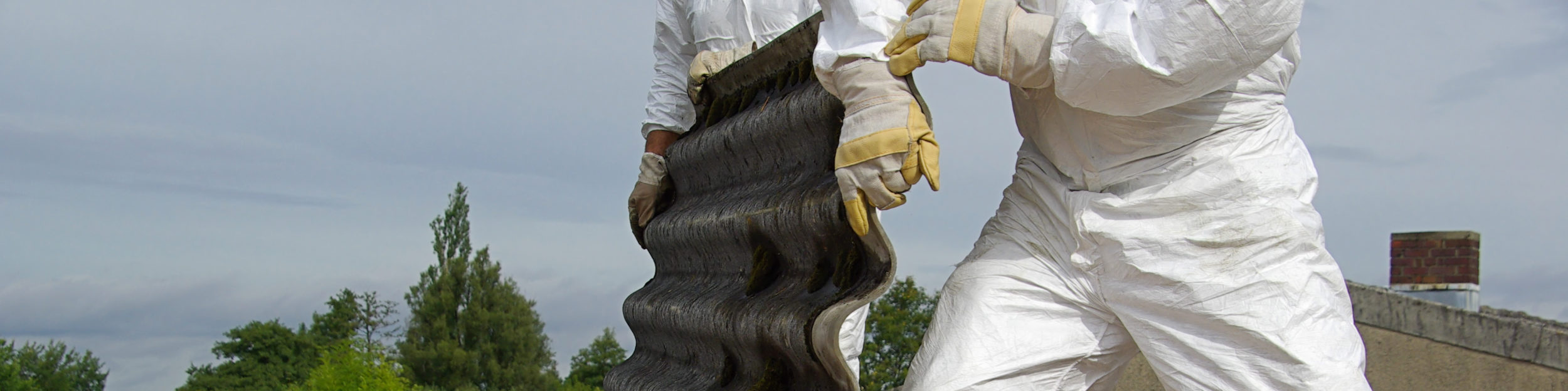
Quick answer: If you find — or suspect you’ve found — asbestos in your Melbourne home, garage, fence, eaves, bathroom, switchboard or commercial property, the seven most expensive mistakes you can make are: (1) disturbing it with power tools, sweeping, vacuuming or pressure-washing; (2) painting over it, sealing it, or pretending you didn’t see it in the hope the next owner deals with it; (3) DIYing beyond the legal threshold — anything above 10m² of non-friable material, anything friable, anything in a rental, workplace or strata block legally requires a licensed removalist; (4) hiring the cheapest unlicensed contractor off a community Facebook group; (5) disposing of it in a skip bin, kerbside hard-rubbish, your local tip, your back paddock or a bonfire — all of which breach the Environment Protection Act 2017; (6) assuming what it is by eye instead of confirming with a NATA-accredited laboratory sample under AS 5370:2024; and (7) skipping the independent clearance certificate required under Regulation 297 of the Occupational Health and Safety Regulations 2017 (Vic). Every one of these mistakes is reversible early and ruinously expensive late. This guide walks through each, why it happens, what it actually costs, and what to do instead.
You’ve spotted something. Maybe it’s the grey corrugated roof on the back shed. Maybe it’s the flat sheeting under the eaves. Maybe it’s the fence that’s been there since the seventies, or the dark brown panel behind your switchboard, or the vinyl floor tiles you’ve just lifted in the laundry. The voice in the back of your head has said the word fibro — and now you’re standing in the kitchen wondering what the right move is.
Before we get to what you should do — covered in detail in our companion guide What to Do if You Disturb Asbestos During a Renovation — there’s a more urgent piece of advice for any Melbourne or Victorian homeowner, landlord, builder or facility manager who has just found something suspicious:
Most of the cost, risk and regret around asbestos comes from things people do in the first 24 hours after they find it. Not from the asbestos itself. From the well-intentioned but wrong response.
This is the no-spin guide to the seven mistakes we see most often on Melbourne sites — from inner-north renovations in Brunswick and Northcote, to bayside bathroom strip-outs in Hampton and Sandringham, to outer-growth-corridor demolitions in Wyndham, Casey and Melton. Avoid these seven, and a confirmed asbestos finding becomes a manageable line item with a clearance certificate at the end. Make one or two of them, and the same finding can run five-figure remediation bills, denied insurance claims, regulatory notices, and disclosure exposure on the next sale of the property.
Mistake #1: Disturbing It (The Fastest Way to Turn a Problem Into a Crisis)
This is the headline mistake — and it’s the one that escalates a $1,500 removal into a $25,000 decontamination faster than any other.
Asbestos in good, intact, non-friable (bonded) condition is genuinely low-risk while it sits still. The fibres are locked into the cement matrix. The hazard is fibre release — and fibre release happens almost exclusively when the material is mechanically disturbed.
The single highest-cost mistake we are called to fix is somebody disturbing material after they suspected it might be asbestos, often “just to check,” “just to clean it up a bit” or “just to take the old shed down before the new one arrives on Saturday.”
What disturbing it actually looks like
- Using power tools on asbestos cement. Angle grinders, circular saws, drills, jigsaws, oscillating multi-tools and sanders are explicitly prohibited on asbestos-containing material (ACM). A single power-tool cut on a fibro sheet can release more fibres into the air than an entire compliant licensed removal job. This is not an exaggeration — it’s the underlying biology of why bonded fibres become airborne fibres.
- Pressure-washing or hosing it down “to clean it up.” This is one of the most common — and most damaging — mistakes on Melbourne residential properties. High-pressure water strips the cement matrix and aerosolises fibres in a fine mist that drifts well beyond the property line. We’ve attended pressure-washed fibro fences where the contaminated zone extended three or four neighbouring backyards downwind.
- Sweeping, vacuuming or using compressed air. Domestic vacuums do not capture asbestos fibres — the fibres pass straight through the filter and exhaust back into the room. Sweeping aerosolises bonded dust. Compressed air blows it everywhere. The only compliant tool for asbestos dust is an H-class hazardous-dust vacuum, which is not sold at general hardware stores.
- Snapping, breaking or stamping on sheets. Breaking a sheet to fit it in a trailer, stomping it to size, dropping it from a roof — every snapped edge is a new release point.
- Disturbing the switchboard backing. Drilling new circuits into a pre-1985 Zelemite, Ausbestos or Lebah panel without a licensed assessment is one of the most under-recognised disturbance events in Melbourne homes.
- Lifting vinyl floor tiles “to see what’s underneath.” Pre-1985 vinyl tiles and their black bitumen adhesive are very commonly asbestos-containing. Lifting them dry, with a scraper, is a textbook fibre-release event.
Why this mistake is so expensive
A controlled, licensed Class B (non-friable) removal of intact material is a planned, contained job with documented airflow management, double-wrapping, EPA-tracked disposal and a Regulation 297 clearance certificate at the end.
A disturbance event is none of those things. By the time we arrive, fibres have typically migrated through the HVAC system, settled across multiple rooms, contaminated clothing, tools and soft furnishings, and in outdoor cases drifted into adjoining properties. The remediation scope multiplies. Air monitoring is required. Carpets, curtains, mattresses and upholstered furniture are routinely written off. The job that should have been a half-day licensed removal becomes a multi-day decontamination project with NATA air monitoring before re-occupation.
Reality check: The single best thing you can do in the first 60 seconds after finding suspect material is nothing. Put the tool down. Close the door. Walk away. Call a licensed removalist. The cost of doing nothing for an hour is zero. The cost of doing the wrong thing for an hour is routinely five figures.
What to do instead
Stop work immediately. Isolate the area — close doors, switch off ducted heating and cooling, restrict foot traffic. Photograph the suspect material from a safe distance. Do not touch, sweep, vacuum, hose, drill or cut. Call a WorkSafe Victoria licensed Class B (non-friable) asbestos removalist for phone triage and urgent site attendance.
For the full step-by-step response, see our companion guide What to Do If You Disturb Asbestos During Renovation in Melbourne.
Mistake #2: Painting Over It, Sealing It, or Pretending You Didn’t See It
This is the mistake born of denial — and it’s the one with the longest, ugliest tail.
When a homeowner, landlord or business owner finds asbestos and the timing is inconvenient — mid-renovation, mid-sale, mid-tenancy, mid-quarter — the temptation is to make it disappear. Paint over the fibro fence. Render the garage. Lay new vinyl over the suspect tiles. Sheet over the popcorn ceiling. Tell the builder to “just work around it.” Hope the next owner deals with it.
This response feels like a saving. In every case we have ever attended, it is the most expensive option available.
Why concealment escalates the cost
- Hidden ACM is discovered by the next trade. The plumber relocating a tap drills into a wall and exposes asbestos sheeting behind the tiles. The electrician upgrading the switchboard cuts into a Zelemite panel. The painter sands what they were told was modern fibre cement. Every one of these events is now a disturbance event — and the remediation cost flows back to the property owner, not the trade.
- It surfaces on the next renovation. Five, ten, fifteen years later, the next owner — or you again — opens the wall to renovate. The contamination is now wider, older, and harder to contain. Removal costs have risen with disposal fees and labour. The clearance scope is larger.
- It is detected during pre-purchase due diligence. A buyer’s building and pest inspector flags suspect material. The contract becomes conditional. The price drops, or the deal collapses. Sale of Land Act 1962 (Vic), Section 32, disclosures become contentious.
- It triggers disclosure breach claims. Under the Sale of Land Act 1962 (Vic), Section 32, vendors must disclose known asbestos condition. “I painted over it and didn’t think about it again” is not a defence. Civil exposure to a purchaser who later discovers concealed asbestos is uninsurable and routinely runs well into the tens of thousands of dollars.
- It surfaces during a tenancy. In rental properties — covered under the Residential Tenancies Act 2021 (Vic) and the OHS Regulations 2017 — concealed asbestos that is later disturbed by a tenant, a tradesperson, or a routine inspection creates a workplace incident with rental provider liability attached.
- It surfaces during demolition. Mechanical demolition pulverises any concealed ACM into the spoil pile. The entire demolition load becomes contaminated waste. Disposal costs multiply by five to ten. WorkSafe issues a prohibition notice. EPA Victoria issues a remediation order. The project stops for months.
Why “encapsulation” is not concealment
There is a legitimate management strategy called encapsulation — sealing intact non-friable ACM in place under a controlled condition assessment, with the material recorded on an asbestos register, periodically inspected, and disclosed at any subsequent sale or renovation. This is a competent, regulated option in some commercial and industrial settings, particularly under an Asbestos Management Plan.
Painting over a fibro fence on a Saturday afternoon and not telling anyone is not encapsulation. It is concealment. The legal, insurance and resale consequences of the two are entirely different.
What to do instead
If the material is intact, in good condition, and not about to be disturbed by works on site, document it on a written asbestos register, disclose it at sale, and engage a licensed assessor to advise on management or scheduled removal. If works are coming — renovation, demolition, refurbishment — schedule licensed removal before the disturbance, not after.
Mistake #3: DIYing Beyond the Legal Threshold
This is the mistake born of mathematics — specifically, the mathematics most Melbourne homeowners get wrong when they eyeball a fibro fence and think “that’s under 10 square metres.”
Victoria’s Occupational Health and Safety Regulations 2017 (Vic) allow a narrow DIY exemption for owner-occupiers. The exemption is real. It is also a lot narrower than most people realise.
The DIY exemption — every condition must be met
| Condition | Threshold |
|---|---|
| Asbestos type | Non-friable (bonded) only |
| Total area | Less than 10m² |
| Time on tools | Less than 1 hour in any seven-day period |
| Property type | Owner-occupied residential (not a workplace, not a rental, not strata common property) |
| Disposal | Must still go to an EPA-licensed landfill |
Breach any one of those conditions and the work legally requires a WorkSafe Victoria licensed Class B (non-friable) asbestos removalist — or, for friable material, a Class A removalist.
Where Melbourne homeowners get the maths wrong
- A typical suburban back fence is 30 to 60m². Not 10. The fence on a standard 600m² block in Reservoir, Footscray, Coburg or Bentleigh, if it’s the original Super Six fibro panel run, is six times the DIY threshold before you’ve counted the side fence.
- A standard fibro garage wall is 12 to 18m² per wall. A four-wall garage is 50m² plus the roof.
- A bathroom of wet-area sheeting behind tiles is 8 to 15m². Add the laundry, and you are over 20.
- Eaves and soffits on a single-storey three-bedroom Melbourne home are typically 30 to 50m² of total ACM once you measure the full perimeter.
- A roof is multiples of 10m² before you’ve finished counting the first slope.
The “small DIY job” almost never exists once you measure honestly. And the one-hour time limit — applied in any seven-day period across the entire site, not per task — is broken before lunch on most DIY attempts.
DIY is never permitted for
- Friable asbestos (anything that crumbles to powder under hand pressure when dry — popcorn ceilings, sprayed limpet, pipe lagging, asbestos rope, millboard, fire- or water-damaged sheeting). This is Class A licensed work only.
- Rental properties, even if you own them.
- Workplaces — commercial premises, factories, warehouses, retail tenancies, schools, halls, churches.
- Common property in strata or owners-corporation buildings.
- Any job above 10m² in total area, or above one hour over any seven-day window.
Why DIY usually isn’t even cheaper
Even where DIY is legally permitted, the honest cost stack — NATA-accredited sampling, P2 or P3 respirators, disposable coveralls, 200-micron polyethylene, duct tape, signage, EPA-licensed landfill tip fees, covered trailer hire, fuel, your own time — typically lands within a few hundred dollars of a fixed-price professional quote. Without the documentation, the insurance cover, or the clearance certificate.
For the full honest costing, see our deep-dive DIY vs Professional Asbestos Removal: Risks, Laws & Costs.
What to do instead
Measure the material honestly. If you’re within the exemption and genuinely confident in the compliant process, the law allows you to proceed. If you’re over the threshold — and the great majority of Melbourne pre-1990 properties are — engage a licensed Class B operator for a free site inspection and fixed-price quote. The cost difference is almost always smaller than DIYers expect, and the documentation pack at the end is the asset that protects you for the next 20 years of ownership.
Mistake #4: Hiring the Cheapest Unlicensed Contractor
This is the mistake that converts a known problem into an unknown one — and it’s the one with the largest gap between the apparent saving and the eventual cost.
Asbestos removal in Victoria is licensed work. The licence is issued by WorkSafe Victoria under the OHS Regulations 2017, in two classes:
- Class A — covers all asbestos, including friable.
- Class B — covers non-friable (bonded) asbestos only.
A general builder, handyman, demolition contractor, gardener or fencing contractor without a current asbestos removal licence cannot legally perform asbestos removal in Victoria above the 10m² owner-occupier DIY threshold — regardless of how confident they sound, how cheap their quote is, or how many neighbours have used them.
What an unlicensed quote is missing
When a quote comes in 40 to 60% below the rest of the market, the maths is doing the talking. A properly licensed Class B quote in Melbourne in 2026 has to cover, at minimum:
- A licensed supervisor at award rates plus on-costs.
- Trained removalists with current medicals and competency.
- H-class hazardous-dust vacuums and decontamination units.
- P2/P3 respirators and PPE consumables.
- 200-micron poly, duct tape, signage and decontamination materials.
- Transport authorised for Reportable Priority Waste under the Environment Protection Regulations 2021 (Vic).
- EPA-licensed landfill disposal fees.
- An independent clearance assessor (the same contractor cannot legally self-certify).
- Public liability and asbestos-endorsed insurance of at least $20 million.
- The administrative overhead of WorkSafe Victoria five-day notification, EPA Waste Tracker manifest, ARCP, SWMS, and the documentation pack.
Three or four properly licensed contractors quoting the same job will usually land within 15 to 25% of each other. A quote dramatically below that range is not a bargain — it’s a signal that one or more of the items above is being deferred to you when something goes wrong.
What goes wrong when it goes wrong
- A contamination event during the removal, which the unlicensed contractor is not insured to remediate.
- No WorkSafe notification, exposing the property owner to regulatory action.
- Illegal dumping of waste in a roadside layby, vacant block or skip bin — traced back to the property owner under EPA Victoria Section 31A notices.
- A self-signed or fabricated clearance certificate with no legal standing under Regulation 297.
- An insurance claim refusal when your home insurer discovers the work was performed unlicensed. Most Australian home and contents policies explicitly exclude losses arising from unlicensed asbestos work.
- Disclosure exposure at the next sale — there is no documentation pack to hand to the buyer’s solicitor.
Five red flags before you sign
- No licence number on the quote. A legitimate licensed Class B operator puts the licence number, expiry and class on every quote, invoice and email signature.
- “We can start tomorrow.” Licensed removal requires five days’ notice to WorkSafe Victoria before work begins. Anyone offering to start within that window is either not licensed or not notifying.
- Cash-only pricing or no GST. In 2026, this is rarely just a tax issue.
- “We’ll sort the disposal” with no EPA Waste Tracker manifest. Ask which EPA-licensed landfill, get it in writing, and confirm you will receive the tip receipt.
- The same person who removes is also issuing the clearance certificate. Regulation 297 requires an independent competent person. A self-certified clearance has no legal weight.
For the full framework, see our companion guides How to Choose a Licensed Asbestos Removalist in Australia and Top 10 Questions to Ask Your Asbestos Removalist Before Hiring.
What to do instead
Get three fixed-price quotes from licensed Class B operators. Verify each licence number on the WorkSafe Victoria public register — it takes five minutes. Ask for the Certificate of Currency for insurance, with the asbestos clause specifically confirmed. Compare on documentation, not price. The cheapest licensed quote is almost always cheaper than the unlicensed one once you cost the long tail honestly.
Mistake #5: Disposing of It in a Skip Bin, Kerbside, the Local Tip, or the Back Paddock
This is the mistake that turns a removal problem into an environmental prosecution. And it’s the one with the most consistent enforcement trail.
Asbestos in Victoria is classified as Reportable Priority Waste under the Environment Protection Regulations 2021 (Vic). Every kilogram has a chain of custody — from the point of removal, through the licensed transporter, through the EPA Waste Tracker electronic manifest, to an EPA-licensed landfill authorised to receive asbestos. There is no informal pathway. There is no “no one will notice.”
What gets prosecuted
- General-purpose skip bins. Skip bin operators in Victoria do not accept asbestos. Material discovered in a general bin contaminates the entire load, which is then either rejected at the transfer station — generating a charge-back and a report — or, worse, processed and detected at a later sorting stage. Either way, the bin company traces the booking back to the address.
- Kerbside hard-rubbish collections. Council hard-rubbish runs are not authorised for ACM. Material put out for hard-rubbish is photographed by collection crews, traced to the property, and routinely passed to council compliance and EPA Victoria.
- Standard transfer stations and recycling centres. Most do not accept asbestos. The ones that do are EPA-licensed sites with restricted opening hours, often requiring a pre-booked slot, double-wrapped material in 200-micron poly, and presentation of identification.
- Vacant blocks, roadside laybys, bush reserves, drains and creeks. EPA Victoria’s illegal dumping enforcement data identifies the same sites year after year. Loads are forensically traceable through fibre signatures, packaging, and — increasingly — visible labelling, dashcam footage and CCTV. EPA Section 31A notices for illegal dumping can flow back to the property owner from whose site the material originated, not just the person who dumped it.
- Bonfires and “I’ll just burn it on the back paddock.” Burning asbestos is illegal anywhere in Victoria, including private rural land, under the Environment Protection Act 2017. Burning concentrates and aerosolises fibres into a wide downwind plume. Penalties exceed $50,000 plus remediation costs.
- Burial. Burying asbestos on private land — including rural and farm blocks — is illegal in Victoria under the same Act. The buried material becomes a permanent contamination liability attached to the title, with disclosure obligations at every future sale.
The penalty exposure is real
Fines under the Environment Protection Act 2017 (Vic) for illegal asbestos disposal are uncapped for corporations and routinely run into the tens of thousands of dollars for individuals. Remediation orders can attach to the title of the land. Civil exposure to neighbours, future purchasers and incoming tradespeople is largely uninsurable.
The economic gap between a compliant disposal — included in any licensed Class B fixed-price quote, with the EPA Waste Tracker manifest and tip receipt in your documentation pack — and an illegal disposal that gets prosecuted is, in every realistic scenario, an order of magnitude.
What to do instead
Use a licensed removalist whose fixed-price quote includes EPA-tracked disposal. Insist on the EPA Waste Tracker manifest and landfill tip receipt in your completion pack. For DIY within the 10m² exemption, book a slot at an authorised EPA-licensed asbestos landfill in advance, double-wrap in 200-micron poly with the load labelled, and retain the tip receipt as proof of compliant disposal.
For the full disposal chain, see our companion guides How Asbestos is Safely Disposed of in Australia and What Happens to Asbestos After Removal in Melbourne.
Mistake #6: Assuming What It Is by Eye Instead of Testing
This is the mistake born of overconfidence — usually based on YouTube videos, a quick Google image search, or a builder mate’s “yeah nah that’s just modern fibre cement.”
Visual identification of asbestos in Melbourne and Victorian buildings is a strong starting point. It is not legally sufficient.
Why visual identification fails
- Modern fibre cement looks almost identical to asbestos cement from a few metres away. The differences are subtle — sheet thickness, edge profile, fixing pattern, weathering, surface texture.
- Asbestos is not always grey. It can be painted, rendered, weathered, moss-covered, stained or stickered over.
- Brand stamps are rarely visible. Original Australian asbestos cement products were not consistently labelled in residential installations, and decades of paint and weathering obscure what little marking existed.
- The age of the building is a guide, not a proof. A 1980s sheet in mint condition is non-friable. A 1980s sheet that has been weathering on a leaking roof since 2005 may have moved into friable status — and the visual difference is sometimes only a chalky surface and a few cracks.
- A “no asbestos” verbal assurance from a previous owner, real estate agent or trade is not evidence. It is a memory, often a wishful one, and it has zero legal standing.
What proper identification looks like
Under Part 4.4 of the OHS Regulations 2017 (Vic) and AS 5370:2024, the legal pathway for identifying asbestos is:
- A competent visual assessment by a licensed assessor — usually as part of a pre-renovation, pre-demolition or pre-purchase inspection.
- NATA-accredited bulk sampling — a small piece of the suspect material, taken under controlled conditions, sealed in a labelled bag, and sent to a National Association of Testing Authorities (NATA) accredited laboratory.
- Laboratory analysis under AS 5370:2024 — confirming whether the material contains asbestos, the type (chrysotile, amosite, crocidolite), and the proportion.
- A written report — which becomes part of the property’s asbestos record, the removal scope, the insurance file and the eventual disclosure pack.
A standard residential pre-renovation inspection in Melbourne with three to eight NATA-accredited samples typically costs $400 to $900. Larger residential and pre-demolition surveys are $700 to $1,800. On a multi-hundred-thousand-dollar property, this is one of the lowest-cost, highest-yield pieces of due diligence available.
Why guessing wrong in either direction is expensive
- Guessing it’s asbestos when it isn’t triggers an unnecessary licensed removal at full Class B pricing.
- Guessing it’s not asbestos when it is triggers an uncontrolled disturbance — the most expensive event on this entire list.
The cost of being wrong, in either direction, dwarfs the cost of a NATA-accredited sample.
What to do instead
Do not assume. Do not Google. Do not rely on the previous owner’s memory or your builder mate’s confidence. Engage a licensed assessor for a NATA-accredited sample under AS 5370:2024, and treat suspect material as if it is asbestos until the laboratory result is in your hand.
For the full breakdown of testing costs and what an inspection includes, see How Much Does Asbestos Testing Cost in Melbourne & Victoria? and Do I Need an Asbestos Inspection Before Renovating in Melbourne?.
Mistake #7: Skipping the Independent Clearance Certificate
This is the mistake born of impatience — and it is the one that erases every other piece of compliance you did correctly.
After any licensed asbestos removal in Victoria, Regulation 297 of the OHS Regulations 2017 requires an independent clearance inspection by a competent person before the area can be re-occupied or returned to general use. The clearance certificate is the document — not the removal — that closes the legal loop.
What the certificate proves
- That the licensed scope of work was completed.
- That the area is visually clean and free of asbestos debris.
- That, where required, air monitoring has confirmed fibre levels are below the relevant clearance threshold.
- That an independent, competent person — not the removalist — has inspected and signed off.
Why “independent” is the load-bearing word
A clearance certificate signed by the same business that removed the asbestos has no legal weight. Regulation 297 specifically requires the assessor to be independent of the removal contractor. A self-signed clearance, or one routed through a related party, is the single most common documentation failure we see on cheap or unlicensed Melbourne jobs.
A property owner relying on a self-signed clearance is, in practice, holding a piece of paper that:
- Will not satisfy a buyer’s solicitor on the next sale.
- Will not satisfy an insurer in the event of a later claim.
- Will not satisfy WorkSafe Victoria if a notifiable event occurs in the area later.
- Will not satisfy the next contractor’s SWMS requirements.
- Will not satisfy a council building surveyor where an Occupancy Permit is involved.
What goes in the documentation pack
A complete post-removal pack from a properly licensed Melbourne Class B operator includes:
- WorkSafe Victoria asbestos removal licence (current).
- Certificate of Currency for public liability and workers’ compensation, with asbestos endorsement.
- Site-specific Asbestos Removal Control Plan (ARCP).
- Safe Work Method Statement (SWMS).
- WorkSafe Victoria five-day notification confirmation.
- NATA-accredited bulk sample analysis under AS 5370:2024 (where sampling occurred).
- EPA Waste Tracker manifest.
- EPA-licensed landfill tip receipt.
- Independent Regulation 297 clearance certificate.
- Air monitoring results (where required).
- Photographic record before, during and after removal.
This pack is the asset that the removal produces. It is what protects you at sale, at the next renovation, at an insurance claim, at a council inspection, and at any future audit. The removal itself is the means; the documentation is the end.
What to do instead
Confirm in writing — before signing the quote — who will issue the independent clearance certificate, and that they are independent of the removal contractor. Verify the certificate references Regulation 297. Insist on the complete documentation pack as a condition of final payment.
For a deep-dive on how to read each section, see our companion guide How to Read an Asbestos Clearance Certificate in Melbourne.
The 7 Mistakes at a Glance
| # | Mistake | Why it’s expensive | What to do instead |
|---|---|---|---|
| 1 | Disturbing it with tools, sweeping, vacuuming or pressure-washing | Turns a contained removal into a multi-room contamination event | Stop, isolate, photograph, call a licensed removalist |
| 2 | Painting over, sealing or concealing it | Triggers disclosure breach claims, denied insurance, next-trade disturbance | Register, disclose, schedule removal before works |
| 3 | DIYing beyond the 10m² / 1-hour threshold | Voids insurance, breaches OHS Regulations 2017, unenforceable clearance | Measure honestly, engage licensed Class B for anything over threshold |
| 4 | Hiring the cheapest unlicensed contractor | Owner inherits the regulatory and remediation exposure | Verify WorkSafe Victoria licence, insurance, documentation pack |
| 5 | Skip-bin, kerbside, local tip, paddock or bonfire disposal | EPA Section 31A notice, fines $50K+, title-attached remediation order | Licensed removalist with EPA Waste Tracker manifest and tip receipt |
| 6 | Identifying by eye instead of NATA-accredited sampling | Misidentification in either direction is more expensive than testing | $400–$900 inspection with NATA samples under AS 5370:2024 |
| 7 | Skipping the independent clearance certificate | Erases the legal value of every other piece of compliance | Independent Regulation 297 clearance, complete documentation pack |
Why These Mistakes Cluster Together
Almost every catastrophic asbestos site we attend in Melbourne and regional Victoria involves two or more of these mistakes stacked on top of each other. The pattern is consistent:
- A homeowner assumes by eye (Mistake 6), DIYs beyond the threshold (Mistake 3), disturbs the material with power tools (Mistake 1), disposes of it in a hard-rubbish pile (Mistake 5), paints over what’s left (Mistake 2), and has no clearance certificate to show the next buyer (Mistake 7).
- A builder bundles asbestos removal into a general renovation quote using an unlicensed subcontractor (Mistake 4), the sub uses power tools (Mistake 1), the waste goes in a mixed skip (Mistake 5), and no clearance is ever issued (Mistake 7).
- A landlord paints over a fibro fence in a rental between tenancies (Mistake 2), uses a handyman with no licence (Mistake 4), and a later tenant disturbs the material drilling into the fence (Mistake 1) — the rental provider is named on the WorkSafe notice.
Avoiding any one of these mistakes lowers your risk. Avoiding all seven turns a confirmed asbestos finding into a textbook compliant remediation with a clearance certificate, a documentation pack, and zero residual liability.
The Legal Framework in One Page
Every one of these mistakes touches one or more of the following Victorian regulatory instruments. None of them are obscure — they are the operating framework for any asbestos site in Victoria in 2026.
- Occupational Health and Safety Act 2004 (Vic) — overarching duty of care.
- Occupational Health and Safety Regulations 2017 (Vic), Part 4.4 — the asbestos-specific framework, including:
- Regulation 271 — written asbestos register for pre-2004 workplaces.
- Regulation 273 — asbestos must be identified and removed before demolition.
- Regulation 274 — pre-refurbishment identification.
- Regulation 297 — independent clearance certificate before re-occupation.
- Regulations 425, 429, 458, 460 — licensing for asbestos removal.
- Environment Protection Act 2017 (Vic) — illegal dumping, burning and burying.
- Environment Protection Regulations 2021 (Vic) — Reportable Priority Waste classification, EPA Waste Tracker, transport authorisations.
- Building Act 1993 (Vic) and Building Regulations 2018 — building and demolition permits.
- Residential Tenancies Act 2021 (Vic) — rental provider duties.
- Sale of Land Act 1962 (Vic), Section 32 — vendor disclosure obligations.
- Standards Australia AS 5370:2024 — sampling and identification methodology.
For a full regulatory walk-through, see our companion guide Asbestos Regulations and Legal Requirements in Australia: The 2026 Compliance Guide for Melbourne & Victoria.
The Bottom Line: Cheap Mistakes Are Always Expensive
The honest takeaway for any Melbourne or Victorian property owner who has just found — or thinks they may have found — asbestos on site is straightforward.
Every one of the seven mistakes above feels, in the moment, like a saving. The cheap quote saves money. The skip bin saves a trip to the tip. The DIY saves a tradesperson’s day rate. The paint-over saves a difficult conversation with a buyer. The “she’ll be right” saves an inspection fee.
Every one of those savings is borrowed against a future cost — and the interest rate on borrowed asbestos liability in Victoria in 2026 is brutal. The remediation costs more. The fines compound. The disclosure exposure lingers for years. The clearance certificate you didn’t get is the one the buyer’s solicitor will ask for. And, on the long-tail medical timeline, the fibre exposure you and your family avoided by doing it properly is the exposure none of us will know about until decades from now.
The compliant pathway is not the expensive option. It is the defined-cost option. A licensed Class B operator gives you a fixed-price quote, a five-day WorkSafe notification, an EPA-tracked disposal manifest, and an independent Regulation 297 clearance certificate at the end. The cost is knowable on day one. The shortcut isn’t.
If you have found something suspect on your Melbourne or Victorian property — at home, at a rental, on a commercial site, ahead of a renovation or before a demolition — the right call is the one that starts the licensed pathway now, before any of the seven mistakes above start compounding.
Get a Compliant, Fixed-Price Quote in Melbourne or Victoria
If you have just found — or suspect you have found — asbestos anywhere in Melbourne or Victoria, Asbestos Gone and Clean can give you the honest answer the same week. We provide:
- A free on-site inspection to identify suspect material, confirm scope, and advise on non-friable (Class B) or friable (Class A) classification.
- NATA-accredited bulk sampling under AS 5370:2024 where confirmation is required.
- A fixed-price written quote — ARCP, SWMS, WorkSafe Victoria five-day notification, licensed removal, EPA Waste Tracker disposal, and independent Regulation 297 clearance certificate, all included.
- Coordinated Class A subcontracting where any friable material is identified — one accountable contact, one consolidated quote, one consolidated documentation pack.
- Integrated demolition under one ABN where required.
- A complete documentation pack delivered on completion — for your insurer, your council, your solicitor, your lender, and any future buyer due diligence.
☎ Call us: 0475 143 106
✉ Email: asbestosgoneandclean@gmail.com
???? Contact Us: Asbestos Gone and Clean – Contact
We service every Melbourne metropolitan suburb — inner-north (Brunswick, Northcote, Coburg, Preston, Reservoir, Thornbury, Fitzroy, Collingwood), inner-east (Hawthorn, Kew, Camberwell, Balwyn, Canterbury, Box Hill, Doncaster, Templestowe), outer-east (Mitcham, Vermont, Ringwood, Boronia, Ferntree Gully, Knoxfield, Rowville, Croydon, Mooroolbark, Lilydale), inner-west (Footscray, Yarraville, Sunshine, Maribyrnong, Williamstown, Newport, Spotswood), bayside (St Kilda, Brighton, Sandringham, Mentone, Mordialloc, Hampton, Black Rock, Beaumaris), south-east (Glen Iris, Malvern, Caulfield, Bentleigh, Cheltenham, Carnegie, Oakleigh, Clayton, Springvale, Dandenong, Berwick, Cranbourne), north-east (Heidelberg, Ivanhoe, Eltham, Diamond Creek), and the outer growth corridors (Wyndham, Casey, Cardinia, Whittlesea, Hume, Melton, Mitchell) — and travel throughout regional Victoria including Geelong, Ballarat, Bendigo, Shepparton, Wodonga, Warrnambool, the Mornington Peninsula, the Yarra Valley, the Latrobe Valley, the Goulburn Valley and Gippsland.
Free on-site inspection. Transparent fixed-price quote. Full WorkSafe Victoria and EPA Victoria compliance pack delivered on completion.
Frequently Asked Questions
I think I’ve found asbestos — what’s the very first thing I should NOT do?
Do not touch it, drill it, sand it, cut it, sweep it, vacuum it, pressure-wash it, hose it, paint it, sticker over it, or move it. Do not lift adjacent material “to have a look.” The first hour of doing nothing is the cheapest hour of asbestos management you will ever spend.
Can I just paint over asbestos cement to seal it?
Painting is not encapsulation, and it is not a substitute for management or removal. Painted asbestos cement is still asbestos cement — the disclosure, register, insurance and removal obligations all still apply. Painting can be part of a properly documented management strategy on an asbestos register, but it does not, on its own, make the problem go away.
Is it actually illegal to put asbestos in a skip bin?
Standard skip bins in Victoria are not authorised to carry asbestos. Doing so contaminates the load, exposes you to charge-backs from the bin operator, and is traceable back to your address. Asbestos must be transported by an authorised carrier to an EPA-licensed landfill under the Environment Protection Regulations 2021 (Vic).
Can I burn or bury asbestos on a rural Victorian property?
No. Burning or burying asbestos anywhere in Victoria — including on private rural and farm land — is illegal under the Environment Protection Act 2017 (Vic). Penalties start at five figures and remediation orders can attach to the title of the land.
My builder said it’s not asbestos — can I trust that?
A builder’s verbal assurance is not legally sufficient. Identification under the OHS Regulations 2017 requires NATA-accredited sampling under AS 5370:2024. If your builder is confident, ask them to fund a sample — a competent builder on a pre-2004 site will already have factored that into the quote.
What if I already disturbed it before I knew what it was?
Stop work immediately. Do not sweep, vacuum or hose. Isolate the area. Photograph from a safe distance. Decontaminate clothing in an outer plastic bag (do not put it through the washing machine). Call a licensed Class B (non-friable) removalist for urgent triage. The full step-by-step is in our emergency response guide.
I’m DIYing under 10m² — do I still need to use an EPA-licensed landfill?
Yes. The DIY exemption removes the licensing requirement on the removal. It does not remove the EPA-licensed landfill disposal requirement. Standard transfer stations and recycling centres are not authorised to accept asbestos.
How do I check if a contractor is actually licensed?
WorkSafe Victoria maintains a public register of asbestos removal licence holders. Search by company name or licence number. The check takes about five minutes. A licensed Class B operator will provide their licence number and expiry on every quote — if it’s missing, the licence usually is too.
Will my home insurance cover the cost of remediation after an asbestos incident?
Most Australian home and contents policies cover accidental disturbance under specific conditions, with notification timelines that are typically tight. Most policies exclude losses arising from unlicensed asbestos work. Hiring a licensed Class B operator is, in practice, the difference between an insurable claim and an uninsurable one.
Does the clearance certificate really matter if everything else was done correctly?
Yes — more than people realise. The Regulation 297 clearance is the document buyers’ solicitors, insurers, lenders, councils and next-stage contractors all ask for. A removal without an independent clearance is, for most practical purposes, an undocumented removal — and the legal value of the work performed is dramatically reduced.
What’s the single biggest mistake homeowners make?
Disturbing the material (Mistake 1) — usually with a power tool, a pressure washer, a broom or a vacuum — in the first hour after finding it. Every minute of mechanical disturbance multiplies the eventual remediation scope.
Do these rules apply outside metropolitan Melbourne?
Yes. The OHS Regulations 2017 (Vic), the Environment Protection Regulations 2021 (Vic), the WorkSafe Victoria Compliance Codes and the EPA Victoria framework apply state-wide. Asbestos Gone and Clean services Greater Melbourne and travels throughout regional Victoria — including Geelong, Ballarat, Bendigo, Shepparton, Wodonga, Warrnambool, the Mornington Peninsula, the Yarra Valley, the Latrobe Valley, the Goulburn Valley and Gippsland.
Related Reading
- What to Do If You Disturb Asbestos During a Renovation in Melbourne — the full first-60-seconds, first-hour, first-day emergency response.
- DIY vs Professional Asbestos Removal: Risks, Laws & Costs (2026 Melbourne & Victoria Guide) — the honest cost stack on the 10m² rule.
- How to Choose a Licensed Asbestos Removalist in Australia — the seven things every removalist must prove.
- Top 10 Questions to Ask Your Asbestos Removalist Before Hiring — the verification framework in writing.
- How Asbestos Removal Is Quoted: What to Expect From Your Assessment — the 11 compliance line items every quote must include.
- Class A vs Class B Asbestos Licence in Melbourne — which licence covers which scope.
- Friable vs Non-Friable Asbestos: Key Differences Explained — the classification that drives the licensing split.
- Signs Your Building May Contain Asbestos: A Visual Checklist — what to look for in pre-2004 Melbourne buildings.
- Do I Need an Asbestos Inspection Before Renovating in Melbourne? — the legal trigger and what an inspection involves.
- How Much Does Asbestos Testing Cost in Melbourne & Victoria? — the all-in pricing on NATA-accredited sampling.
- How Asbestos is Safely Disposed of in Australia and What Happens to Asbestos After Removal in Melbourne — the EPA-tracked disposal chain.
- How to Read an Asbestos Clearance Certificate in Melbourne — what every section of the Regulation 297 certificate means.
- Asbestos Regulations and Legal Requirements in Australia: The 2026 Compliance Guide for Melbourne & Victoria — the full federal, state and local regulatory framework.
- Can You Sell a House With Asbestos in Australia? — the Section 32 disclosure pathway at sale.
Sources and Further Reading
- WorkSafe Victoria — Asbestos: Safety Basics, Licensing and Compliance Codes
- WorkSafe Victoria — Compliance Code: Removing Asbestos in Workplaces
- WorkSafe Victoria — Compliance Code: Managing Asbestos in Workplaces
- Occupational Health and Safety Act 2004 (Vic)
- Occupational Health and Safety Regulations 2017 (Vic), Part 4.4
- Environment Protection Act 2017 (Vic)
- Environment Protection Regulations 2021 (Vic)
- EPA Victoria — Publication IWRG611.2: Asbestos Transport and Disposal
- Sale of Land Act 1962 (Vic), Section 32
- Residential Tenancies Act 2021 (Vic)
- Standards Australia — AS 5370:2024 Methods for sampling and analysis of asbestos
- Asbestos and Silica Safety and Eradication Agency (ASSEA) — Asbestos National Strategic Plan 2024–2030
Disclaimer: This article is general information only and is current as at May 2026. It is not legal advice, and it is not a substitute for a competent licensed inspection or removal. For advice on a specific property, contact WorkSafe Victoria, EPA Victoria, or speak directly with Asbestos Gone and Clean.