
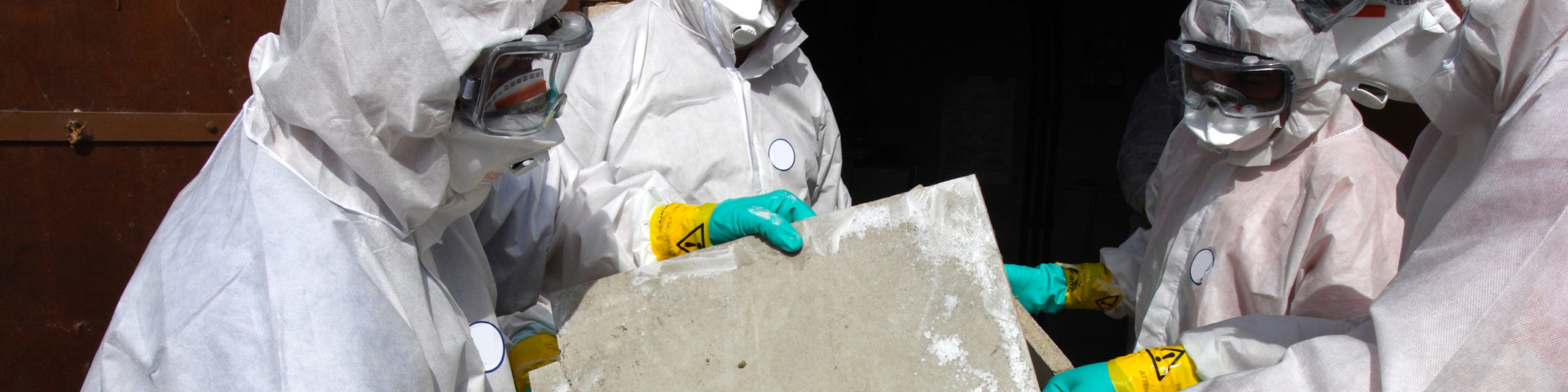
Quick answer: Once the last sheet of asbestos cement has come off the wall, the roof or the eaves of your Melbourne property, the job is not finished — legally, biologically or commercially. What follows is a tightly regulated sequence of final decontamination, clearance air monitoring (where applicable), an independent inspection under Regulation 297 of the OHS Regulations 2017 (Vic), EPA-tracked transport and disposal of the waste, the issuance of a written clearance certificate by a licensed asbestos assessor who is independent of the removal contractor, the handover of a complete documentation pack, and only then lawful re-occupation and reinstatement of the area. Skipping or shortcutting any one of these steps is what turns an otherwise clean job into a contamination incident, a voided insurance claim, a council enforcement order, or a failed property sale. This guide walks through every phase of the after in plain English, the way a WorkSafe Victoria licensed Class B removalist actually runs it.
If you are a homeowner, builder, developer, landlord, body corporate, school facilities manager or property investor anywhere in Greater Melbourne or regional Victoria — and your project is at the point where the asbestos is coming off or has just come off — the rest of this article is what you need to know to bring the job home cleanly.
Why the “After” Is More Important Than the “During”
In ten years of running asbestos removal programs across Melbourne, the single most consistent observation we make is this: clients focus on the removal day, but every problem we have ever had to remediate began after the last sheet was off.
The removal itself is the visible part. The truck arrives, the crew suits up, the sheets come down, the trailer leaves. From the kerb, it looks like the work is done. But the fibres that cause harm to lungs are almost never visible. They are released in the moments where the controls slip — and almost all of those moments are after the bulk material has been bagged.
The four most common failure modes we are asked to remediate, in order of frequency, are:
- Skipped or shortcut decontamination — a contractor rushed off site without H-class vacuuming the work zone, leaving settled fibre dust on horizontal surfaces.
- Self-issued clearance certificates — the removal contractor signed their own clearance, which has no legal weight under Regulation 297.
- Improper waste handling between site and landfill — single-wrapped waste, uncovered transport, an unlicensed tip receiving the load, or no EPA Waste Tracker manifest.
- Re-occupation before clearance — owners or trades walking back into the work area before the independent assessor has signed the certificate.
Every one of those failures occurs after the removal step the client was watching. The “after” is where compliance is won or lost, and it is where the cheap quote almost always gets exposed.
This guide unpacks every phase of the after in the order it actually happens on a compliant Melbourne or Victorian job.
The Seven Phases After the Last Sheet Comes Off
A correctly run post-removal sequence in Victoria has seven distinct, time-ordered phases. They cannot be rearranged. They cannot be compressed into one or two. They are:
- On-site decontamination — work area, tools, equipment, personnel.
- Clearance air monitoring (where required by the ARCP, Class A scope, or risk-based controls on Class B).
- Independent visual clearance inspection under Regulation 297.
- EPA-tracked transport and licensed landfill disposal.
- Issuance of the written clearance certificate.
- Documentation pack handover.
- Lawful re-occupation, reinstatement and downstream works.
Each phase has its own deliverables, its own legal basis, and its own failure points. We walk through them in order below.
Phase 1 — On-Site Decontamination
Decontamination is the single most under-priced step in non-compliant quotes. Every dollar a corner-cutting contractor saves on decontamination is a dollar of risk that lands on the property owner.
A properly executed decontamination phase has four parallel streams — area, tools/equipment, personnel and waste — and all four must be closed out before the independent assessor is invited on site.
Stream 1: Work area decontamination
Every surface inside the former exclusion zone is treated as potentially contaminated until it has been:
- H-class HEPA vacuumed, including floors, ledges, window sills, door tracks, skirting boards, architraves, light fittings, ceiling cornices, and every horizontal surface where fibres could have settled. A standard shop vacuum does not capture asbestos fibres — it discharges them through its exhaust. Only H-class hazardous-dust vacuums are compliant for asbestos work in Victoria.
- Wet-wiped with disposable microfibre cloths and a mild detergent solution. The cloths are bagged as asbestos waste immediately after use, never rinsed, never re-used.
- Visually checked under bright lighting for residual debris, dust films, fibre fragments and any disturbed material around fixtures, penetrations or services.
- Re-vacuumed if any residue is detected, with the cycle repeated until the surface is verifiably clean.
For roof, eaves and external sheeting scopes — the bulk of Class B non-friable work in suburban Melbourne — the decontamination also includes:
- Gutter clean-out and H-class vacuum of every gutter run beneath the removed sheeting.
- Downpipe flush and inspection for fragments that may have migrated.
- Yard scan and HEPA-vacuum of paved areas and lawn within the drop zone.
- Adjacent fence and neighbouring fence inspection for fragments that may have been carried by wind during removal.
This is not theoretical. After every asbestos cement roof removal in suburbs like Reservoir, Coburg, Footscray, Sunshine, Box Hill, Glen Iris, Bentleigh, Oakleigh, Heidelberg, Pascoe Vale, Brunswick, Frankston, Dandenong, Ringwood, Hoppers Crossing, Werribee, Craigieburn and Berwick — and across regional Victoria from Geelong to Ballarat, Bendigo to the Latrobe Valley — the gutter, downpipe and yard scan is where missed fragments are most often found. Skipping it is how fragments end up in playground sand pits, vegetable gardens and stormwater drains.
Stream 2: Tools and equipment decontamination
Every piece of plant, hand tool, ladder and length of scaffolding that crossed the exclusion zone boundary is treated as contaminated until it is decontaminated. This means:
- Wet-wiping of every surface that was inside the work zone — handles, treads, rails, frames, fittings.
- H-class HEPA vacuuming of any porous, textured or grooved surface (ladder treads, scaffold platform anti-slip surfaces, drill bit storage, tool boxes, harness webbing).
- Disposable wraps and pads bagged with the asbestos waste.
- Vacuum hoses, filters and pre-filters themselves decontaminated or, where appropriate, replaced and disposed of as asbestos waste.
A common red flag on cheap quotes: a contractor whose ute or trailer doubles as both an asbestos-waste vehicle and a clean-tool truck. Without separation, every job that vehicle attends afterwards is cross-contaminating the next site.
Stream 3: Personnel decontamination
The decontamination sequence for a Class B non-friable operator exiting the work zone — which we run on every job — is:
- HEPA-vacuum the coverall while still wearing it, head to toe, including the hood, the sleeves, the leg cuffs and the boots.
- Wet-wipe any visible debris from the coverall, gloves and boots.
- Roll the coverall down from the inside, so the contaminated outer surface is rolled inward and away from the body.
- Step out of the coverall onto the clean side of the boundary, leaving the rolled coverall on the dirty side.
- Remove gloves last, bagging them inside the rolled coverall.
- Bag the coverall, gloves and boot covers as asbestos waste — double-wrapped in 200-micron polyethylene, sealed, labelled “CAUTION ASBESTOS.”
- Wet-wipe exposed skin — face, hands, forearms, neck — with disposable wipes, also bagged as asbestos waste.
- Remove the respirator last, and only on the clean side of the boundary.
- Wash hands and face thoroughly with water before leaving the site.
For Class A friable scopes — pipe lagging, sprayed insulation, asbestos rope, fire-damaged ACM — a three-stage decontamination unit (DCU) with a dirty room, an integrated shower room and a clean room is constructed at the enclosure entry. Workers shower fully (including hair) before leaving, with their respirator on, removing the respirator only in the clean room.
For a deeper walkthrough of the worker-side protective controls, see our companion guide How Do Asbestos Removalists Protect Themselves on Site?
Stream 4: Waste decontamination, segregation and staging
Before the waste leaves the property, every asbestos waste bag must be:
- Double-wrapped in 200-micron polyethylene — single-wrap is non-compliant in Victoria.
- Sealed with gaffer tape or equivalent, with the seal physically intact.
- Labelled “CAUTION ASBESTOS” with the appropriate hazard symbol, in indelible marker or pre-printed bag.
- Segregated from general construction and demolition waste, never co-mingled, never thrown into a general C&D skip.
- Staged for transport in a dedicated area away from foot traffic, ideally covered, with no risk of being struck or punctured.
For sheet material removed whole — roof sheets, wall cladding panels, fence panels — the equivalent is whole-sheet wrapping in 200-micron polyethylene, double-layered and sealed.
When Phase 1 is complete, the work zone is visually clean, the equipment has crossed back into the clean side under controlled decontamination, the crew has exited the zone under decontamination protocols, and the waste is staged for compliant transport. Only at this point is the area ready for the next phase.
Phase 2 — Clearance Air Monitoring (Where Required)
Clearance air monitoring is the measurement phase. Where the law or the project’s Asbestos Removal Control Plan (ARCP) requires it, this is the data that confirms the work zone is genuinely below the regulatory clearance threshold.
What clearance air monitoring measures
Clearance air monitoring confirms that the airborne fibre concentration in the formerly enclosed work zone is below 0.01 fibres per millilitre (fibres/mL) — the WorkSafe Victoria clearance criterion under the Occupational Health and Safety Regulations 2017 (Vic).
The measurement is made by:
- An independent licensed asbestos assessor registered with WorkSafe Victoria.
- Drawing air through a calibrated filter cassette under the NOHSC:3003 (2005) Membrane Filter Method.
- NATA-accredited laboratory analysis by phase contrast microscopy (PCM).
- Multiple static sample positions inside the formerly enclosed work zone.
- Typically with a gentle disturbance scenario (light air agitation) to challenge the cleanliness of settled surfaces.
When clearance air monitoring is mandatory
Clearance air monitoring is legally mandatory in Victoria for:
- All Class A (friable) asbestos removal works without exception.
- Class B non-friable scopes where the ARCP specifies it as a control measure.
- Any post-fire, post-flood or post-storm scope where the material has crossed into friable status.
Clearance air monitoring is strongly recommended (and routinely required on the ARCP) for Class B scopes where:
- The work is in or adjacent to an occupied building — particularly schools, childcare centres, hospitals, aged-care facilities and multi-unit residential properties.
- The removal area is larger than approximately 250m² of material.
- The removal exceeded 24 hours of active works.
- The material was in poor condition, weathered, or showed any signs of fibre release during removal.
- The work occurred in a body corporate or strata setting where multiple occupants share airspace.
For Class B residential scopes on detached homes — a fence, a small garage, an eaves run, a single roof — visual clearance is often the standard, conducted under Phase 3 below. Whether your specific job requires analytical clearance air monitoring is determined by the ARCP at quote stage, not improvised on the day.
For a complete walk-through of the four types of asbestos air monitoring (background, control, leak-detection and clearance), see our guide Asbestos Air Monitoring: What It Is and When It’s Required.
What happens if a sample exceeds the threshold
Any clearance sample returning a result at or above 0.01 fibres/mL triggers an immediate stop on the re-occupation sequence. The work zone is re-cleaned, the source of the residual fibre is investigated, and the area is re-sampled before clearance can proceed. There is no negotiating the threshold, and there is no averaging high samples with low samples to bring an average under.
Phase 3 — Independent Visual Clearance Inspection Under Regulation 297
This is the regulatory hinge of the entire post-removal sequence. Under Regulation 297 of the Occupational Health and Safety Regulations 2017 (Vic), the person who commissioned the asbestos removal must obtain a clearance certificate from an independent competent person before the area is re-occupied.
Who is the “independent competent person”?
The independent competent person is a licensed asbestos assessor, registered with WorkSafe Victoria, who:
- Holds current WorkSafe Victoria assessor credentials with a valid licence number.
- Is independent of the removal contractor — not a director, not an employee, not a regular subcontractor, not a related party, not sharing a phone number, address or commercial relationship.
- Has personally attended the site to conduct the inspection.
- Has the appropriate training, competence and insurance to certify clearance.
The independence requirement is the entire point of the regulation. A removal contractor cannot mark their own homework. Any contractor offering to self-issue their own clearance certificate is offering a document that has no legal weight under Regulation 297, will not be accepted by your insurer, will fail conveyancing due diligence and will not survive a WorkSafe Victoria investigation.
What the inspector actually does on site
The independent assessor’s site inspection includes:
- A complete visual walk-through of every surface in the former exclusion zone — floors, walls, ceilings, ledges, sills, penetrations, services, junction boxes, behind appliances, inside cupboards, on the top of internal frame elements, in roof voids where access was used, in any cavity that was opened during removal.
- A bright-light inspection of suspect areas — torch raked across surfaces to highlight dust films, fibre residue, fragment debris and any disturbed area.
- A check of the gutter and downpipe runs under any external sheeting that was removed.
- A photographic record of representative views before clearance is issued.
- A review of the work scope and ARCP to confirm that every nominated area has been completed.
- For analytical scopes, collection or review of clearance air monitoring samples and their NATA-accredited lab results.
If the inspector finds residual debris, dust film, fragments or any other indication of incomplete decontamination, the area is not cleared. The removal contractor is required to re-clean, and the assessor returns for re-inspection — typically at the removal contractor’s cost.
This is one of the quietest virtues of a properly tendered job. A genuinely independent assessor is professionally and reputationally exposed if they certify a contaminated area as clear, and they will not do it. They will fail the inspection and bring the removalist back. On every reputable Melbourne and Victorian job, this is exactly how it should be structured — and it is the gate-key for everything downstream.
For a deeper look at what the certificate itself contains and how to read it, see our companion guide How to Read an Asbestos Clearance Certificate.
Phase 4 — EPA-Tracked Transport and Licensed Landfill Disposal
While the independent assessor is conducting Phase 3, the asbestos waste is moving through Phase 4 — its compliant journey from the site to the landfill.
The legal classification of asbestos waste in Victoria
Asbestos waste in Victoria is classified as Reportable Priority Waste (RPW) under the Environment Protection Regulations 2021 and the Environment Protection Act 2017. It cannot legally be:
- Mixed with general construction and demolition waste.
- Transported in an open or uncovered vehicle.
- Disposed of at a general C&D landfill or transfer station.
- Burned, buried, dumped on site, or stockpiled long-term.
- Taken to a residential kerbside collection.
- Dropped off at a tip without a pre-booked tipping slot at an EPA-licensed asbestos-accepting facility.
Compliant transport requirements
Every load of asbestos waste leaving a Melbourne or Victorian property must travel under:
- An EPA Waste Tracker manifest lodged before transport, identifying the waste type, quantity (estimated weight), originating site, transporter, vehicle, destination landfill and date.
- A permissioned waste transporter authorised by EPA Victoria to transport RPW.
- A covered, lockable vehicle — typically a hooklift bin, a covered tipper, a sealed trailer or a covered ute tray with the load secured.
- Direct routing to the destination landfill — no detours, no off-route stops, no transfer station consolidation.
Compliant disposal
The waste must be received at an EPA-licensed landfill authorised to accept asbestos. Around Greater Melbourne, this is a short and well-known list of receiving facilities, most requiring pre-booked tipping slots, operating under restricted hours, and weighing every inbound load. At the landfill:
- The load is buried in a dedicated asbestos cell.
- It is covered with clean fill immediately, the same working day.
- Its location is recorded by GPS in the landfill’s waste records.
- A weighbridge tip receipt is issued and retained for the project file.
What you receive from this phase
By the close of Phase 4, the documentation pack should contain — for every load that left your site:
- The EPA Waste Tracker manifest with all required fields completed.
- The landfill weighbridge tip receipt matching the manifest.
- The transporter’s signature and timestamp confirming chain of custody.
For a deeper look at where your waste actually ends up, see our companion guide What Happens to Asbestos After It’s Removed From a Property?
Phase 5 — Issuance of the Written Clearance Certificate
Once the independent assessor’s Phase 3 inspection has passed (and, where required, Phase 2 analytical results have been returned by the NATA-accredited laboratory), the assessor issues the written clearance certificate.
Standard turnaround in 2026
- For Class B non-friable scopes cleared on a visual basis: typically 1 to 3 working days from the inspection.
- For Class A friable scopes with analytical clearance: typically 3 to 5 working days, to allow the NATA laboratory to complete the phase contrast microscopy analysis.
- For large commercial, industrial and post-demolition site clearances: the certificate is generally delivered within 5 to 10 working days alongside the full documentation pack.
Minimum content of a compliant clearance certificate
A properly issued Regulation 297 clearance certificate names:
- The specific area cleared, with a clear boundary description (often by reference to a marked-up plan).
- The date and time of the clearance inspection.
- The basis of the clearance — visual only, or visual plus analytical (with air monitoring results referenced).
- The assessor’s name, business and WorkSafe Victoria assessor licence number.
- The assessor’s signature and a clear statement that the area is safe to re-occupy.
- A reference to Regulation 297 of the OHS Regulations 2017 (Vic) as the basis for the certification.
- (For analytical clearances) the NATA laboratory that performed the analysis, the sample IDs, the fibre count results, and the analytical method used.
Common red flags on non-compliant certificates
Across hundreds of certificates reviewed in due-diligence work for Melbourne buyers, builders, developers and conveyancers, the same patterns recur on documents that do not survive scrutiny:
- The removal contractor’s name appears on the signature block.
- The “independent assessor” shares a phone number, address or director with the removal contractor.
- No WorkSafe Victoria assessor licence number is shown.
- Friable scope cleared by visual inspection only (non-compliant under Regulation 297).
- No NATA laboratory accreditation reference on analytical results.
- The certificate uses language like “asbestos removal works completed” rather than a clearance statement.
- Backdated certificates — clearance date predates removal completion or EPA Waste Tracker manifest date.
- Generic, unbranded templates with no business identification.
- No defined work area — “property cleared” without a boundary description.
- Conditional clearance language that effectively cancels the certifying sentence.
If any of these appear on the certificate handed to you, do not re-occupy the area. Raise it in writing with the assessor and the removal contractor, request a corrected and reissued certificate, and — if unresolved — escalate to WorkSafe Victoria.
Phase 6 — Documentation Pack Handover
The clearance certificate is the most important document on your project, but it is not the only one. Properly delivered, it sits inside a complete compliance documentation pack that contains:
- Class B (or Class A) asbestos removal licence copy of the removal contractor, with current expiry date.
- Certificates of Currency for public liability and workers’ compensation, with asbestos endorsement.
- The Asbestos Register and pre-works survey (Type 2 or Type 3, as applicable).
- The NATA-accredited laboratory bulk sample results under AS 5370:2024.
- The site-specific Asbestos Removal Control Plan (ARCP).
- The Safe Work Method Statement (SWMS) for the scope.
- The WorkSafe Victoria five-day notification confirmation.
- Every EPA Waste Tracker manifest for every transport load.
- Every EPA-licensed landfill disposal receipt matching the manifests.
- Air monitoring reports (background, control, leak-detection, clearance — as applicable to the scope).
- The independent Regulation 297 clearance certificate itself.
- Photographs — before, during and after — indexed by location and date.
- An updated Asbestos Register entry confirming that the removed elements have been struck off, with the removal date, contractor, licence number and clearance certificate reference.
Retention period
Retain the documentation pack indefinitely. It is the single most valuable document set attached to a pre-2004 property after the works are complete. It will be requested by:
- Your home or commercial property insurer if a future fibre release event is ever traced back to the removal scope. Standard Australian insurance policies overwhelmingly exclude losses arising from unlicensed asbestos work — the pack is what proves your work was licensed and compliant.
- Your future buyer’s solicitor or conveyancer when the property comes up for sale and a pre-2004 build year triggers due diligence. A complete pack closes asbestos questions before they reduce the sale price or kill the deal.
- Your council at building permit, demolition permit, occupancy certificate and strata title stages. Most Melbourne councils — including the City of Melbourne, Yarra, Boroondara, Whitehorse, Knox, Casey, Wyndham, Hume, Glen Eira, Stonnington, Kingston, Maribyrnong, Moonee Valley, Darebin, Banyule, Manningham, Monash, Bayside, Port Phillip, Hobsons Bay, Melton, Brimbank and Whittlesea — increasingly request evidence of an asbestos register, a licensed removalist and a clearance certificate before signing off.
- WorkSafe Victoria or EPA Victoria if the site is ever audited.
- Your lender or refinancing institution in some cases — particularly on construction loans, knock-down rebuilds and commercial property finance.
- Your incoming tenant, body corporate or building manager for any commercial, multi-residential or strata property.
- The next contractor on site — electrician, plumber, builder, tiler, roofer — who is legally entitled to evidence that the area they are about to work in has been cleared.
For a deeper walk-through of how the pack sits inside a compliant Victorian asbestos program, see our companion guide Asbestos Removal in Victoria: What Homeowners Need to Know.
Phase 7 — Re-Occupation, Reinstatement and Your Next Steps
With the clearance certificate issued and the documentation pack in hand, the area can be lawfully re-occupied. This is the point at which most clients ask: now what?
The answer depends on what the asbestos was, what is replacing it, and what the project’s next stage is.
For homeowners re-occupying a residential area
Once the certificate is in hand, you can:
- Re-enter the work area for normal residential use.
- Engage a builder, roofer, plasterer, electrician or plumber to start the reinstatement work — for example, a new Colorbond roof to replace the former asbestos cement roof, new eaves linings to replace asbestos eaves, new wet-area sheeting to replace asbestos cement wall sheeting in a bathroom strip-out, new vinyl flooring over a slab where asbestos backing was lifted, or a new compliant fence to replace a removed asbestos cement fence line.
- Lodge any insurance claim that relates to the removal works (for storm-damaged or fire-damaged scopes), attaching the documentation pack as evidence of compliance.
- Update your asbestos register if you maintain one for a commercial or rental property — or create one if the removal was the trigger event.
For builders and project managers on a renovation
Reinstatement trades can mobilise the day after clearance is issued. The clearance certificate is the green light for:
- Carpenters and framers rebuilding any wall or ceiling element that was removed.
- Plasterers and lining trades installing new compliant sheeting (gyprock, fibre cement, compressed sheet — all asbestos-free).
- Roofers installing new roof sheeting, ridge cappings and flashings.
- Eaves and soffit installers putting back compliant lining.
- Tilers and waterproofers in wet-area reinstatement.
- Electricians and plumbers re-instating services where penetrations were made through removed material.
A well-structured program will have the reinstatement trades on standby the day of clearance, with materials pre-ordered, so the gap between clearance and reinstatement is hours, not weeks.
For commercial property owners and developers
For a commercial removal that is the prelude to fit-out, the clearance certificate is the trigger for the fit-out contractor’s mobilisation. For a removal that is the prelude to demolition (the most common commercial scope we run), the clearance certificate is the legal precondition for any mechanical demolition plant to cross the exclusion zone line. The excavator does not move until the certificate is issued — and once it is issued, the demolition crew can typically begin within 24 to 72 hours.
For a complete commercial scope walk-through, see our companion guides Asbestos and Demolition: The Full Site Clearance Process Explained and Asbestos Removal in Commercial Buildings: Process and Compliance.
For schools, childcare centres and aged-care facilities
Clearance is the gate to re-occupation by children, residents or vulnerable groups. The documentation pack should be circulated to:
- The facilities manager, the principal or director, and the board or owner.
- The parent or family communication channel — typically a letter, an email or a newsletter — attaching the clearance certificate as evidence of compliance.
- The state regulator for the relevant sector (for schools, the Victorian School Building Authority; for childcare, the Department of Education’s regulatory branch).
For Victorian school programs specifically, see our companion guide Asbestos Removal in Schools and Childcare Centres: Safety Guide.
For landlords and rental property owners
Under the Residential Tenancies Act 1997 (Vic) and rental minimum standards, the property must be re-let in a clean and safe condition. The clearance certificate is the document that evidences this for the asbestos scope. Provide a copy to the incoming tenant on lease execution, and add a copy to the property’s permanent ownership file.
For specific landlord obligations, see our companion guide Asbestos Removal in Rental Properties: Landlord Obligations.
Common Mistakes Owners Make in the 72 Hours After Clearance
The 72-hour window immediately after the clearance certificate is issued is where a surprising number of property owners undo all the good work that preceded it. The most common avoidable mistakes are:
- Walking back in with unprotected family members or pets the same day before the contractor has demobilised and the site is fully de-rigged. The clearance certifies the air is clean and the surfaces are clean. It does not mean the temporary protection sheeting, the dropsheets, the bin staging and the safety signage have all been cleared away. Wait for the demobilisation to be confirmed.
- Letting a non-licensed trade do the adjacent work — for example, hiring a handyman to “tidy up the gutter” or “patch the eaves” after the licensed work is signed off. If the adjacent work disturbs any remaining ACM the licensed removalist did not touch, you are back into a new fibre-release event.
- Disposing of the clearance certificate or storing it on a single home computer. The certificate should be stored:
- In the cloud (Google Drive, OneDrive, Dropbox) with redundancy.
- Printed on paper in a property document folder.
- Forwarded to your conveyancer or solicitor for the property’s master file.
- Logged with the council where the original works were permitted.
- Failing to update the Asbestos Register. For commercial, multi-residential, rental, school and aged-care properties, the Asbestos Register must be updated within the timeframes prescribed by the OHS Regulations 2017 (Vic) — typically immediately after clearance. An out-of-date register undermines the entire compliance chain.
- Selling the property without disclosing the clearance certificate to the buyer’s representatives. In Victorian conveyancing, non-disclosure can become a contractual liability later. The clearance is a good document to disclose — it actively protects the sale by closing buyer questions.
- Allowing reinstatement trades on site without showing them the certificate. Every incoming trade is entitled to evidence that the area is cleared. Showing them the certificate is the simplest possible way to discharge your obligation as the property’s controller.
- Re-using or attempting to recycle “left over” asbestos sheeting the contractor was “going to take but you said keep.” This happens more often than you would believe. Do not do it. Asbestos cannot be reused, repurposed, recycled, or stored long-term on site. Anything that didn’t go to landfill goes back to the contractor for disposal.
What Happens If the Clearance Doesn’t Pass First Time?
It happens. On a properly run job it is uncommon, but it is not catastrophic. The typical sequence when the independent assessor finds something on inspection is:
- The assessor fails the inspection and provides a written or verbal note of what was found — usually dust film on a specific surface, debris in a gutter run, a fragment in a downpipe, or residual material in a hard-to-access corner.
- The removal contractor returns to site, usually the same day or next working day, to re-decontaminate the specific area.
- The assessor returns for a re-inspection — typically at the removal contractor’s cost on a properly tendered job.
- The clearance certificate is issued after the second inspection passes.
This is the system working correctly. A failed first inspection followed by a clean second inspection is better than a single-pass certificate from an assessor who was not really independent. The first failure is the system catching the problem before it lands on your insurance file.
If you are facing a repeatedly failed clearance — three or more attempts without progress — that is the signal to escalate. Contact WorkSafe Victoria’s General Enquiries line and request a regulatory review. Do not re-occupy the area.
The Cost of Skipping the After
For a typical pre-1990 residential scope in Greater Melbourne — a 100m² Super Six roof on a weatherboard home in Northcote, Coburg, Reservoir, Footscray, Sunshine, Pascoe Vale, Brunswick, Heidelberg, Box Hill, Glen Iris, Caulfield, Bentleigh, Oakleigh, Dandenong, Frankston, Ringwood, Boronia, Ferntree Gully, Hoppers Crossing, Werribee, Craigieburn, Berwick or Melton — the correctly run post-removal sequence costs in the order of a few hundred to a few thousand dollars depending on whether analytical clearance air monitoring is included. That sits inside the fixed-price quote from a properly tendered Class B contractor.
The cost of skipping it — discovered six months or six years later — can be:
- A $50,000+ EPA fine for illegal dumping if waste was not tracked to a licensed landfill.
- A voided home insurance claim on any future event that traces back to fibre release at the property.
- A failed conveyancing inspection that knocks $30,000–$150,000 off a sale price, or kills the sale entirely.
- A WorkSafe Victoria improvement notice if the property’s compliance gaps come to light through a complaint or an audit.
- Personal liability under the OHS Regulations 2017 (Vic) for any subsequent worker exposure caused by inadequate decontamination.
- A forced second remediation at full cost, with no recoverable portion from the original cheap contractor (often phoenixed, deregistered or uninsured by the time the gap is found).
In every job we have ever had to re-remediate after another contractor, the savings on the cheap original quote were a fraction of the final cost to the owner. The after is where the value of the licensed contractor compounds.
Local Snapshot: How the After Plays Out Across Melbourne and Victoria
The post-removal sequence is the same across every postcode — but the local context shapes how it lands.
- Inner and middle-ring Melbourne (Yarra, Darebin, Boroondara, Stonnington, Glen Eira, Bayside, Port Phillip, Moonee Valley, Hobsons Bay) — Heritage overlays and conservation precincts mean the reinstatement after clearance often involves heritage-matched materials and council heritage advisor liaison. Plan reinstatement timing around the heritage permit pathway, not just the asbestos clearance.
- Outer-east and south-east (Knox, Maroondah, Whitehorse, Manningham, Monash, Greater Dandenong, Casey, Cardinia, Mornington Peninsula) — Larger blocks, older weatherboard housing stock and higher rates of Super Six asbestos cement roofs. The post-removal yard scan and gutter clean-out is the highest-value sub-phase of decontamination on these properties.
- Western and northern growth corridors (Wyndham, Melton, Brimbank, Hume, Whittlesea, Mitchell) — Mixed older fibro housing within newer estates. The clearance certificate is often the trigger document for a knock-down rebuild start. Sequence reinstatement around the new-build builder’s mobilisation, not the asbestos contractor’s demobilisation.
- Regional Victoria (Geelong, Surf Coast, Ballarat, Bendigo, Latrobe Valley, Shepparton, Wodonga, Warrnambool, the Yarra Valley) — The regulatory framework is identical, but the receiving EPA-licensed landfill may be further from site and the transport leg costs are accordingly different. The documentation pack is the same regardless of postcode.
The compliance pathway does not change by suburb. What changes is who routinely asks to see the pack — and across every Melbourne council and every regional Victorian shire, the answer in 2026 is more people, more often, for more reasons.
Frequently Asked Questions
How long after asbestos removal can I re-occupy the area?
Once the independent Regulation 297 clearance certificate has been issued in writing — typically 1 to 3 working days after the clearance inspection for Class B non-friable scopes, or 3 to 5 working days for Class A friable scopes requiring analytical clearance. Re-occupying before the certificate is issued is non-compliant under the OHS Regulations 2017 (Vic), regardless of how the area looks visually.
Can the removal contractor issue their own clearance certificate?
No. Under Regulation 297, the clearance must be issued by an independent competent person — a licensed asbestos assessor with no commercial or employment relationship to the removal contractor. A self-issued clearance certificate has no legal weight, will not be accepted by insurers or councils, and will fail conveyancing due diligence. The independence of the assessor is the single most important enforcement provision in the Victorian asbestos regulations.
Is air monitoring required for every Class B job in Melbourne?
Not automatically. Clearance air monitoring is mandatory for all Class A friable scopes and is specified by the ARCP for Class B scopes where the work occurs in occupied buildings, schools, childcare, hospitals, aged care, multi-unit residential, large scopes (>250m²) or any work involving materials in poor condition. For routine Class B residential scopes — a fence, a small garage, a single roof, an eaves run — visual clearance under Regulation 297 is the standard. Your contractor’s ARCP at quote stage tells you which path applies.
What does the documentation pack actually look like?
A properly delivered documentation pack for a residential scope runs to 20–60 pages, and for a commercial scope can run to 150–250+ pages. It includes the removal licence copy, currency certificates, the survey and register, NATA bulk sample results, the ARCP, the SWMS, the WorkSafe Victoria notification, EPA Waste Tracker manifests, landfill tip receipts, air monitoring reports (where applicable), the independent Regulation 297 clearance certificate, before/during/after photographs, and an updated register entry. Retain it indefinitely.
What happens to the asbestos waste between removal and landfill?
It is double-wrapped in 200-micron polyethylene, sealed and labelled, loaded into a covered and lockable vehicle, transported under an EPA Waste Tracker manifest by a permissioned waste transporter, and delivered direct to an EPA-licensed landfill authorised to accept asbestos. No transfer stations, no consolidation stops, no detours. The load is weighed at the landfill, buried in a dedicated cell, covered with clean fill the same day, and GPS-logged in the landfill’s records. The weighbridge tip receipt is retained in your documentation pack.
Do I need to update my Asbestos Register after the removal?
Yes, if your property is a workplace under the OHS Regulations 2017 (Vic) — which covers commercial buildings, schools, childcare centres, aged-care facilities, hospitals, multi-residential properties with shared facilities, body corporates, and any rental property. The register must be updated to record that the removed material has been struck off, with the date, contractor, licence number and clearance certificate reference. For private domestic residences, a register is not legally mandated, but a personal file with the documentation pack serves the same purpose. See our companion guide What Is an Asbestos Management Plan and Do You Need One? for the full register framework.
Can my electrician or plumber start work straight after clearance?
Yes — the clearance certificate is the legal green light for any non-asbestos trade to enter the cleared area. Show them the certificate, give them a copy for their site safety file, and proceed. The clearance certificate is what protects them as well as you — they are legally entitled to evidence that the area they are working in has been cleared, particularly if they are cutting, drilling or opening up adjacent surfaces.
Can I sell my house with the clearance certificate as part of the sale documents?
Yes — and you should. A clearance certificate attached to a Section 32 vendor statement is a positive document for the sale. It actively closes asbestos-related questions before the buyer’s conveyancer raises them, protects against price chips on building inspection, and demonstrates compliant ownership of a pre-2004 property. Pass the full documentation pack to the buyer with the property; it travels with the title for the life of the building.
What if the clearance inspection fails?
The independent assessor’s failed-inspection note identifies what was found. The removal contractor returns to site — typically the same or next working day, at the contractor’s cost on a properly tendered job — re-decontaminates the specific area, and the assessor returns for a re-inspection. The clearance certificate is issued after the second inspection passes. A failed first inspection is not catastrophic; it is the system catching the problem before it becomes one.
Is the clearance certificate enough to make my insurance company happy?
The clearance certificate is the centrepiece of an insurance-friendly compliance pack, but on its own it is not the whole picture. Insurers will want to see the complete documentation pack — licence, currency, ARCP, SWMS, WorkSafe notification, NATA bulk samples, EPA manifests, landfill tip receipts, air monitoring (where applicable), the clearance certificate itself, and before/during/after photographs. The pack as a whole is what protects future claims; the certificate alone is the single most important document inside it.
How does asbestos removal in older homes differ for clearance?
Older pre-1990 weatherboard, brick veneer and post-war fibro homes in Melbourne typically have ACM in more locations than the original scope identifies — eaves, soffits, switchboards, wet-area sheeting, vinyl floor backing, garage roofs, fence panels and shed claddings can all carry it. The clearance applies only to the defined area cleared on the certificate. Other ACM left in place stays in the register, stays managed, and is the responsibility of the property’s controller. See our companion guide Asbestos Removal in Older Homes: What Pre-1990 Buyers Need to Know.
What if I find suspected asbestos after clearance has been issued?
If material that looks like ACM is discovered in an area that was not part of the cleared scope, that is a new event. Stop work, isolate the area, and call a licensed Class B contractor for a triage assessment. The clearance certificate covers the scope that was cleared, not the entire property. Pre-2004 buildings will often have ACM in more than one location. The framework is to identify, manage and remove progressively — see What to Do If You Disturb Asbestos During Renovation for the immediate-response sequence.
Do Melbourne councils accept the clearance certificate as proof of compliance?
Yes — and increasingly require it. Most Melbourne councils, including the City of Melbourne, Yarra, Boroondara, Whitehorse, Knox, Casey, Wyndham, Hume, Glen Eira, Stonnington, Kingston, Maribyrnong, Moonee Valley, Darebin, Banyule, Manningham, Monash, Bayside, Port Phillip, Hobsons Bay, Melton, Brimbank, Whittlesea, Greater Dandenong, Cardinia, Mornington Peninsula, Maroondah and Manningham, request evidence of an asbestos register, a licensed removalist and a clearance certificate at building permit, demolition permit and occupancy certificate stages. Regional Victorian shires follow the same framework under identical state regulations.
Related Reading From Our Knowledge Base
For a deeper walk-through of the topics referenced in this guide, see our companion articles:
- How to Read an Asbestos Clearance Certificate (2026 Melbourne & Victoria Guide)
- Asbestos Air Monitoring: What It Is and When It’s Required
- What Happens to Asbestos After It’s Removed From a Property?
- How Asbestos Is Safely Disposed Of in Australia
- Asbestos and Demolition: The Full Site Clearance Process Explained
- Asbestos Removal in Victoria: What Homeowners Need to Know
- How Do Asbestos Removalists Protect Themselves on Site?
- What Is an Asbestos Management Plan and Do You Need One?
- Asbestos Removal in Commercial Buildings: Process and Compliance
- Asbestos Removal in Schools and Childcare Centres: Safety Guide
- Asbestos Removal in Rental Properties: Landlord Obligations
- What to Do If You Disturb Asbestos During Renovation
- Asbestos Removal in Older Homes: What Pre-1990 Buyers Need to Know
Closing the Loop on Your Melbourne or Victorian Asbestos Project
The removal is the part of an asbestos job people remember. The after is the part that protects the property, the family, the sale, the insurance file, the council permit, the next contractor on site, and (in the worst case) the legal defence under a WorkSafe Victoria or EPA Victoria investigation.
Run cleanly, the post-removal sequence — final decontamination, clearance air monitoring where required, the independent Regulation 297 inspection, EPA-tracked transport and disposal, the written clearance certificate, the documentation pack and the lawful re-occupation — adds a few days to your program and a small fraction to the cost of the job. Skipped or shortcut, it is the most expensive set of corners a property owner can ever cut.
If you are planning, scoping, mid-program or post-removal on a residential, commercial, industrial, school or rental asbestos project anywhere in Greater Melbourne or regional Victoria, Asbestos Gone and Clean can take the entire program end-to-end — from pre-works survey, NATA-accredited bulk sampling, ARCP, SWMS, WorkSafe Victoria notification, licensed Class B non-friable removal, EPA-tracked transport and disposal, independent Regulation 297 clearance certificate and a full compliance documentation pack — under a fixed-price written quote with no surprises after the day-one signature.
☎ Call us: 0475 143 106
✉ Email: asbestosgoneandclean@gmail.com
???? Contact Us: Asbestos Gone and Clean – Contact
We service all Melbourne metropolitan suburbs — inner-city, north, north-east, east, south-east, south, west and the north-west growth corridor — and travel throughout regional Victoria for larger residential, commercial, industrial, rural and school projects. Every job we run closes with a compliant clearance certificate and a complete documentation pack, ready for your insurer, your conveyancer, your council and the next owner of the property.
The removal is the visible part of the work. The after is what makes it worth doing.