
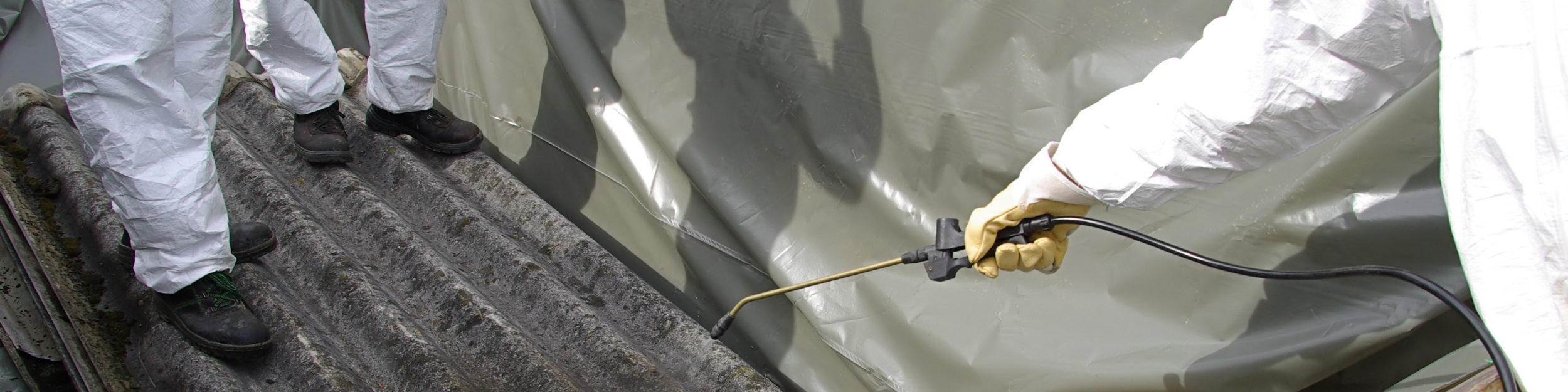
Quick answer: Across the 2025 / 2026 school year we delivered a refreshed Asbestos Management Plan and a three-stage Class B asbestos removal program at a mid-1970s government primary school in Melbourne’s north-east. The school had a current Asbestos Register but the Management Plan had not been meaningfully reviewed since 2018, and a routine condition reinspection had flagged degraded eaves, lifting vinyl floor tiles in three classrooms, and a Zelemite switchboard backing panel scheduled for replacement under an electrical upgrade. Rather than ripping the entire campus apart in one summer-break window, the school council and the Victorian School Building Authority (VSBA) approved a staged removal program running across three consecutive school holiday periods — Stage 1 in the April / Easter break, Stage 2 in the July mid-year break, and Stage 3 across the long summer break — with the refreshed Asbestos Management Plan released at the start of Term 1 and updated after each stage. Total documented ACM area across all three stages was approximately 1,180 square metres of non-friable bonded material spread across six pre-1979 building blocks and two demountable classrooms. The end-to-end program ran eleven calendar months from the AMP-refresh site visit to the final documentation pack landing in the principal’s inbox, with nineteen working days of on-site removal split across the three holiday windows. Final fixed-price cost for the integrated AMP refresh + staged Class B removal + independent clearances + EPA-tracked disposal scope was $268,400 (incl. GST) across the three stages combined. Each stage delivered an independent Regulation 297 clearance certificate before students and staff returned, and the AMP was refreshed three times across the program to reflect the diminishing residual ACM inventory.
This is the kind of programmed, multi-stage school asbestos project we run regularly across Greater Melbourne and regional Victoria for principals, business managers, school councils, approved providers, VSBA project officers and independent and Catholic school facility teams. It is also the kind of project where doing it in stages, against a refreshed Management Plan, with parent communication built into the program from Day 1, is the difference between a maintenance milestone and a community crisis.
The case study below walks you through every stage of the project — what the original Register and AMP looked like, what the condition reinspection found, how the three stages were sequenced against the school calendar, what each stage cost, what the parent communication looked like at each step, what could have gone sideways and didn’t, and what the school council would do differently next time. Identifying details — the school’s name, the exact suburb, the principal’s name and the colour of the demountables — have been generalised for privacy. Scope, sequencing, costs and the compliance pathway are as the project ran.
If you are a principal, business manager, school council member, VSBA project officer, ECEC approved provider or facility manager responsible for a pre-2004 school, kindergarten or campus anywhere in Melbourne or Victoria, this is what a compliant, fixed-price, staged school asbestos management plan and removal program actually looks like in 2026.
Why We Wrote Up This Case Study
Most online content about school asbestos removal speaks in abstractions. Compliance checklists. Regulatory citations. Cost ranges. Generic “what to look for” articles that never put a sequence, a calendar, a number or a parent letter on the page.
The principals, business managers and school councils we work with do not want abstractions. They want to know what actually happens on the ground, what it actually costs, when the work actually runs against the term calendar, what gets communicated to parents and when, and what the documentation pack looks like at the end. They want to see a real program walked through from the moment the condition reinspection flags an issue to the moment the final clearance certificate is filed against the building file.
This case study is written for that reader. It is the school-sector companion to our Case Study: Full Asbestos Removal in a 1970s Weatherboard Home and our Case Study: Asbestos Clearance Before Demolition of a Commercial Warehouse. Where the residential case study showed a four-day, single-window program and the commercial case study showed an eleven-week integrated clearance-and-demolition program, this case study shows the third operating mode — a programmed, multi-stage scope sequenced against an occupied, regulated, community-facing site where the program has to bend to the calendar, not the other way around.
If you take one structural idea from this article, take this one: schools are not commercial sites with children in them. They are a different kind of asbestos project, governed by a different combination of regulators, scheduled against a different kind of calendar, and answerable to a different audience. The technical work is the easy part. The program design is the hard part. The communication is the harder part. The documentation is the part that will outlast every adult on the project.
The School: A Typical Pre-1979 Melbourne Government Primary
The site is a Department of Education government primary school in Melbourne’s north-east, sitting on a 1.8-hectare campus with approximately 480 enrolled students from Foundation to Year 6, a teaching staff of 32, an administrative team of 6, and a regular roster of after-school care providers, allied health practitioners and community groups using the hall and library outside school hours.
The campus comprises six permanent buildings constructed between 1972 and 1978 — a main classroom block (Building A), a junior classroom block (Building B), a library and resource centre (Building C), a multi-purpose hall and canteen (Building D), an administration and staff block (Building E) and a standalone art and music room (Building F) — plus two relocatable / demountable classrooms added in the late 1990s as enrolments climbed, and a 2014 OSHC and STEM extension wing on the eastern boundary that is entirely post-2004 construction.
For asbestos compliance purposes, the relevant assumption is straightforward: every building constructed at this campus before 31 December 2003 is to be treated as containing ACM until proven otherwise by sampling. That covers six permanent blocks and two demountables. Only the 2014 wing is exempt. This is the same assumption we make across every pre-2004 Victorian school we attend — government, Catholic and independent alike.
The school’s existing Asbestos Register (last refreshed in late 2022) recorded ACM in the following twelve categories across the campus:
- Asbestos cement (AC) eaves and soffit linings — all six pre-1979 buildings.
- AC fascia capping — Buildings A, B and D.
- AC corrugated roof sheeting — Building F and the rear canteen lean-to of Building D (Super Six profile).
- AC fence panels — sections of the rear boundary and the bin enclosure.
- AC partition sheeting — internal corridor partitions in Buildings A and B.
- AC wet-area sheeting — toilet blocks in Buildings A, B and D, plus the staff amenities in Building E.
- Vinyl floor tiles with suspect bituminous adhesive — three classrooms in Building A, the staff room in Building E, and the corridor in Building B.
- AC switchboard backing panels (Zelemite-type) — main switchboard in Building E, sub-board in Building D.
- AC flue penetrations — the original boiler-room flue (decommissioned, retained), and the canteen rangehood flue.
- AC penetration collars around plumbing risers — both toilet blocks in Buildings A and B.
- AC sheeting beneath the demountable classroom subfloors (two demountables).
- Possible ACM rope gasket in the original boiler door (Class A scope flagged for specialist confirmation).
The 2022 Register classified eleven of the twelve categories as Class B non-friable bonded material in stable condition, manage in place, with the twelfth (the boiler rope gasket) flagged for Class A specialist assessment if the boiler room was ever to be disturbed. This was a reasonable register for 2022. The problem, as is almost always the case, was not the register itself. The problem was that the Asbestos Management Plan built around the register had not been meaningfully refreshed since 2018, and the condition of several categories of material had drifted in the four years between the 2022 reinspection and our involvement in early 2026.
Stage 0 — The Trigger: A Routine Condition Reinspection (January 2026)
In late January 2026, immediately before the start of Term 1, the school’s independent licensed assessor conducted the routine five-year condition reinspection required under Regulation 425 of the OHS Regulations 2017 (Vic). The assessor walked every building, photographed every documented ACM element, sampled four new suspect materials identified since the 2022 walk, and produced a refreshed condition report.
The report flagged four findings that escalated the school’s risk profile.
Finding 1 — Eaves degradation on Buildings A and B. Sections of the AC eaves linings on the eastern elevations of Buildings A and B (the side that catches the late-afternoon weather) had degraded to the point where surface delamination, edge crumbling and visible micro-cracking were no longer “monitor in place” findings. The assessor’s condition rating moved from “good — manage in place” to “poor — schedule removal within twelve months.”
Finding 2 — Vinyl floor tile lifting in three Building A classrooms. Three classroom floors in Building A had begun to lift at the joints under heavy student traffic, exposing the bituminous adhesive substrate. The tiles themselves were still mechanically intact but the lifting created both an immediate trip hazard for students and a potential disturbance pathway for the underlying ACM adhesive. Condition rating: “poor — schedule removal within six months.”
Finding 3 — Zelemite switchboard panel due for replacement. The school’s electrical contractor had separately advised the business manager that the main Building E switchboard required full replacement within the year as part of a Department of Education electrical upgrade. The Zelemite backing panel sitting behind the existing switchboard was now a planned-works disturbance rather than a “manage in place” element — moving it from a passive Register entry to an active scope item.
Finding 4 — Demountable subfloor sheeting confirmed friable in one location. Sampling of the AC sheeting beneath one of the two demountables returned a NATA-accredited laboratory result confirming chrysotile asbestos in a friable condition at one corner, where moisture ingress over twenty-plus years had degraded the material to a state where it crumbled under hand pressure. This was a Class A scope finding — a material change from the 2022 register’s “Class B, manage in place” classification.
The four findings together changed the school’s compliance posture. Three of the four required scheduled removal within the school year. One required Class A specialist subcontracting. None of the four were emergencies; all of them required a programmed response built into the school calendar.
The principal, the business manager, the school council chair, the school council’s facilities subcommittee and the VSBA regional project officer convened in the second week of Term 1 to scope the response. The decision they made was the right one: rather than attempt a single mass removal over the summer break (which would have crashed against multiple competing campus projects, exceeded any single annual maintenance budget, and concentrated all of the disruption into one window), they would commission a staged removal program across three consecutive holiday breaks — Easter, July and summer — with the Asbestos Management Plan refreshed before Stage 1 commenced.
We were engaged at the end of Term 1 Week 4 to prepare the program.
Stage 1A — Asbestos Management Plan Refresh (February – March 2026)
Before a single sheet of ACM was touched, the Asbestos Management Plan required a comprehensive refresh. This is non-negotiable on a school site. The AMP is the legal foundation under Regulation 429 of the OHS Regulations 2017 (Vic) on which every subsequent compliance action — the WorkSafe notifications, the staff briefings, the parent communications, the contractor inductions, the clearance certificates and the post-removal Register updates — sits.
A separate piece on our site explains What Is an Asbestos Management Plan and Do You Need One? in full regulatory detail. For the purposes of this case study, the relevant point is that the school’s existing 2018 AMP had three problems: it had not been updated for the 2022 Register refresh, it had not been updated for the late-2024 changes to WorkSafe Compliance Code references, and — most importantly — it did not contain a sufficiently detailed incident response procedure, planned-works disturbance pathway or community communication framework to support a staged removal program running across three holiday windows.
The refreshed AMP we produced in February and March 2026, in collaboration with the independent licensed assessor and the school’s leadership, contained the following core content (this is the Regulation 429 minimum framework we recommend every Victorian school adopt):
- Identification. A current Asbestos Register listing every identified ACM element by building, location, type, quantity, condition rating, sampling reference, photograph and last-inspection date.
- Decisions and procedures. The decision-making procedure for what is removed, what is managed in place, what is encapsulated and what is sealed off pending future work.
- Responsible persons. Named accountability — the principal as the duty-holder under s.21 of the OHS Act, the business manager as the day-to-day site contact, the school council as the governance body, the VSBA project officer as the procurement and funding gatekeeper, and the licensed removalist as the executing contractor.
- Worker information. How staff, contractors, cleaners, gardeners, OSHC providers and external trades are informed of identified ACM before any work begins. The AMP attached the Asbestos Awareness Briefing that every contractor signs before commencing work on site.
- Training. Confirmation of asbestos-awareness training requirements for facility-management staff, plus signposting to the contractor’s own Class B licensing and refresher records.
- Health monitoring. The framework for any health monitoring of school staff in the (highly unlikely) event of an exposure incident, in conjunction with WorkSafe Victoria’s Asbestos Health Surveillance Program.
- Incident response procedure. The step-by-step response if any ACM is damaged, dislodged, drilled into, accidentally cut, water-damaged or weather-damaged. This is the procedure that gets called when a Year 4 student kicks a soccer ball through an eaves panel; the AMP we deliver always includes a 24-hour licensed-removalist contact number on the cover page.
- Planned-works disturbance pathway. The procedure that any planned works at the school — solar panel installation, air conditioning upgrade, painting, fence replacement, classroom refurbishment — must follow before any contractor mobilises. This is one of the single most important sections, and the one most commonly missing from older school AMPs.
- Community communication framework. The school’s standing position on how parents, carers and the broader school community are notified about asbestos works. This section was new in our refresh — the 2018 AMP had no community communication content at all.
- Disposal pathway. The default disposal pathway via EPA Victoria’s Waste Tracker manifest system to an EPA-licensed landfill, with reference to the school’s preferred licensed removalist.
- Document control. Version control, review cycle (five years minimum, immediately after every removal), distribution list and storage location for both the master document and the on-site working copy.
- Appendices. The current Register, the current condition reinspection report, every licensed contractor’s WorkSafe Class B (and Class A) licence, the standing public liability and asbestos liability insurance certificates, the EPA waste transporter permit, and a sample parent communication letter template.
The refreshed AMP was endorsed by the school council at its March meeting, lodged with the VSBA, distributed to all staff via the staff intranet, distributed to all standing contractors at their next site induction, and uploaded into the school’s facilities management system. Version 1.0 of the 2026 AMP was dated 21 March 2026. It would be reissued as Version 1.1 after Stage 1, Version 1.2 after Stage 2, and Version 1.3 after Stage 3 — reflecting the diminishing residual ACM inventory at each step.
Cost of Stage 1A (AMP refresh, condition reinspection coordination, school council briefing): $6,800 (incl. GST).
Stage 1B — Scoping, Pricing and Program Design (March 2026)
With the AMP refreshed and the four reinspection findings prioritised, we sat with the principal, business manager and VSBA project officer to design the three-stage program. The principles underlying the program design are worth listing because they apply to every staged school asbestos removal we run.
Principle 1: Match the scope to the available holiday window.
Each Victorian school term break is a different length. Easter / Term 1 break is roughly two weeks. The July mid-year break is roughly two weeks. The Term 3 spring break is roughly two weeks. The summer break, from mid-December to late January, is roughly six to seven weeks. The scope assigned to each stage has to fit comfortably inside the window with a buffer for weather, clearance scheduling and the unexpected. A school holiday window with no buffer is a window that will overrun into Day 1 of the new term — which is non-negotiable.
Principle 2: Sequence by risk and disturbance need, not by convenience.
The Building A vinyl floor tiles needed to come out first because the lifting was already creating a disturbance pathway during occupied term time. The eaves on Buildings A and B were next priority because of the condition degradation. The switchboard panel was time-locked to the electrical upgrade. The demountable subfloor (Class A scope) needed dedicated Class A subcontractor scheduling and was the obvious candidate for the summer break.
Principle 3: Stage the disruption against the academic calendar.
Library closures, hall closures and admin block closures have different academic costs. Locking down the library during NAPLAN week is harder than locking it down in Week 1 of Term 2. The program design lined up the heaviest disruption with the lowest-impact academic moments.
Principle 4: Build in independent clearance scheduling.
Every stage needs its own Regulation 297 independent clearance certificate before re-occupation. Independent assessors are booked weeks in advance, particularly through the summer break. The clearance booking is part of the program design, not an afterthought.
Principle 5: Build in WorkSafe notification timing.
Every stage requires a five-day WorkSafe Victoria notification under Regulation 460. The notification clock has to start at least a week before the planned commencement of each stage. On a staged program this means three separate notifications, three separate ARCPs and three separate SWMSs — one per stage, each site-specific to that stage’s scope.
Principle 6: Communicate to the school community before each stage, not just once.
Parent communication on a staged program is not “send one letter at the start of the year.” It is a fresh, stage-specific communication before each stage, with the documentation pack from the previous stage attached as evidence that the program is running properly.
The agreed three-stage program
After three rounds of scope-shaping with the school leadership and the VSBA, the agreed program was:
Stage 1 — Easter / Term 1 break (April 2026, ~12 working days available, 4 days of removal scheduled).
- Building A — vinyl floor tile and bituminous adhesive removal across three classrooms (~210m² of tiles).
- Building B — vinyl floor tile and adhesive removal across the corridor (~58m²).
- Building E — staff room vinyl floor tile removal (~36m²).
- Total Stage 1 ACM: ~304m² of vinyl floor tiles plus bituminous adhesive.
Stage 2 — July mid-year break (July 2026, ~12 working days available, 5 days of removal scheduled).
- Buildings A and B — eaves, soffits and fascia capping replacement across the eastern elevations (~265m² of eaves linings and ~38 linear metres of fascia capping).
- Building E — main switchboard Zelemite backing panel removal coordinated with the electrical upgrade (~1.2m² panel plus sub-board panel of ~0.4m²).
- Building D — canteen rangehood flue removal (~3 linear metres of AC flue).
- Total Stage 2 ACM: ~306m² of bonded sheeting plus electrical and flue elements.
Stage 3 — Summer break (December 2026 to late January 2027, ~6 weeks available, 10 days of removal scheduled).
- Building D — canteen lean-to roof (Super Six profile) removal (~94m²).
- Building F — art and music room roof (Super Six profile) full re-roof program with Class B removal of existing sheeting (~118m²).
- Buildings A and B — wet-area partition sheeting in toilet blocks (~78m² internal sheeting).
- Demountables (×2) — subfloor AC sheeting removal, coordinated with Class A subcontractor for the friable corner identified in the January reinspection (~62m² Class B subfloor sheeting + ~3m² Class A friable scope).
- AC fence panels — rear boundary and bin enclosure (~220m²).
- Total Stage 3 ACM: ~575m² of Class B bonded material plus ~3m² Class A friable scope.
Cross-stage total: approximately 1,180m² of Class B non-friable ACM + 3m² of Class A friable scope + ~38 linear metres of fascia capping + 3 linear metres of AC flue + 1.6m² of switchboard backing panels.
The fixed prices
| Stage | Scope | Fixed price (incl. GST) |
|---|---|---|
| Stage 1A | AMP refresh + condition reinspection coordination + school council briefing | $6,800 |
| Stage 1B | Scoping, three-stage program design, ARCP and SWMS development | included in Stage 2/3 mobilisation |
| Stage 2 (calendar Stage 1) | April / Easter break removal (Building A, B, E floor scope) | $58,400 |
| Stage 3 (calendar Stage 2) | July break removal (eaves, switchboard, canteen flue) | $74,200 |
| Stage 4 (calendar Stage 3) | Summer break removal (roofs, wet areas, demountables incl. Class A subcontract, fences) | $129,000 |
| Total program | $268,400 |
The school council endorsed the program and the fixed prices at its March meeting. The VSBA confirmed funding allocation against the school’s 2026 facilities maintenance budget plus a top-up from the Department’s Asbestos Removal Program funding line.
The program was locked in on 24 March 2026 — a week before the end of Term 1.
Stage 2 — Easter Break: Vinyl Floor Tiles and Bituminous Adhesive (April 2026)
Parent communication (last week of Term 1)
The principal’s first community communication on the program went out on the Tuesday of the last week of Term 1, two weeks before commencement. The letter was drafted in collaboration with us and adapted into the principal’s voice. The core content was as follows (paraphrased, not quoted, to keep the case study generic):
- The school holds a current Asbestos Register and a refreshed Asbestos Management Plan, both available for parents to view on request.
- During the upcoming Easter break, a WorkSafe Victoria licensed Class B asbestos removalist will conduct planned removal of vinyl floor tiles in three Building A classrooms, the Building B corridor and the Building E staff room.
- The work will be supervised, sealed off from the rest of the campus, conducted under the WorkSafe Compliance Code, and cleared by an independent licensed assessor before students return.
- The clearance certificate will be shared with the school community after the work is complete.
- Any parent with questions is welcome to contact the principal or the business manager directly, and the licensed removalist’s contact details are available for any technical questions.
The letter ran to one A4 page. No technical jargon. No list of PPE. No regulation numbers. The framework was the evidence — the licence, the independent clearance and the documentation pack — not the equipment.
Total parent enquiries received in the week after the letter: four. Three were follow-up questions about whether the affected classrooms would be reorganised (they would not — the same furniture would return). One was a thank-you for the transparency.
This is, broadly, what happens when school asbestos communication is done well: a handful of follow-up questions, no group chat panic, no local media interest, and a community that walks back into Term 2 with the same level of trust they walked out of Term 1 with.
Day 1 (Monday, Easter Tuesday) — Site establishment
- 0700: Crew on site. School business manager present for site induction and key handover. Sign-in to the contractor visitors’ log.
- 0730: Final ARCP and SWMS walk-through across all three work zones with the site supervisor.
- 0800: Temporary perimeter fencing installed across the Building A wing entry and the staff room corridor entry, with locked gates at the controlled access points. Signage posted: “DANGER — ASBESTOS REMOVAL IN PROGRESS — AUTHORISED PERSONS ONLY”, principal contractor details, WorkSafe Class B licence numbers, and emergency contacts.
- 0900: Three-stage decontamination unit established outside Building A. H-class hazardous-dust vacuums, P2/P3 respirators, disposable Type 5/6 coveralls, gloves, boots and 200-micron polyethylene rolls staged for the week’s work.
- 1030: Critical-barrier 200-micron polyethylene sheeting installed at the doorways of all three Building A classrooms, the Building B corridor and the Building E staff room. Each work zone fully isolated from the rest of the building.
- 1200: Lockable asbestos skip positioned at the side service entry, out of sight of the front-of-school view (specifically requested by the principal — schools live and die on visual cues, and a clearly-signed asbestos skip parked in front of the main reception is a guaranteed parent enquiry).
- 1330: Site office, first-aid station, eye-wash and spill kits established at the muster point.
- 1500: End-of-day toolbox talk. Sign-off on site readiness for vinyl tile removal commencement on Tuesday morning.
Day 2 (Tuesday) — Building A Classrooms 1 and 2
The vinyl floor tile and bituminous adhesive removal is the slow, methodical end of Class B work. Tiles cannot be ripped or jack-hammered. The bitumen is the harder problem; it has to be removed in stages with wet methods and hand scrapers.
- 0700: Crew on site. Daily toolbox talk. Pre-start check of decontamination unit, PPE, RPE, water supply, vacuum filters.
- 0730: Classroom 1 entered under full PPE. The classroom furniture had been moved to an adjoining classroom by the school’s facilities team on the Friday of Term 1.
- 0800: Vinyl tile removal commenced. Each tile lifted individually with a hand scraper, sprayed with water and surfactant, double-wrapped, into the lockable asbestos skip via the controlled access pathway.
- 1100: Bituminous adhesive removal commenced. Wet-method scraper, two passes across the substrate, H-class HEPA vacuum to capture any loose material between passes.
- 1430: Classroom 1 substrate cleaned. Visual check by site supervisor. Sealed and tagged “Ready for Independent Clearance.”
- 1500: Classroom 2 entered. Same procedure.
- 1700: End-of-day decontamination. Crew through the three-stage unit. Disposable PPE bagged as waste. Reusable tools wet-wiped and HEPA-vacuumed. Skip secured for overnight. Manifest opened in EPA Waste Tracker for Day 2 load.
Day 2 ACM removed: ~140m² of tiles plus underlying adhesive. Loads transported: 0 (skip retained on site to be collected end of week).
Day 3 (Wednesday) — Building A Classroom 3, Building B corridor
- 0700: Crew on site. Toolbox talk. Pre-start check.
- 0800: Classroom 3 vinyl and adhesive removal — same procedure as Tuesday.
- 1300: Building B corridor commenced. The corridor was the lowest-volume but most footfall-exposed zone; we ran it later in the week to allow the heaviest student-touch zones to be cleared first.
- 1700: End-of-day decontamination. Site secured.
Day 3 ACM removed: ~128m². Loads transported: 0.
Day 4 (Thursday) — Building E staff room, final pre-clearance prep
- 0700: Crew on site. Toolbox talk.
- 0800: Staff room vinyl and adhesive removal.
- 1300: All three work zones across all three buildings final-cleaned. Wet-wipe and H-class HEPA across every surface in the work zones. Critical-barrier sheeting inspected for breach. Decontamination unit fully cleaned.
- 1500: Independent licensed assessor arrived on site for Regulation 297 visual clearance inspection across all three work zones. The independent assessor is exactly that — independent. We never sign our own clearance. The assessor’s report must be issued by a party with no commercial interest in the removal program. This is the single most important compliance gate on every school job.
- 1700: Skip collected by our EPA-permissioned transport partner and driven directly to the pre-booked EPA-licensed landfill slot. Manifest closed at the weighbridge. Tip receipts retained. Stage 1 transport: 1 load, 2.4 tonnes.
Day 5 (Friday) — Clearance certificate issued, site demobilised
- 0900: Independent licensed assessor issued the Regulation 297 clearance certificate for all three Stage 1 work zones, signed and dated, sample IDs cross-referenced, photographs attached.
- 1100: Critical-barrier sheeting removed. Site decontamination unit dismantled. Skip area swept.
- 1300: Building A, Building B and Building E work zones formally handed back to the school’s facilities team. School furniture returned to the cleared classrooms by the facilities team.
- 1500: Stage 1 documentation pack compiled — licence copy, ARCP, SWMS, WorkSafe notification confirmation, NATA sample IDs, clearance certificate, EPA Waste Tracker manifest, landfill tip receipt, before/during/after photographs, updated Register entries for the removed elements.
- 1700: Documentation pack delivered to the principal and business manager by email and hard copy.
Days 6 – 14 — Reinstatement
The school’s flooring contractor was on site by the following Monday (still inside the Easter break) to install new compliant vinyl flooring across the cleared classrooms, corridor and staff room. The reinstatement was a separate contract scoped by the VSBA, but the asbestos clearance had been timed to release the floors with eight clear working days of holiday window remaining for the reinstatement to land before students returned.
Students walked back into Building A on Day 1 of Term 2 onto compliant, non-ACM flooring, with the cleared corridor in Building B feeling identical to how it had felt the previous term. There was no announcement, no banner, no signage. The work was simply done.
Post-Stage-1 parent communication
The principal’s follow-up letter went out on the Monday of Term 2, attaching the clearance certificate as evidence. Three sentences in plain English: the work was completed during the break, the independent clearance certificate is attached, and the Register and AMP have been updated. Parent enquiries received in the week after the follow-up letter: zero.
Stage 1 fixed price delivered: $58,400 (incl. GST). Program: on time. Documentation: complete. Community response: silent. This is what a well-run school asbestos stage looks like.
The AMP was reissued as Version 1.1 to reflect the removal of ~304m² of vinyl floor tile and bituminous adhesive across Buildings A, B and E. The Register was updated to flag those elements as removed, replaced with compliant non-ACM flooring, file reference 2026-S1-01.
Stage 3 — July Mid-Year Break: Eaves, Switchboard and Canteen Flue (July 2026)
The July break ran the same structural program as Easter, with two differences — the scope was external rather than internal, and a coordinated electrician was on site for the switchboard work.
Parent communication (last week of Term 2)
The Stage 2 parent letter went out fourteen days before the start of the July break, attaching the Stage 1 clearance certificate from the April program as evidence of the program’s compliance track record. The community at this point had already seen one stage delivered without incident. Trust was higher. Enquiries were lower. Total parent enquiries received in the week after the Stage 2 letter: one — a question about whether the eaves work would affect the rooftop solar panels (it would not).
The five-day clock and the WorkSafe notification
The mandatory five-day WorkSafe Victoria notification under Regulation 460 was lodged 11 working days before the planned commencement of Stage 2. The notification included the site-specific Stage 2 ARCP, the Stage 2 SWMS, the named site supervisor, the proposed start date, the disposal pathway and a copy of our current Class B licence. A separate licence copy was provided to the school for the electrical contractor’s site induction, which we coordinated jointly.
Day 1 (Monday, Week 1 of break) — Eastern elevation eaves, Buildings A and B
- 0700: Crew on site. Mobile elevating work platforms (MEWPs) delivered and inspected.
- 0800: Site establishment — perimeter fencing across the eastern elevations of Buildings A and B, exclusion zones marked, signage posted, decontamination unit established, skip positioned at the service entry.
- 0900: Eaves removal commenced on Building A eastern elevation. Each AC eaves panel unscrewed at the fixings, lifted off whole, sprayed continuously with water and surfactant, no power tools, no cutting. Material lowered to ground level on ropes, never dropped, wrapped and tagged at ground level.
- 1100: Fascia capping removal commenced (~38 linear metres across both buildings). Capping unfixed at the fasteners, removed in lengths, double-wrapped, into the skip.
- 1700: End-of-day decontamination. Crew through the three-stage unit. Day 1 ACM removed: ~98m² eaves + ~12 linear metres capping.
Day 2 (Tuesday) — Building B eastern elevation eaves, Building A southern elevation eaves
- 0700: Crew on site. Toolbox talk.
- 0800: Building B eastern eaves and Building A southern eaves. Same method.
- 1700: End-of-day decontamination. Day 2 ACM removed: ~107m² eaves + ~14 linear metres capping.
Day 3 (Wednesday) — Building E switchboard coordination
This was the day with the heaviest coordination load of the stage.
- 0700: Crew on site. Electrical contractor on site at the same time. Joint toolbox talk covering the electrical isolation, the Zelemite removal procedure, the sub-board removal, and the immediate reinstatement plan.
- 0800: Electrician isolated the main switchboard. Site supervisor and electrical foreman jointly verified isolation. Lock-out / tag-out applied.
- 0830: Critical-barrier sheeting installed around the switchboard cabinet. Decontamination of the cabinet interior in preparation for panel removal.
- 0900: Zelemite backing panel removed under wet method, lifted out as a single piece, wrapped, labelled and decontaminated.
- 1000: Electrician commenced installation of the new compliant switchboard backing.
- 1300: Sub-board panel removed from Building D under the same procedure.
- 1500: Electrical reinstatement complete. Switchboard re-energised. Building D and Building E power confirmed across all circuits.
- 1700: End-of-day decontamination.
Day 4 (Thursday) — Canteen rangehood flue and outstanding eaves sections
- 0700: Crew on site. Toolbox talk.
- 0800: Canteen rangehood flue removal. The flue had been disconnected by the school’s plumber the previous afternoon. The AC flue sections were removed under wet method, double-wrapped, into the skip.
- 1000: Outstanding sections of Building A and B eaves (the lower-elevation overhang above the playground equipment) completed.
- 1500: Visual clearance walk-through by the site supervisor across all Stage 2 work zones.
- 1700: End-of-day decontamination. Skip collected by the EPA-permissioned transport partner. Manifest closed. Stage 2 transport across all days: 2 loads, 5.8 tonnes.
Day 5 (Friday) — Independent clearance and demobilisation
- 0900: Independent licensed assessor on site. Regulation 297 visual clearance across all four Stage 2 work zones (eaves runs on Buildings A and B, switchboard in Building E, sub-board in Building D, canteen flue in Building D).
- 1300: Clearance certificate issued.
- 1500: Site demobilised. Documentation pack compiled and delivered to the principal and business manager by 1700.
Reinstatement window
The eaves replacement contractor was on site by the following Monday with compliant fibre-cement (non-ACM) replacement linings. The fascia capping was replaced with Colorbond capping in the school’s colour scheme. The eaves reinstatement landed on the second Friday of the break, leaving the following weekend as buffer before students returned.
Stage 2 fixed price delivered: $74,200 (incl. GST). Program: on time. Documentation: complete. Community response: a single email thanking the principal for keeping families informed.
The AMP was reissued as Version 1.2 reflecting the removal of the eaves runs, the fascia capping, the switchboard backing panels and the canteen flue. The Register’s remaining ACM inventory now sat at approximately 575m² of bonded material and 3m² of friable material — all of which would come out in Stage 3.
Stage 4 — Summer Break: Roofs, Wet Areas, Demountables, Class A Subcontract and Fences (December 2026 – January 2027)
The summer break is where the heavy work goes on a staged school program. Six weeks of available window. Ten days of removal scheduled. Two licensed crews — our in-house Class B team running the bonded scope, and a coordinated Class A subcontractor running the friable demountable subfloor corner.
Pre-summer community communication (Week 8 of Term 4)
The Stage 3 parent letter was the most detailed of the three because the summer scope touched the most visible elements — the canteen lean-to roof, the art and music room roof, the toilet block partition sheeting, the demountables and the rear fence line. The letter attached the Stage 1 and Stage 2 clearance certificates and explained the scope in plain English: which buildings would be closed during which weeks, which playground areas would be fenced off during which weeks, and when the rear boundary fence would be open during the demolition-and-replacement window.
The school council chair attended the final-week-of-term assembly to brief the school community in person. The principal answered five parent questions at the assembly and three by email in the week that followed. None of the eight enquiries required escalation. All eight were resolved with reference to the AMP, the clearance pack from the previous two stages and the licensed removalist’s licence.
Weeks 1 – 2 of the summer break — Class A friable subcontract and demountable subfloor
The Class A friable scope (the moisture-degraded subfloor corner under Demountable 1) ran first, in parallel with no Class B work, so the campus remained empty around the Class A enclosure.
- Day 1 (Monday): Class A subcontractor on site. Full 200-micron sealed enclosure around the demountable’s degraded corner, three-stage decontamination airlock, negative-air unit with H14 HEPA filtration, supplied-air respirators for the supervisor working under the demountable, baseline air monitoring samples taken at four perimeter positions by the independent assessor.
- Day 2 (Tuesday): Wet-spray application of PVA-based encapsulant to the friable material. Removal of degraded subfloor section by hand, into double-bagged friable-waste containment, decontaminated, into the locked Class A skip.
- Day 3 (Wednesday): Adjoining Class B subfloor sections removed under the Class B crew’s wet-method procedure, with a clean handover between the Class A and Class B work areas confirmed by the independent assessor.
- Day 4 (Thursday): Class A enclosure dismantled. Clearance air monitoring conducted. Class A independent clearance certificate issued.
- Day 5 (Friday): Class B demountable subfloor scope completed on Demountable 2. End-of-week decontamination.
Demountable subfloor scope completed: ~62m² Class B + 3m² Class A. Loads transported: 1 Class A (separate sealed manifest), 1 Class B.
Weeks 3 – 4 — Building F art and music room roof, Building D canteen lean-to roof
- Week 3 Monday – Wednesday: Building F roof. Each Super Six profile sheet unscrewed individually, lifted clear, sprayed, lowered on a controlled descent system to ground level, wrapped, into the skip. ~118m² removed across three days.
- Week 3 Thursday – Week 4 Tuesday: Building D canteen lean-to roof. Same procedure. ~94m² across four days. The canteen scope ran slower because the lean-to roof was tied into the main building roof structure and required careful sequencing with the school’s roofing contractor (who was standing by to install the compliant replacement immediately after clearance).
Week 5 — Wet-area partition sheeting, toilet blocks in Buildings A and B
- Monday – Thursday: Toilet block partition sheeting removal across both Buildings A and B. ~78m² internal sheeting. Each partition lifted whole where possible, wrapped, into the skip. Tile substrates removed as composite waste where tiles came down with the sheeting.
Week 6 — Fence removal and final clearance
- Monday – Tuesday: Rear boundary AC fence panels and bin enclosure removed. ~220m² across two days. Sheets removed whole, wrapped, lowered. Timber posts cut and treated as ordinary construction waste, separated from the asbestos stream.
- Wednesday: Final wet-wipe and H-class HEPA across all six summer-break work zones. Independent licensed assessor on site for Regulation 297 visual clearance across the full Stage 3 scope.
- Thursday: Clearance certificate issued. Site demobilisation commenced.
- Friday: Final documentation pack compiled and delivered to the principal, business manager, school council chair and VSBA project officer.
Reinstatement
The roofing contractor, the toilet block refurbishment contractor and the fencing contractor were sequenced into the final 10 days of the summer break, all working off cleared and compliant substrates. By the time staff walked back onto campus for the staff-development week before Term 1 2027, every reinstated element was in place.
Stage 3 fixed price delivered: $129,000 (incl. GST). Program: on time across all six weeks. Documentation: complete. Class A clearance issued separately, Class B clearance issued across the consolidated Stage 3 scope. Community response: a school council resolution at the February 2027 meeting formally thanking the licensed removalist and the VSBA project officer for the program’s clean delivery.
The AMP was reissued as Version 1.3 reflecting the final residual ACM inventory across the campus — limited to the original boiler-room flue (decommissioned, retained as an ACM monument, fully sealed and signed), the AC penetration collars around the plumbing risers (manage in place, low-risk, scheduled for the next planned-works pathway), and the small sections of internal corridor partition sheeting that had not required removal because they sat behind compliant non-ACM partition cladding installed in 2009. The Register now had 84% of the original 1,180m² ACM inventory removed and disposed of, with the residual 16% manage-in-place inventory clearly mapped, condition-rated and scheduled for the next five-year reinspection cycle.
What the Three-Stage Program Actually Cost
The fixed-price total across the three stages was $268,400 (incl. GST). The internal cost composition broke down approximately as follows:
| Cost component | Approximate share |
|---|---|
| Stage 1A — AMP refresh + condition reinspection coordination | $6,800 |
| Pre-stage NATA-accredited samples + reporting (cross-stage) | $4,200 |
| ARCPs, SWMSs, three WorkSafe notifications, permits coordination | $5,800 |
| Stage 1 — Class B labour (April / Easter break, 4 days × crew of 4) | $32,200 |
| Stage 2 — Class B labour (July break, 5 days × crew of 4 + electrician coordination day) | $39,400 |
| Stage 3 — Class B labour (summer break, 10 days × crew of 5 across multiple zones) | $76,800 |
| Stage 3 — Class A subcontracted scope (friable demountable subfloor + enclosure + air monitoring) | $14,600 |
| PPE, decontamination consumables, polyethylene, encapsulants, HEPA filters (cross-stage) | $9,200 |
| Mobile elevating work platforms (Stage 2 eaves, Stage 3 roofs) | $11,400 |
| EPA-tracked transport + EPA Waste Tracker manifests + EPA-licensed landfill disposal (8 loads across three stages, 22.6t total) | $14,100 |
| Independent licensed assessor — three separate Regulation 297 clearances + Class A air monitoring | $9,200 |
| Site establishment, fencing, signage, decontamination units across three stages | $11,600 |
| Documentation pack compilation, three AMP version updates, Register updates, photo indexing | $7,400 |
| Project management, insurance, compliance overhead, contingency | $25,700 |
| Total (incl. GST) | $268,400 |
A few observations on the cost structure that matter for any principal, business manager, school council member or VSBA officer reading this:
- Staging the program across three windows added approximately $18,000 to $22,000 to the total cost compared with running everything in one consolidated summer-break window. The extra cost came primarily from three separate mobilisations, three separate WorkSafe notification cycles, three separate site establishments and three separate independent clearances. The school council judged — correctly, in our view — that this added cost was easily justified by the spreading of disruption, the spreading of budget across two financial years, and the building of community confidence stage-by-stage.
- The Class A subcontracted scope cost $14,600 for ~3m² of friable material. That works out at roughly $4,870 per square metre — which sounds extraordinary until you understand that the Class A enclosure, the negative-air unit, the supplied-air respirators, the NATA air monitoring and the independent Class A clearance for the friable scope all flow into that line item. A non-compliant contractor would have run the same scope as Class B at perhaps $1,500 to $2,000 — and would have produced a non-compliant outcome that would have surfaced on the first WorkSafe audit.
- Disposal across the program was $14,100 across 22.6 tonnes. That is approximately $625 per tonne all-in for transport, manifest handling and EPA-licensed landfill gate fees. Quotes that omit the disposal line, or that quote disposal at a fraction of this number, are quotes where the material is not going to a licensed landfill. On a school site, the duty of care for downstream disposal sits with the school under the Environment Protection Act 2017 (Vic). Cheap disposal is not a saving — it is an off-balance-sheet liability waiting to surface.
- The documentation pack compilation across three stages was $7,400. Cheap quotes routinely strip this line out. The pack is what protects the school’s downstream position with insurers, with future buyers (if the site is ever sold), with refinancing lenders (if the school is a non-government school), with the next VSBA project officer, and with any future audit or community inquiry. The saving is the single most expensive saving in school asbestos.
For broader context on cost ranges across the schools sector, see our companion guide Asbestos Removal for Schools and Childcare Centres: A Safety Guide.
What Could Have Gone Sideways — And Didn’t
Every staged school asbestos program has potential failure points. This program had five, all of which we identified during program design and managed through delivery. They are worth listing because they are the same failure points we see across virtually every school-sector asbestos program in Melbourne and Victoria.
1. The outdated 2018 Asbestos Management Plan
The 2018 AMP on file had no community communication framework, no planned-works disturbance pathway and no incident response procedure consistent with the 2017 Regulations. A contractor relying on the old AMP — instead of insisting on a refreshed AMP before scope commenced — would have run the program against compliance gaps that any WorkSafe inspector would have picked up on a routine audit. The AMP refresh, commissioned at $6,800, prevented that.
2. The friable demountable subfloor
The 2022 Register had classified the demountable subfloor as Class B, manage in place. The January 2026 reinspection upgraded one corner to Class A friable, following sampling of degraded material at the moisture-affected joint. A contractor with a Class B-only licence and no honest Class A subcontracting relationship would have either (a) attempted the work as Class B (illegal and unsafe), (b) declared the scope too hard and walked away (program slips by months), or (c) quietly omitted the friable corner from the scope and left it for the next contractor (compliance gap that surfaces at the next reinspection). The honest Class A subcontracting pathway, declared upfront, eliminated all three failure modes.
3. The electrical upgrade timing
The Building E switchboard had a hard external deadline driven by the Department of Education’s electrical upgrade program. If the Zelemite backing panel removal had slipped into Term 3, the electrical upgrade would have been pushed into a future financial year and the school’s switchboard would have remained on the upgrade backlog. The July-break sequencing — coordinated jointly with the electrical contractor on a single day with shared toolbox talks and shared lock-out / tag-out — held the deadline. This is the kind of coordination that has to be designed into the program from the start; it cannot be retrofitted in the last week.
4. The community communication risk
A school community that hears about asbestos works for the first time via a hand-painted “Danger Asbestos” sign on the front fence is a school community that ends up in the local paper and the school council inbox by the end of the week. The three-stage parent communication framework — letter before each stage, clearance certificate attached after each stage, school council briefing before Stage 3 — meant the community learned about the program from the principal, not from the contractor’s signage. Total media enquiries across the program: zero. Total escalations to the Department of Education: zero. This was not luck. It was program design.
5. The mid-program AMP drift risk
On a multi-stage program, the AMP can drift out of currency between stages — the Register stops reflecting what is actually in the building, the contractor list stops reflecting who has been inducted, and the planned-works pathway stops reflecting the residual inventory. We reissued the AMP three times across the program (Versions 1.1, 1.2 and 1.3) at the end of each stage. By the time Stage 3 closed, the AMP was a fully current, fully accurate, fully site-specific document for the residual inventory. The next principal, the next business manager, the next VSBA project officer and the next contractor will all walk into a documentation environment that reflects the building as it is — not as it was eight years ago.
The Documentation Pack: What the School Received at the End
On completion of Stage 3 — and progressively at the end of each prior stage — the school received a complete documentation pack containing:
- The licensed removalist’s current WorkSafe Victoria Class B licence and the subcontractor’s Class A licence.
- The three site-specific Asbestos Removal Control Plans (ARCPs) — one per stage.
- The three site-specific Safe Work Method Statements (SWMSs) — one per stage.
- The three WorkSafe Victoria five-day notification confirmations.
- NATA-accredited laboratory results for every sample taken under AS 5370:2024 across the program.
- Air monitoring results for the Class A demountable subfloor scope.
- The three independent Regulation 297 clearance certificates — one per stage — each signed by an independent licensed assessor with no commercial interest in the removal program.
- EPA Victoria Waste Tracker manifests for every load of waste leaving site across the program (eight loads in total).
- EPA-licensed landfill tip receipts for every load.
- Before, during and after photographs of every work zone across all three stages.
- The updated Asbestos Register entries reflecting the full removal program, with retained-in-place inventory clearly mapped.
- The three Asbestos Management Plan versions — V1.0 (refreshed pre-program), V1.1 (after Stage 1), V1.2 (after Stage 2) and V1.3 (after Stage 3).
- Refreshed signage for the retained ACM elements across the campus.
- The contractor’s public liability and asbestos liability insurance certificates ($20M public liability and separate asbestos liability cover).
- The contractor’s EPA Victoria waste transporter permit.
- Parent communication letters issued at each stage.
- School council briefing notes for the Stage 3 community briefing.
The principal filed the pack against the school’s building file. The business manager filed the digital copy in the school’s facilities management system. The VSBA project officer filed the pack against the school’s asset record. The school council chair retained a copy in the school council’s governance file. The pack will be referenced by every future principal, every future business manager, every future contractor mobilising onto the site, every future buyer of the land (if the school is ever sold or rezoned), every future insurer, and any future WorkSafe Victoria or EPA Victoria audit. It is built to outlast every adult who worked on the program.
What the School Council Would Do Differently Next Time
At the February 2027 school council meeting, the principal asked the licensed removalist and the VSBA project officer to brief the council on what worked and what could have been done better. The council resolved four practical lessons for any school undertaking a similar program. They are worth listing because they apply broadly.
- Refresh the AMP before the contractor walks on site, not after. The AMP refresh in February and March 2026 was the foundation of every subsequent decision. A school that runs a removal program against a stale AMP is a school exposed at every audit, every reinspection and every contractor handover.
- Lock the program calendar in at the school council meeting before Term 1. All three stages — Easter, July and summer — were locked in writing by the end of Term 1 Week 6. Every subsequent VSBA conversation, every parent communication, every contractor coordination and every WorkSafe notification ran against that locked calendar. A school that re-opens the calendar mid-program is a school that ends up running stages into the first week of the new term — non-negotiable.
- Communicate to parents before the contractor’s signage goes up — never the other way around. The Stage 1 parent letter went out 14 days before the Easter break. By the time the contractor’s perimeter fencing and signage was visible to the front of school, every parent in the community had already read the principal’s letter, knew what was happening, knew it had been planned, and knew the documentation pack was coming. The signage was confirmation, not surprise.
- Treat the AMP as a living document, not a one-off filing. The AMP was reissued three times across the program. Each reissue took us roughly four to six hours of compilation work and cost the school approximately $1,800 to $2,400 per version. The cost is trivial against the protection the refreshed AMP provides to the principal, the school council, the VSBA and every future contractor.
How This Compares to a Single-Window Program
For schools weighing up whether to stage a program across multiple holiday windows or consolidate everything into a single summer-break window, the simple comparison looks like this:
| Factor | Staged program (this case study) | Consolidated summer-break program |
|---|---|---|
| Total ACM removed | ~1,180m² Class B + 3m² Class A | ~1,180m² Class B + 3m² Class A |
| Calendar windows used | 3 (Easter, July, summer) | 1 (summer only) |
| Working days on site | 19 days across 3 windows | ~14 days in one window |
| Fixed-price cost | ~$268,400 | ~$246,000 to $250,000 |
| Mobilisations | 3 | 1 |
| Independent clearances | 3 (one per stage) | 1 (consolidated) |
| WorkSafe notifications | 3 | 1 |
| Parent communications | 3 stage-specific letters + 1 council briefing | 1 program-wide letter + 1 council briefing |
| Reinstatement pressure | Distributed across 3 windows | Concentrated in 1 window |
| Budget recognition | Across 2 financial years | Within 1 financial year |
| Risk concentration | Distributed | Concentrated |
| Disruption profile | 3 small disruptions | 1 large disruption |
| Community trust-build cycle | 3 stage-by-stage confirmations | 1 single confirmation |
There is no single correct answer between the two. For this school, with this campus footprint, this community and this VSBA funding pathway, the staged program was the right design. For another school with a smaller footprint, a tighter community, a single annual budget cycle and no competing campus projects, the consolidated summer-break program may be the right design. The decision should sit with the principal, the school council and the VSBA project officer — informed by the licensed removalist, but not driven by the contractor’s commercial preference. Any contractor who tells you “we only do staged programs” or “we only do single-window programs” is selling their convenience, not designing for your school.
Why a Licensed Class B Removalist Is the Right Default for Pre-2004 Victorian Schools
Across this case study, every action — the AMP refresh, the staging design, the parent communication, the WorkSafe notifications, the on-site removal, the independent clearances, the EPA-tracked disposal, the Register updates and the documentation pack — sat under the accountability of a single WorkSafe Victoria licensed Class B (non-friable) asbestos removalist, with a coordinated Class A subcontractor for the friable demountable scope under the same project management contact.
This is the right default operating mode for pre-2004 Victorian schools because:
- Most school ACM is Class B non-friable bonded material — eaves, fences, roofs, partition sheeting, wet-area sheeting, vinyl tiles, switchboards. A Class B licensed removalist is the natural fit for that scope.
- Class A scope is the exception, not the rule — friable material at schools typically appears in degraded subfloor sheeting, boiler-room lagging, heritage plant rooms and storm-damaged debris. A reputable Class B removalist will identify Class A scope honestly and coordinate a licensed Class A subcontractor under one accountable contact.
- The five-day WorkSafe notification under Regulation 460 applies to all licensed Class B and Class A removal scopes at workplaces — and a school is a workplace. There is no “small school job” exemption, no DIY threshold and no informal pathway.
- The independent Regulation 297 clearance certificate is mandatory before re-occupation — and is one of the most common compliance gates that non-licensed or cheap contractors quietly skip or self-sign. A licensed Class B contractor with an independent assessor relationship will always run an independent clearance because they cannot legally sign their own.
- EPA-tracked disposal is mandatory under the Environment Protection Regulations 2021 — and the chain-of-custody documentation is the school’s only defence if the material is ever found to have been dumped illegally downstream. A licensed Class B contractor with an EPA-permissioned transport partner closes that loop.
- The duty of care under s.21 of the OHS Act 2004 (Vic) sits with the school — and the school’s defence in any future audit, incident or community inquiry is the documentation pack assembled at the end of the program. That pack is only as good as the licensed contractor who assembled it.
A Class B licensed removalist who refuses to coordinate Class A scope, refuses to use an independent assessor for clearance, refuses to use the EPA Waste Tracker system, or refuses to deliver a full documentation pack at the end of the project is not a contractor your school should engage. The cheap quote that strips any of those lines out is the most expensive quote on the table.
Why Asbestos Gone and Clean Is the Right Partner for Your School’s Program
If you are a principal, business manager, school council member, VSBA project officer, Catholic Education property officer, independent school facility manager, ECEC approved provider, or kindergarten committee chair anywhere in Melbourne or Victoria, Asbestos Gone and Clean delivers:
- WorkSafe Victoria licensed Class B (non-friable) asbestos removal as the in-house licensed scope.
- Coordinated Class A friable subcontracting under one accountable project management contact, where any friable scope is identified.
- Free on-site inspection and quote within 24 to 72 hours across Greater Melbourne, with NATA-accredited sampling where required under AS 5370:2024.
- Honest classification of Class B vs Class A scope before the program is locked in — never quoting Class A scope as Class B to win the job.
- Fixed-price written quotes — including survey, sampling, AMP refresh, ARCP, SWMS, WorkSafe Victoria notification, removal, decontamination, transport, EPA-licensed landfill disposal, independent Regulation 297 clearance certificate, and the full documentation pack.
- Staged program design across multiple school holiday windows — Easter, July, spring and summer breaks — sequenced against your school calendar, your reinstatement contractors, your VSBA project officer and your financial-year budget cycles.
- Single-window summer-break programs where consolidation suits the campus better — we do not push staged programs on schools that don’t need them.
- Asbestos Management Plan refresh as a stand-alone service or built into the removal scope, drafted to Regulation 429 with the planned-works disturbance pathway, the incident response procedure and the community communication framework included as standard.
- Wet methods, hand tools, H-class HEPA vacuums, P2/P3 respiratory protection, sealed enclosures and three-stage decontamination units as standard on every job.
- Independent licensed assessor clearance under Regulation 297 — never signed by us, never signed by a related party.
- EPA Waste Tracker manifests for every load, with landfill tip receipts retained.
- Full documentation pack delivered at the end of every stage and again at the end of the program — for the school, the school council, the VSBA, the insurer, the next contractor and any future audit.
- Parent and staff communication support — accurate technical content the principal or approved provider can adapt into the school’s own voice, with sample letters and council briefing notes provided.
- Term-break scheduling as the default — with bookings accepted six to twelve months in advance for the summer break, and three to six months in advance for the Easter and July breaks.
- Integrated demolition and soft-strip services under the same ABN where larger campus projects need both — eliminating the program-slippage and compliance-gap risks that show up when separate trades try to coordinate the asbestos-to-demolition handover on a school site.
We service all Melbourne metropolitan suburbs — from the inner north (Brunswick, Northcote, Coburg, Reservoir, Preston, Heidelberg) and inner west (Footscray, Sunshine, Yarraville, Williamstown), through the south-east (Caulfield, Bentleigh, Oakleigh, Glen Iris, Box Hill, Mount Waverley, Glen Waverley), out to the outer ring (Dandenong, Frankston, Cranbourne, Melton, Sunbury, Werribee, Berwick) — and travel throughout Victoria for school, kindergarten, ELC, childcare and education-sector projects in Geelong, Ballarat, Bendigo, Shepparton, Wodonga, Warrnambool, the Mornington Peninsula, the Yarra Valley, the Latrobe Valley and beyond.
☎ Call us: 0475 143 106
✉ Email: asbestosgoneandclean@gmail.com
???? Contact Us: Asbestos Gone and Clean – Contact
Frequently Asked Questions
What is a school asbestos management plan and why does my school need one?
An Asbestos Management Plan (AMP) is a written, site-specific document required under Regulation 429 of the OHS Regulations 2017 (Vic) that explains how identified asbestos-containing material (ACM) at a workplace will be managed over time. For a school, the AMP sits alongside the Asbestos Register and explains how ACM will be identified, how it will be communicated to staff and contractors, how planned works will be sequenced around it, how damage or disturbance incidents will be responded to, and how disposal will be tracked. Every pre-2004 Victorian school is required to maintain a current AMP. The AMP must be site-specific; a generic template will not satisfy the duty under the OHS Act.
Can a school remove asbestos in stages across multiple holiday breaks?
Yes — and for larger campuses with multiple buildings, it is often the more compliant and more community-friendly design. Staged removal across two, three or four school holiday windows distributes disruption, distributes budget across multiple financial years, builds community trust stage-by-stage, and allows the reinstatement contractors to land cleanly between stages. The trade-off is approximately $15,000 to $25,000 of additional mobilisation, notification and clearance cost on a mid-size program. For most schools running more than ~700m² of ACM, the staged design is worth the additional cost.
Does the residential 10m² / one-hour DIY exemption apply to schools?
No. The residential DIY exemption in Victoria applies only to owner-occupier residential properties. A school is a workplace under the OHS Act 2004 (Vic). Every asbestos removal at a Victorian school — at any quantity — requires a WorkSafe Victoria licensed Class B or Class A removalist. There is no DIY threshold and no “small job” carve-out.
How long should each stage of a staged school program take?
A typical Easter or July break stage runs 4 to 6 working days of removal inside a 10 to 12 working-day holiday window, leaving 4 to 7 working days for reinstatement before students return. A summer break stage typically runs 8 to 12 working days of removal inside a 25 to 30 working-day window, leaving 13 to 18 working days for reinstatement. The exact split depends on the scope, the weather, the independent clearance scheduling and the reinstatement contractor’s program.
Does the Asbestos Management Plan need to be refreshed after every stage of a staged program?
Yes. The AMP should be reissued after every removal stage to reflect the diminishing residual ACM inventory. On the program in this case study, the AMP was reissued three times — once after each stage — at a cost of roughly $1,800 to $2,400 per reissue. The refreshed AMP becomes the document the next principal, next contractor and next reinspection cycle will rely on.
Who pays for school asbestos removal in Victorian government schools?
For Victorian government schools, asbestos removal is typically funded through a combination of the school’s annual facilities maintenance budget and the Victorian School Building Authority’s Asbestos Removal Program funding line, with the program coordinated by the school’s leadership and the regional VSBA project officer. For Catholic schools, funding sits with the Catholic Education Office or the relevant diocese. For independent schools, funding sits with the school’s own property and facilities team.
What is an independent Regulation 297 clearance certificate and why does every stage need one?
Regulation 297 of the OHS Regulations 2017 (Vic) requires that an independent licensed assessor — independent of the removalist — issue a clearance certificate confirming that the work zone is safe for re-occupation. On a school site, this means an independent visual clearance for Class B scope and an independent air-monitoring clearance for Class A scope. Each stage of a staged program needs its own clearance certificate because each stage is a discrete removal scope. A clearance signed by the removalist or a related party is non-compliant and will not survive a WorkSafe audit.
Can a Class B licensed contractor handle every removal scope at our school?
A Class B licence covers non-friable (bonded) asbestos only — fibro cement sheeting, corrugated roofing, eaves, fences, switchboards, vinyl tiles and similar materials where the fibres are locked inside a hard matrix. Friable asbestos — pipe lagging, sprayed coatings, asbestos rope, millboard, degraded subfloor sheeting and damaged ACM that crumbles under hand pressure — requires a Class A licence. Most pre-2004 Victorian school removals are predominantly Class B scope, but heritage boiler rooms, demountable subfloors and storm-damaged material can trigger Class A involvement. A reputable Class B contractor will identify Class A scope honestly and coordinate a Class A subcontractor under a single project management structure.
How should we communicate a staged removal program to our school community?
Communicate before each stage, in plain English, without technical jargon, and with the framework as the evidence rather than the PPE. A typical pre-stage parent letter should confirm: the school holds a current Register and Management Plan; the upcoming stage will be conducted by a WorkSafe Victoria licensed Class B (or Class A) removalist; the work will be sealed off from any occupied areas; an independent clearance certificate will be issued before students return; and the clearance certificate will be shared with the school community after the work is complete. A school council chair or principal briefing at the assembly before the largest stage adds significant trust on top of the written letter.
What documentation should we retain after a staged school asbestos program?
Retain — indefinitely — the licensed removalist’s WorkSafe Class B (and any Class A) licence copies; every ARCP and SWMS issued across the program; every WorkSafe Victoria notification confirmation; every NATA-accredited sample result; every independent Regulation 297 clearance certificate; every EPA Waste Tracker manifest; every EPA-licensed landfill tip receipt; before, during and after photographs of every work zone; every version of the refreshed AMP; the updated Asbestos Register; and the contractor’s public liability and asbestos liability insurance certificates. This pack is the school’s defence in any future audit, sale, refinance, incident review or community inquiry — and it is built to outlast every adult on the program.
Do you service Catholic and independent schools as well as government primary schools?
Yes. We service all sectors of the Victorian education system — government primary and secondary schools (through the VSBA and the Department of Education procurement framework), Catholic primary and secondary schools (through the Catholic Education Office or the diocesan property team), independent schools (through the school’s own facilities or property team), kindergartens, long day care centres, early learning centres, OSHC programs and family day care residences. The compliance framework is consistent across all sectors; the procurement pathway varies.
Do you service regional Victorian schools?
Yes. We service all of Greater Melbourne and travel throughout Victoria for school and education-sector projects — Geelong, Ballarat, Bendigo, Shepparton, Wodonga, Warrnambool, the Mornington Peninsula, the Yarra Valley, the Latrobe Valley and beyond. The Occupational Health and Safety Regulations 2017, the Environment Protection Regulations 2021, the Education and Care Services National Law (for ECEC) and the WorkSafe Compliance Codes apply state-wide.
Is asbestos still legal in Australia in 2026?
No. The manufacture, supply, use and reuse of all forms of asbestos has been banned in Australia since 31 December 2003. The legal obligations now relate to managing, removing and disposing of legacy asbestos already in the built environment — including the substantial residual quantity in pre-2004 Victorian school buildings.
The Bottom Line on School Asbestos Management Plans and Staged Removal
A staged school asbestos removal program is not the hardest technical job in the industry. It is, however, one of the most carefully programmed jobs in the industry. The occupants are children. The duty stack is deep. The calendar is unforgiving. The communication environment is unique. The documentation outlives every site leader.
For principals, business managers, school council members, VSBA project officers and ECEC approved providers across Melbourne and Victoria, the practical takeaways from this case study are simple:
- Refresh the AMP before you scope the removal, not after. The AMP is the foundation; the removal is the consequence.
- Treat the Register as a living inventory, not a 2018 PDF. Five-year reinspections under Regulation 425 are mandatory; they are also where the real condition changes show up.
- Stage the program against your school calendar, not against the contractor’s preferred mobilisation window. Easter, July and summer breaks are the natural windows; design the scope to fit.
- Use a WorkSafe Victoria licensed Class B contractor with an honest Class A subcontracting relationship. There is no DIY threshold in schools. There is no “small school job” carve-out. There is no compliance pathway that skips the licence.
- Insist on an independent Regulation 297 clearance certificate for every stage. Never accept a clearance signed by the removalist or a related party.
- Insist on EPA-tracked disposal with Waste Tracker manifests and landfill tip receipts. The school carries the downstream illegal-dumping exposure if the chain breaks.
- Communicate to the community before each stage, in plain English, with the framework as the evidence. The signage should be confirmation, not surprise.
- Refresh the AMP after every stage. Document drift between stages is the single most common reason staged programs fall over at audit.
- Keep the documentation pack indefinitely. It is the school’s defence in any future audit, sale, refinance, incident review or community inquiry, and it is built to outlast every adult on the project.
Get those nine things right, and a staged school asbestos removal program becomes a programmed maintenance milestone — not a community crisis waiting to happen.
Get a Compliant, Fixed-Price Quote for Your School’s Asbestos Program
If you are responsible for a school, kindergarten, ELC, long day care centre, OSHC service, family day care residence or any pre-2004 education or care setting anywhere in Melbourne or Victoria, Asbestos Gone and Clean can provide:
- A free on-site inspection within 24 to 72 hours across Greater Melbourne, with NATA-accredited sampling where required under AS 5370:2024.
- A refreshed Asbestos Management Plan drafted to Regulation 429 with the planned-works disturbance pathway, incident response procedure and community communication framework included as standard.
- An honest classification of Class B (non-friable) vs Class A (friable) scope before the program is locked in.
- A fixed-price written quote for the full staged or consolidated removal program — including survey, sampling, ARCP, SWMS, WorkSafe Victoria notification, removal, decontamination, transport, EPA-licensed landfill disposal, independent Regulation 297 clearance certificate, and the full documentation pack.
- Term-break and summer-break scheduling as the default — with bookings accepted six to twelve months in advance for the summer break.
- Coordinated Class A subcontracting for any friable scope under our project management — one accountable contact, one consolidated documentation pack.
- In-house Class B removal of all non-friable scope, plus integrated soft-strip and demolition under the same ABN where larger campus projects require it.
- Parent and staff communication support — accurate technical content the principal or approved provider can adapt into the school’s voice.
- Updated Asbestos Register and Management Plan entries on completion of every stage.
- A complete compliance documentation pack delivered on completion of every stage and at the end of the program.
???? Call us: [Phone Number]
???? Email: [Email Address]
???? Online quote form: [Website URL]
We service all Melbourne metropolitan suburbs and travel throughout Victoria for school, kindergarten, ELC, childcare and education-sector projects.
Related Reading
- Asbestos Removal for Schools and Childcare Centres: A Safety Guide (2026 Melbourne & Victoria) — the full duty-of-care framework for principals, approved providers and facility managers.
- What Is an Asbestos Management Plan and Do You Need One? (2026 Melbourne Guide) — the standalone AMP framework under Regulation 429.
- Asbestos Regulations and Legal Requirements in Australia: The 2026 Compliance Guide for Melbourne & Victoria — the full Victorian regulatory framework.
- How to Choose a Licensed Asbestos Removalist in Australia — the quote-comparison and red-flag framework.
- Class A vs Class B Asbestos Licence in Melbourne — what each licence covers and why most pre-2004 school scope is Class B with a coordinated Class A subcontract.
- Case Study: Full Asbestos Removal in a 1970s Weatherboard Home (2026 Melbourne Project Walkthrough) — the residential companion case study.
- Case Study: Asbestos Clearance Before Demolition of a Commercial Warehouse (2026 Melbourne Project Walkthrough) — the commercial integrated-program companion case study.
Sources and Further Reading
- WorkSafe Victoria — Compliance Code: Removing Asbestos in Workplaces
- WorkSafe Victoria — Compliance Code: Managing Asbestos in Workplaces
- WorkSafe Victoria — Guidance on Notification of Asbestos Removal Work
- Occupational Health and Safety Act 2004 (Vic)
- Occupational Health and Safety Regulations 2017 (Vic), Part 4.4 (including Regulations 273, 297, 425, 429, 458, 460)
- Environment Protection Act 2017 (Vic)
- Environment Protection Regulations 2021 (Vic) — Reportable Priority Waste; Waste Tracker
- EPA Victoria — Publication IWRG611.2: Asbestos Transport and Disposal
- Education and Care Services National Law and National Regulations
- Department of Education (Vic) — Asbestos Management Program for Government Schools
- Victorian School Building Authority — Capital and maintenance programs
- Standards Australia — AS 5370:2024 Air Quality — Bulk Materials
- Asbestos and Silica Safety and Eradication Agency (ASSEA) — Asbestos National Strategic Plan 2024 – 2030
Disclaimer: This case study is general information only and is current as at May 2026. Identifying details of the school, the suburb, the principal, the school council, the VSBA project officer and the receiving landfill have been generalised for privacy. Scope, sequencing, costs and compliance pathway are as the project ran. This article is not legal, financial, insurance or medical advice. For advice on a specific school’s asbestos register, management plan, removal program or compliance pathway, contact WorkSafe Victoria, EPA Victoria, the Victorian School Building Authority, the Department of Education, the Catholic Education Office, your independent school’s governance body, your kindergarten’s approved provider, or speak directly with Asbestos Gone and Clean.