
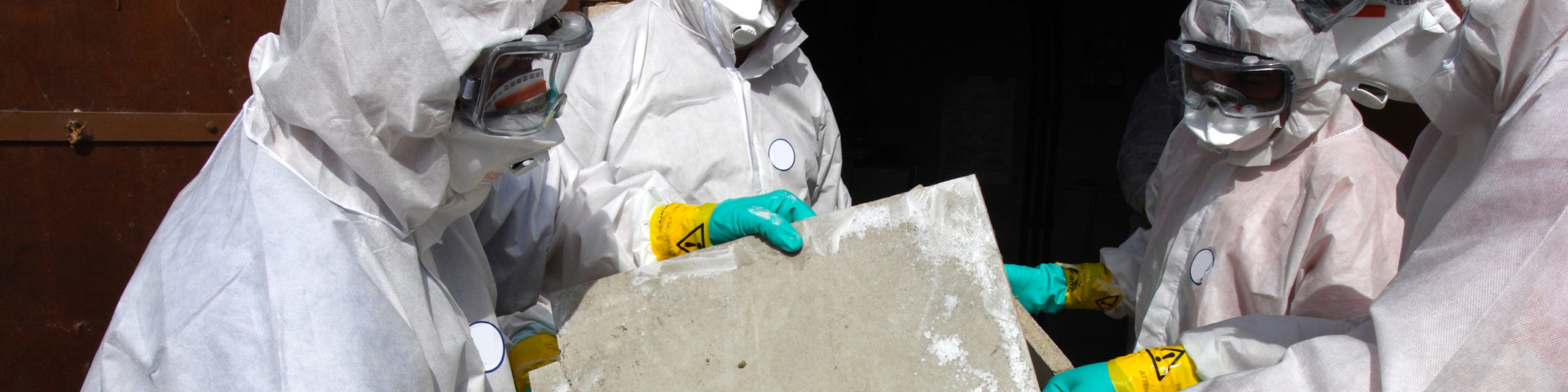
Quick answer: A compliant full site clearance for any pre-2004 property in Melbourne or Victoria is a sequenced, regulated process — not just “knock it down and cart it away.” It starts with a pre-demolition (Type 3 destructive) asbestos survey, runs through council permits, WorkSafe Victoria notification, licensed Class B asbestos removal, independent clearance certification under Regulation 297, soft strip, mechanical demolition, EPA-tracked waste disposal, and ends with a clean slab and a complete compliance documentation pack. Skipping any step is the fastest way to contaminate your site, void your insurance, and personally expose the property owner under the Occupational Health and Safety Regulations 2017 (Vic) and the Environment Protection Act 2017.
This guide walks through every phase of a full site clearance the way a WorkSafe Victoria licensed Class B asbestos removalist and demolition contractor actually runs one — in plain English, with the regulations, timelines, costs and pitfalls a builder, developer, owner-builder, body corporate or commercial landlord in Melbourne actually needs to know.
What “Full Site Clearance” Actually Means
In Melbourne and Victoria, the phrase “full site clearance” gets thrown around loosely. Some contractors use it to mean “we’ll knock the house down.” Others use it to mean “we’ll strip the building.” Almost none of them mean what the owner thinks they mean: a building site that has been emptied of every structure, every fixture, every hazardous material, every contaminated load and every metre of asbestos sheeting — and then handed back as a clean, level, certified slab or pad, ready for the next stage of works to begin.
A genuine full site clearance, properly defined, covers:
- All identified and assumed asbestos-containing materials (ACM) removed under a licensed scope.
- All non-asbestos hazardous materials (lead paint, synthetic mineral fibre insulation, contaminated soil hotspots, refrigerants, PCBs in older switchgear) identified and managed.
- All non-structural soft strip (carpet, cabinetry, fittings, salvage items, white goods) removed.
- All utility services disconnected and isolated by the relevant authorities.
- All structural elements demolished — superstructure, slab (where required), driveways, paving, fencing and outbuildings.
- All waste streams correctly segregated and disposed of — asbestos to EPA-licensed landfill via Waste Tracker, recyclable C&D waste to material recovery, residual waste to general landfill.
- The site graded, cleaned and inspected, and the clearance certificate plus compliance documentation pack delivered to the owner.
That is the bar a developer, builder, owner-builder or commercial owner should be measuring against. Anything less is a partial site clearance with a tidy invoice — and a list of latent problems that surface when the next contractor turns up.
Why Pre-2004 Sites Need a Specific Clearance Process
Asbestos cement and asbestos-containing materials were used in Australian construction in enormous volumes from the 1940s through to the early 2000s. The official cut-off date in Victoria for the workplace duty to identify asbestos is 31 December 2003 — any building constructed before that date is treated, by default, as assumed to contain asbestos unless a competent person has formally identified otherwise under Part 4.4 of the Occupational Health and Safety Regulations 2017 (Vic).
That means almost every:
- Pre-1990 weatherboard, brick veneer or fibro home across Melbourne — Northcote, Coburg, Reservoir, Footscray, Sunshine, Box Hill, Glen Iris, Caulfield, Bentleigh, Oakleigh, Frankston, Werribee, Pakenham, Berwick, Cranbourne;
- 1950s to 1990s commercial, retail and industrial building in the western, northern and south-eastern industrial corridors — Sunshine, Tottenham, Brooklyn, Campbellfield, Broadmeadows, Dandenong South, Bayswater, Mulgrave;
- Pre-2000 farm shed, dairy, shearing shed, packing shed or rural outbuilding across the Mornington Peninsula, Yarra Valley, Latrobe Valley, Geelong, Ballarat, Bendigo and Shepparton corridors;
- Older school building, childcare centre, body corporate complex, hospital wing, government facility or aged-care residence —
— sits inside the regulatory net the moment any clearance, demolition or major refurbishment is planned. Regulation 273 of the OHS Regulations 2017 makes the point bluntly: the person with management or control of the workplace must ensure that all identified or assumed asbestos-containing materials are removed before the building is demolished. Site clearance, in Victoria, is built around that single non-negotiable rule.
The Full Site Clearance Sequence — Phase by Phase
Below is the actual sequence we run on a residential or light-commercial site clearance across Melbourne and Victoria. Larger industrial projects add scope (engineering controls, scaffold, isolation, traffic management, longer programs) but the backbone is the same.
Phase 1 — Pre-clearance site assessment and feasibility
Before anything is quoted, the site is walked. A licensed Class B representative inspects the building (or buildings), the boundary, the access for plant and skip bins, the proximity of neighbours, the overhead and underground services, the trees and vegetation, and any visible features that indicate the presence of asbestos — fibre cement sheeting, corrugated cement roofing, eaves and soffit linings, vinyl floor tiles, switchboard backing panels, asbestos cement fences, garage cladding and the like.
This visit produces three things:
- A scope brief — what is being cleared, in what order, to what depth.
- A risk register — overhead lines, asbestos hotspots, neighbour exposure, heritage overlays.
- An indicative timeline and budget, which the formal quote then sharpens once the survey is in.
For complex sites — multi-tenancy commercial buildings, post-fire properties, partially collapsed structures, sites with contamination history — this phase may include a desktop review of historical building permits, prior asbestos registers, environmental site assessments, and council records.
Phase 2 — Pre-demolition (Type 3 destructive) asbestos survey
A standard management-grade asbestos register is not enough for a site clearance. Management registers are prepared without lifting floors, opening wall cavities, or removing fixtures — so they only capture what was visible at the time of inspection. A site about to be cleared is going to be torn apart, and every concealed surface needs to be identified before mechanical plant arrives.
The instrument for that is a pre-demolition (Type 3) destructive asbestos survey, prepared by a licensed assessor in accordance with AS 5370:2024 and informed by the WorkSafe Victoria Compliance Code: Managing Asbestos in Workplaces. The survey covers:
- All wall, ceiling and floor linings — including behind tiles and under vinyl;
- Eaves, soffits, gable infills, fascia and barge boards;
- Roof sheeting and any roof insulation;
- Pipe lagging, boiler insulation, fire doors and rope seals;
- Switchboards, electrical backing panels and meter boxes;
- Vinyl floor tiles, sheet vinyl and their adhesives;
- Asbestos cement water tanks, flues, vents and pipework;
- Sub-floor and roof-void debris;
- External fences, garages, sheds, outbuildings and chook houses.
Samples are taken under controlled conditions and analysed at a NATA-accredited laboratory. The deliverable is a written survey report that lists every confirmed or assumed ACM, with locations, quantities, condition and recommended removal class. This survey is the spine of the entire clearance program. Without it, the removalist is working blind, the demolition contractor is working dangerously, and the owner is working illegally.
For a deeper look at how testing is priced and what NATA accreditation means in practice, our guide How Much Does Asbestos Testing Cost in Melbourne and Victoria? unpacks the cost ranges and what they buy.
Phase 3 — Permits, approvals and documentation
With the survey in hand, the project moves into the regulatory phase. For a typical residential or light-commercial site clearance in Melbourne, this involves:
- A building permit for demolition under the Building Act 1993 (Vic) and the Building Regulations 2018, issued by a registered building surveyor and lodged with the relevant council. Many councils — including the City of Melbourne, Yarra, Boroondara, Whitehorse, Knox, Casey, Wyndham, Hume, Maribyrnong, Moonee Valley, Glen Eira, Stonnington, Kingston and Melton — require evidence of an asbestos register or survey before sign-off.
- A planning permit where the property sits inside a heritage overlay, neighbourhood character overlay, vegetation protection overlay or environmental significance overlay.
- An Asbestos Removal Control Plan (ARCP) prepared by the licensed Class B removalist, setting out the site-specific work method.
- A Safe Work Method Statement (SWMS) for high-risk construction work, covering not just the asbestos scope but working at heights, mobile plant operation, demolition activities and any confined-space work.
- Notification to WorkSafe Victoria at least five clear days before any licensed asbestos removal begins, lodged through the WorkSafe online portal.
- Utility disconnection requests with the relevant authorities — power (CitiPower, Powercor, Jemena, AusNet, United Energy depending on suburb), gas, water and telecommunications.
- Notification to neighbours — courtesy in residential settings, often mandatory in commercial body-corporate settings.
- Where required, a traffic management plan for sites where skip placement or plant movement affects a public road.
This phase typically runs in parallel with the five-day WorkSafe notification window, so it rarely sits on the critical path — but it is the phase where small administrative oversights can turn into multi-week delays. A council demolition permit can take two to six weeks depending on the council and the overlay status of the site.
Phase 4 — Site establishment
Before any work begins on the building itself, the site is established as a controlled work area. This is the visible difference between a properly run clearance and a backyard demolition.
Site establishment includes:
- Temporary perimeter fencing to the full site boundary, with locked gates at controlled access points.
- Site signage identifying the principal contractor, the WorkSafe Victoria licensed asbestos removalist, the emergency contacts and (during asbestos works) the “DANGER — ASBESTOS REMOVAL IN PROGRESS — AUTHORISED PERSONS ONLY” notices required under the WorkSafe Compliance Code.
- Hoarding in commercial or street-fronting locations where pedestrian protection is required.
- Exclusion zones marked around the work area, with separation distances based on the ARCP.
- Decontamination units — personal and equipment — set up downwind of the work area.
- Skip bin positioning for non-asbestos waste, in lockable or covered bins where required.
- First aid, spill kits, eye-wash, fire extinguishers and emergency procedures posted at the site office or muster point.
- Site induction register for every worker, visitor and inspector entering the site.
For commercial site clearances, site establishment often runs into a second day — particularly where the site is bordered by a live tenancy, an active road or a sensitive use (school, childcare centre, aged care).
Phase 5 — Utility disconnections and isolation
You cannot legally — or safely — strip a building with the power, gas, water and telecommunications still live. Disconnections must be requested in advance, completed by the relevant authority (not by the demolition contractor or asbestos removalist), and certified before any internal works begin.
The standard sequence is:
- Electricity — abolish or disconnect at the pole or the network connection point, with the meter pulled and the service certified de-energised. Lead times can run from one to four weeks depending on the distributor.
- Gas — capped at the main, with the meter removed. Lead times typically one to three weeks.
- Water — capped at the meter or, for a full slab removal, at the property boundary. Coordinated with the relevant water authority (Yarra Valley Water, South East Water, City West Water/Greater Western Water depending on suburb).
- Telecommunications and NBN — disconnected through the relevant retailer; physical cabling removed by the network operator if required.
- Stormwater and sewer — confirmed and, where required, capped at the connection point before slab demolition.
This phase regularly determines the program. A power abolishment lead time of three weeks is the most common cause of “the demolition is delayed” in inner-Melbourne projects, and is one of the first things a competent contractor lodges on day one.
Phase 6 — Non-asbestos soft strip and salvage
With utilities down, the building is soft-stripped of every non-asbestos, non-structural item. This is the phase where value is recovered (or wasted) and where the asbestos work environment is prepared.
Soft strip typically includes:
- Carpet, underlay, vinyl rolls (non-asbestos sheet vinyl) and tack strips;
- Cabinetry — kitchen, bathroom, laundry, built-in robes;
- Appliances — ovens, cooktops, dishwashers, washing machines, hot water systems;
- Joinery — internal doors, architraves, skirting, picture rails;
- Light fittings, ceiling fans, electrical accessories (post-isolation);
- Plumbing fixtures — taps, toilets, vanities, sinks, bathtubs;
- Heritage salvage items — original timber flooring, leadlight windows, fireplace surrounds, decorative cornice, where the project brief includes salvage value;
- Whitegoods, furniture and personal effects left on site;
- Roof tiles (non-asbestos cement or terracotta), gutters and downpipes where the roof structure is being kept until last.
Soft strip waste is segregated for recycling and disposal. A well-run residential soft strip recovers a meaningful proportion of the material into metals, timber, masonry and clean fill recycling streams — which both reduces landfill cost and improves the project’s environmental footprint.
Important: soft strip stops at any item identified in the asbestos survey. Fibre cement sheeting, vinyl floor tiles, switchboard panels and any other ACM stay in place until the licensed removal phase begins. Mixing soft strip waste with asbestos waste contaminates the entire load and converts thousands of dollars of recyclable C&D waste into Reportable Priority Waste.
Phase 7 — Licensed Class B asbestos removal
This is the regulated heart of the site clearance. Once soft strip is complete and the five-day WorkSafe notification window has elapsed, the licensed Class B removal begins.
A compliant Class B (non-friable) removal involves:
- Site set-up to the ARCP — exclusion zone, signage, decontamination unit, plastic sheeting where required;
- Wet methods — fibre cement sheets, vinyl tiles and cement products are wetted down with a suppressant to bind fibres before removal;
- Whole-sheet removal wherever possible — sheets are unscrewed, lifted intact and lowered to ground level rather than broken, snapped or smashed;
- Personal protective equipment — disposable Type 5 coveralls, P2 or P3 half-face or full-face respirators, gloves, boots and eye protection;
- H-class hazardous-dust vacuum cleaners for any residue or debris;
- Immediate double-wrapping of all removed materials in heavy-duty 200-micron polyethylene, sealed with tape and labelled “CAUTION ASBESTOS”;
- Bagged or wrapped waste loaded directly into a covered, lockable skip or vehicle staged outside the exclusion zone.
Where the survey identifies friable asbestos — pipe lagging, sprayed insulation, asbestos rope, damaged or degraded sheeting, or any material that can be crumbled by hand pressure — a Class A licensed removalist is engaged for that scope under the project manager’s coordination. Class B contractors cannot legally undertake Class A work, and any contractor who offers to is exposing both themselves and the property owner.
For a deeper look at the licensing distinction, our companion guide Class A vs Class B Asbestos Licence: What’s the Difference? unpacks the legal and practical differences in detail.
Phase 8 — Decontamination
After the asbestos is out, the work area, the tools, the plant and the people are all decontaminated before anyone leaves the exclusion zone. This phase is short but critical — most “asbestos found after demolition” incidents trace back to a skipped or shortcut decontamination step.
Decontamination involves:
- H-class vacuuming of the work area, including floors, ledges, sills, and any horizontal surface where fibres could have settled;
- Wet-wiping of remaining hard surfaces with disposable cloths, which are then bagged as asbestos waste;
- Equipment decontamination — ladders, scaffolds, hand tools, vacuum hoses, and the H-class vacuum itself;
- Personnel decontamination through the decon unit — coveralls removed inside-out, sealed in asbestos waste bags, hands and faces washed before clean clothing is donned outside the unit;
- Final visual inspection by the supervisor to confirm the area is debris-free.
Phase 9 — EPA-tracked transport and disposal
Asbestos waste in Victoria is classified as Reportable Priority Waste (RPW) under the Environment Protection Regulations 2021. It cannot legally be:
- Mixed with general construction and demolition waste;
- Transported in an open or uncovered vehicle;
- Disposed of at a general C&D landfill;
- Burned, buried, dumped on site or stockpiled long-term.
Compliant disposal requires:
- EPA Waste Tracker manifest lodged for every load, identifying the waste type, quantity, transporter, vehicle, source site and destination;
- Permissioned waste transporter — a person or business authorised by EPA Victoria to transport RPW;
- Covered, lockable vehicle — typically a hooklift bin, sealed tipper or covered ute tray;
- EPA-licensed landfill authorised to accept asbestos waste. Around Greater Melbourne, this is a short and well-known list of sites, most requiring pre-booked tipping slots and operating under restricted hours;
- Weighbridge tip receipt retained for the project file.
For a deeper walk-through of where your asbestos waste actually ends up, our guide What Happens to Asbestos After It’s Removed From a Property? follows the full disposal chain.
Phase 10 — Independent clearance certificate (Regulation 297)
This is the regulatory hinge between the asbestos work and the demolition work. Under Regulation 297 of the OHS Regulations 2017, the person who commissioned the asbestos removal must obtain a clearance certificate from an independent competent person before the area is re-occupied — and on a site clearance, that means before any mechanical demolition equipment crosses the exclusion zone line.
The clearance assessor:
- Must be independent of the removal contractor — never the same business, never a related party, never a “mate signing off the mate”;
- Attends site once the removal contractor has signalled completion;
- Conducts a visual inspection of the work area for residual debris, dust or contamination;
- Where required (particularly on Class A scopes, friable work, large commercial sites or post-fire jobs), conducts air monitoring with samples analysed at a NATA-accredited laboratory;
- Issues a written Clearance Certificate within one to three working days of the inspection, naming the area cleared, the basis of the clearance, and the assessor’s credentials.
Any contractor offering to self-issue their own clearance certificate is offering a document that has no legal weight under Regulation 297. The clearance certificate is what the property owner relies on for insurance, council sign-off, and (in the worst case) for defence under a future WorkSafe Victoria or EPA investigation. It is also the gate-key for the demolition crew.
Phase 11 — Mechanical demolition
With the clearance certificate issued, mechanical demolition can begin. For a typical pre-1990 Melbourne home, this is one to three days of high-reach excavator work; for a commercial or industrial site, two to eight weeks depending on size, height, structural complexity and adjacent-property risk.
Mechanical demolition on a properly cleared site is dramatically simpler — and cheaper — than on a contaminated site. The demolition spoil can be classified as standard construction and demolition (C&D) waste rather than asbestos-contaminated material, which:
- Reduces disposal cost by a factor of five to ten;
- Opens the spoil up to material recovery streams — crushed concrete and brick to recycled aggregate, steel to scrap metal, timber to mulch or biomass;
- Eliminates the need for environmental remediation orders;
- Keeps the project’s WorkSafe and EPA position clean for the next phase of works.
This is the single biggest reason the asbestos work is sequenced first and never mixed into the demolition: a clean clearance certificate is what protects every downstream cost on the project.
Phase 12 — Slab, foundations, paving and site grading
Where the project brief includes removal to slab level (for a renovation extension) or removal of the slab entirely (for a full knock-down rebuild), this is the phase where the final structural elements come out. It includes:
- Concrete slab breaking and removal;
- Footings and stumps extracted;
- Driveways, paths, paving and crossovers removed where required;
- Retaining walls and garden walls demolished;
- Underground service stubs capped at the boundary;
- Tree stumps ground out where the development envelope requires it (subject to planning permit conditions and tree protection overlays);
- Site graded to the agreed datum, with stormwater controlled to prevent silt runoff.
The waste from this phase is almost entirely recyclable — concrete to crushing, steel reinforcement to scrap, masonry to recycled aggregate. A well-run site clearance recovers a substantial proportion of the slab waste into the recycling stream.
Phase 13 — Final site clean, documentation pack and handover
The clearance is not complete when the last load leaves site. It is complete when the documentation pack is in the owner’s hands.
Final handover includes:
- Site swept and graded — no loose debris, no protruding reinforcement, no exposed services;
- Perimeter fencing maintained until the next contractor takes possession of the site;
- Final photographs of the cleared site for the project file;
- Compliance documentation pack delivered to the owner — digital and hard copy — containing:
- Class B asbestos removalist licence;
- Pre-demolition asbestos survey report;
- Asbestos Removal Control Plan (ARCP);
- Safe Work Method Statement (SWMS);
- WorkSafe Victoria notification confirmation;
- EPA Waste Tracker manifests;
- EPA-licensed landfill tip receipts;
- Independent Clearance Certificate (Regulation 297);
- Air monitoring results (where required);
- Building permit and council demolition approvals;
- Utility disconnection certificates;
- Site induction register and SWMS sign-on records;
- C&D waste recovery records.
This documentation pack is the asset that protects the owner long after the site is gone. It is the document the next builder’s insurer will want to see, the document a future purchaser’s solicitor will ask for, and the document that demonstrates regulatory compliance if WorkSafe Victoria or EPA Victoria ever audits the project.
Realistic Timelines for a Full Site Clearance in Melbourne
The honest answer is that the on-site days are fast, but the project timeline is longer than most owners expect — because the regulatory steps are not negotiable.
Standard residential site clearance — pre-1990 home
Example: A 1960s or 1970s weatherboard or brick veneer home in Reservoir, Coburg, Sunshine, Footscray, Box Hill, Glen Iris, Caulfield, Bentleigh, Oakleigh, Frankston, Werribee, Pakenham or Berwick, with asbestos eaves, an asbestos garage, an asbestos fence and the usual interior fibro hotspots.
| Phase | Duration |
|---|---|
| Site inspection and quote | 3–7 days |
| Pre-demolition asbestos survey | 1–2 days on site, plus 3–5 days lab |
| Council demolition permit | 2–6 weeks (council-dependent) |
| Utility disconnections | 1–4 weeks (in parallel) |
| ARCP, SWMS, WorkSafe notification | 5–10 days (including five-day window) |
| Site establishment | 1 day |
| Soft strip | 1–2 days |
| Licensed Class B asbestos removal | 1–3 days |
| Decontamination and clearance | 1–2 days |
| Mechanical demolition to slab | 1–3 days |
| Slab removal and site grading (if scope) | 1–2 days |
| Documentation pack delivered | 1–3 days post-clearance |
Total: typically 4 to 8 weeks end-to-end, with the council permit and utility disconnections sitting on the critical path.
Commercial or industrial site clearance
Example: A 1980s factory, warehouse, retail strip or office building in the western or south-eastern industrial belt — Sunshine, Tottenham, Brooklyn, Campbellfield, Broadmeadows, Dandenong South, Bayswater or Mulgrave — being cleared for redevelopment.
These projects routinely run 8 to 16 weeks end-to-end. The drivers are scale, structural complexity, scaffold and edge protection requirements, after-hours work in occupied precincts, HVAC isolation in shared tenancies, and the larger volumes of asbestos cement roofing, wall cladding, switchboard backing and pipe lagging that mid-century commercial buildings tend to carry.
Knock-down rebuild for a building site
Example: A pre-1990 home in inner-Melbourne being cleared for a new dual-occupancy or townhouse development.
Allow 6 to 10 weeks end-to-end from contract signing to a clean slab ready for the new build crew. Builders who lock in the asbestos and demolition contractor early — at design development, not at construction commencement — routinely pull two to three weeks off the critical path by running permits, surveys and notifications in parallel with the architectural and engineering documentation.
For a deeper view of where the time goes, see our guide How Long Does Asbestos Removal Take in Melbourne?.
What a Full Site Clearance Actually Costs in Melbourne (2026)
Pricing varies with scope, scale, access and disposal route — but the broad ranges in 2026 Melbourne for a compliant fixed-price site clearance are predictable.
| Project type | Typical cost range (compliant fixed price) |
|---|---|
| Small residential — fence and garage only | $5,000 – $12,000 |
| Standard pre-1990 home — house, garage, fences, slab retained | $18,000 – $38,000 |
| Knock-down rebuild — full home, garage, fences, slab removed | $25,000 – $55,000 |
| Light commercial — single-storey retail or office | $40,000 – $120,000 |
| Industrial — warehouse, factory, multi-bay | $80,000 – $400,000+ |
| Rural property — house, sheds, dairies, asbestos cement tanks | $20,000 – $80,000 |
These ranges assume a compliant fixed-price scope including survey, ARCP, SWMS, WorkSafe notification, site establishment, soft strip, Class B asbestos removal, EPA-tracked disposal, the independent clearance certificate, mechanical demolition and full documentation pack.
If you are receiving quotes that look dramatically cheaper than the rest of the market, the contractor is almost certainly cutting corners on one of three things: licensing, disposal, or the clearance certificate. All three are visible on a WorkSafe audit. All three sit at the owner’s legal door, not just the contractor’s.
For a deeper unpack of how the asbestos scope itself is priced, see our guides Asbestos Roof Sheeting Removal Cost and Process in Melbourne and How Much Does Asbestos Testing Cost in Melbourne and Victoria?.
The Most Common Pitfalls — and How They Hurt the Owner
Across hundreds of Melbourne and Victorian site clearances, the same handful of failures keep showing up. Every one of them puts the property owner (not just the contractor) on the wrong side of the law.
The “we’ll throw the asbestos in with the demo” contractor. A general demolition contractor without a Class B licence offers to “include the asbestos” in the demolition quote. The building gets demolished with the asbestos still in place. The mechanical demolition pulverises the ACM into the spoil. The entire demolition pile becomes contaminated waste. Disposal costs multiply by five to ten. WorkSafe issues a prohibition notice. EPA issues an environmental remediation order. The project stops for months. The owner — not just the contractor — is named on every notice.
The missing pre-demolition survey. The contractor relies on a five-year-old management register prepared without lifting floors or opening walls. Mid-demolition, asbestos is discovered in a wall cavity, behind tiles, or under the vinyl flooring. Work stops. The site is isolated. A new survey and a new removal contractor are engaged. The program slips by three to six weeks and the cost overrun runs into five figures.
The self-signed clearance certificate. The removal contractor signs their own clearance, or routes it through a related party. The certificate has no legal standing under Regulation 297. The contamination is discovered six months later by an incoming builder, body corporate or purchaser. The owner is left holding the remediation cost, the breach-of-contract exposure, and the cleanup bill — with no enforceable clearance to point to.
Mixed waste loads. Asbestos waste is mixed with general C&D waste — sometimes by accident, sometimes deliberately to save on tip fees. When the EPA traces the load, the property owner is on the Section 31A notice for illegal dumping under the Environment Protection Act 2017. Fines are uncapped and largely uninsurable.
Skipped neighbour notification. The site clearance proceeds without notifying adjoining properties. A neighbour reports fibre release to WorkSafe Victoria. The site is shut down for the duration of the investigation. Even where the work was technically compliant, the reputational and program damage is substantial.
Utility disconnections left to the last minute. The demolition crew arrives to find power still live, gas still connected, and the water meter still in place. The job is stood down. The contractor is paid for a wasted mobilisation. The schedule slips by one to four weeks.
For a deeper look at the common asbestos-related mistakes on Melbourne sites, see our guides What to Do if You Disturb Asbestos During Renovation in Melbourne and DIY vs Professional Asbestos Removal in Melbourne.
The Legal Framework in One Page
A full Melbourne or Victorian site clearance touches every one of these regulatory instruments:
- Occupational Health and Safety Act 2004 (Vic) — overarching duty of care to workers and visitors at the workplace.
- Occupational Health and Safety Regulations 2017 (Vic), Part 4.4 — the asbestos-specific framework, including:
- Regulation 271 — written asbestos register;
- Regulation 273 — asbestos must be identified and removed before demolition;
- Regulation 274 — pre-refurbishment identification;
- Regulation 297 — independent clearance certificate before re-occupation;
- Regulations 425, 429, 458, 460 — licensing for asbestos removal.
- Environment Protection Act 2017 (Vic) — general environmental duty, including no illegal dumping, no burning, no burying of asbestos.
- Environment Protection Regulations 2021 (Vic) — Reportable Priority Waste classification, EPA Waste Tracker, transport permissions.
- Building Act 1993 (Vic) and Building Regulations 2018 — building permit and demolition consent.
- Planning and Environment Act 1987 (Vic) — planning permits, overlays and heritage controls.
- Residential Tenancies Act 2021 (Vic) — rental provider duties for tenanted properties.
- Sale of Land Act 1962 (Vic), Section 32 — vendor disclosure of known asbestos condition.
- Local government law — council-specific demolition, tree protection and stormwater requirements.
For a deeper compliance walk-through, see our guide Asbestos Regulations and Legal Requirements in Australia: The 2026 Compliance Guide for Melbourne & Victoria.
How Asbestos Gone and Clean Runs a Full Site Clearance
We are a WorkSafe Victoria licensed Class B (non-friable) asbestos removalist and demolition contractor based in Melbourne, servicing all of Greater Melbourne and regional Victoria — from the inner suburbs out to Geelong, Ballarat, Bendigo, Shepparton, the Mornington Peninsula, the Yarra Valley, the Latrobe Valley, and beyond.
Because we run asbestos removal and demolition under one ABN, your site clearance does not get held up waiting for two contractors to align diaries. Every project we take on follows the same disciplined backbone:
- Free on-site inspection and pre-clearance assessment, typically within 24 to 72 hours of enquiry across Greater Melbourne.
- Pre-demolition (Type 3 destructive) asbestos survey with NATA-accredited sampling under AS 5370:2024.
- Site-specific Asbestos Removal Control Plan (ARCP) and Safe Work Method Statement (SWMS).
- WorkSafe Victoria notification at least five clear days before any licensed work begins.
- Class B non-friable asbestos removal using H-class vacuums, P2/P3 respiratory protection, wet methods and whole-sheet removal protocols. Where friable material is identified, we coordinate a Class A subcontractor under our project management for a single point of accountability.
- EPA-compliant double-wrapping, labelling, transport and disposal at a licensed landfill, with full Waste Tracker manifests handled in the background.
- Independent clearance certificate under Regulation 297, issued by a competent person who is not us.
- Soft strip, mechanical demolition, slab removal and site grading to the agreed datum.
- Full documentation pack — licences, surveys, control plans, statements, notifications, manifests, tip receipts, clearance certificate and air monitoring (where applicable) — delivered to you for your records, your insurer, your council, your incoming builder, and any future purchaser due diligence.
For builders, developers and owner-builders, this integrated approach removes the single biggest cause of program slippage on pre-2004 Melbourne sites: the gap between “asbestos guy finishes” and “demo guy starts.” With both scopes under one project manager, the clearance certificate is issued in the morning and the excavator is on site in the afternoon.
Frequently Asked Questions
What is a full site clearance in Melbourne?
A full site clearance is the complete, sequenced process of emptying a building site of every structure, fixture and hazardous material — including asbestos — and handing it back as a clean, level, certified slab or pad ready for the next stage of works. In Melbourne and Victoria, a compliant full site clearance covers pre-demolition asbestos survey, licensed Class B (or Class A) asbestos removal, soft strip, mechanical demolition, EPA-tracked disposal, the independent Regulation 297 clearance certificate, and a complete compliance documentation pack.
Do I need to remove asbestos before demolition in Victoria?
Yes. Under Regulation 273 of the Occupational Health and Safety Regulations 2017 (Vic), the person with management or control of the workplace must ensure that all identified or assumed asbestos-containing materials are removed before the building is demolished. There are very narrow exceptions where removal would be more dangerous than controlled demolition, but they require expert sign-off and are rare in standard residential and commercial projects across Melbourne.
Can one contractor handle both the asbestos removal and the demolition?
Yes — provided that contractor holds a current Class B asbestos removal licence (for non-friable) or Class A licence (for friable) issued by WorkSafe Victoria. Most general demolition contractors are not licensed for asbestos work and must engage a licensed removalist separately. We hold a Class B licence and run both scopes under one project, which removes the single biggest cause of program slippage on pre-2004 sites.
What is the difference between Class A and Class B asbestos removal?
A Class B licence covers non-friable (bonded) asbestos — fibre cement sheeting, asbestos cement roofing, vinyl floor tiles, switchboard backing and similar bonded products. A Class A licence covers both non-friable and friable asbestos — pipe lagging, sprayed insulation, asbestos rope, fire-damaged or degraded sheeting, and any material that can be crumbled by hand. Class B contractors cannot legally undertake Class A work. For mixed-scope projects, a Class B contractor will coordinate a Class A specialist as a subcontractor under one project. For more, see our guide Class A vs Class B Asbestos Licence: What’s the Difference?
How long does a full site clearance take in Melbourne?
For a standard pre-1990 residential site clearance with house, garage and fences, expect 4 to 8 weeks end-to-end including the pre-demolition survey, council demolition permit, utility disconnections, the five-day WorkSafe notification window, the licensed asbestos removal, the clearance certificate and the mechanical demolition. Commercial and industrial site clearances typically run 8 to 16 weeks end-to-end.
How much does a full site clearance cost in Melbourne in 2026?
Compliant fixed-price ranges in 2026 Melbourne run from approximately $18,000 to $38,000 for a standard pre-1990 residential clearance to slab, $25,000 to $55,000 for a knock-down rebuild including slab removal, and $80,000 to $400,000+ for industrial sites. Pricing depends on the type and quantity of asbestos, access, disposal distance, slab and footing scope, and any specialist requirements such as scaffold, edge protection or after-hours work.
What is a clearance certificate and why is it needed before demolition?
A clearance certificate is a written statement from an independent competent person confirming that the asbestos removal area is safe to re-occupy. Under Regulation 297 of the OHS Regulations 2017, the owner must obtain one before the cleared area is used again — and on a site clearance, that practically means before the excavator starts on the structural demolition. The clearance assessor cannot be the removal contractor or a related party.
What happens if asbestos is found mid-demolition?
Work stops immediately. The site is isolated, the area is treated as potentially contaminated, a licensed removalist is engaged, and the area is re-surveyed and re-cleared before any further demolition proceeds. The cost and program impact are significant, which is exactly why pre-demolition surveys exist. For a deeper look at what to do if asbestos is disturbed unexpectedly, see our guide What to Do if You Disturb Asbestos During Renovation in Melbourne.
Do Melbourne councils require evidence of asbestos compliance for site clearance?
Most do, and the trend is towards more, not less, scrutiny. Councils across Melbourne — including the City of Melbourne, Yarra, Boroondara, Whitehorse, Knox, Casey, Wyndham, Hume, Glen Eira, Stonnington, Kingston, Maribyrnong, Moonee Valley and Melton — increasingly request evidence of an asbestos register, a licensed removalist engagement, and a clearance certificate before signing off demolition or new build approvals.
Can I burn or bury asbestos waste on a rural Victorian property?
No. Burning or burying asbestos is illegal in Victoria under the Environment Protection Act 2017, including on private rural land. Asbestos must be disposed of at an EPA-licensed landfill authorised to accept it, with a full Waste Tracker manifest. Illegal dumping penalties exceed $50,000 plus remediation costs, and the property owner is named on the notice — not just the transporter.
Does the demolition contractor handle the utility disconnections?
No. Utility disconnections must be requested in advance and completed by the relevant authority — the electricity distributor, the gas distributor, the water authority and the telecommunications retailer. A reputable demolition contractor lodges these requests on day one of the project and coordinates the timing, but the physical disconnection is performed by the network operator. Lead times of one to four weeks are common.
Will my site clearance affect my building insurance?
Yes — significantly. Most demolition and construction insurance policies exclude losses arising from unlicensed asbestos work. If a non-licensed contractor handles asbestos and something goes wrong (contamination, exposure, prosecution), the principal is typically uninsured for the entire claim. Always ask to see the Class B (or Class A) licence and the certificate of currency before signing a contract.
What documentation should I receive at the end of a site clearance?
You should receive a complete documentation pack containing the contractor’s Class B licence, the pre-demolition asbestos survey report, the Asbestos Removal Control Plan, the Safe Work Method Statement, the WorkSafe Victoria notification confirmation, the EPA Waste Tracker manifests, the EPA-licensed landfill tip receipts, the independent Regulation 297 Clearance Certificate, any air monitoring results, the building and demolition permits, the utility disconnection certificates and the C&D waste recovery records. This pack is your evidence trail for insurance, council, future buyers and any subsequent contractor on the site.
Plan Your Melbourne or Victorian Site Clearance the Right Way
Site clearances do not fail because asbestos is complicated. They fail because the asbestos work is sequenced last instead of first, handed to a contractor who isn’t licensed for it, or rushed through without the documentation that protects the owner long after the contractor is gone.
If you are planning a residential, commercial, industrial or rural site clearance anywhere in Melbourne or Victoria — knock-down rebuild, dual-occupancy development, townhouse infill, factory redevelopment, retail strip refresh, school upgrade, body corporate works, post-fire clean-up or rural property clearance — Asbestos Gone and Clean can provide:
- A free on-site inspection within 24 to 72 hours across Greater Melbourne;
- A fixed-price written quote with a full project program — survey to slab — including every regulatory milestone;
- Integrated Class B asbestos removal, soft strip and demolition under one ABN;
- Coordinated Class A subcontracting for any friable scope, under our project management;
- A complete compliance pack delivered on completion for your insurer, your council, your incoming builder, your body corporate and any future buyer due diligence.
☎ Call us: 0475 143 106
✉ Email: asbestosgoneandclean@gmail.com
???? Contact Us: Asbestos Gone and Clean – Contact
We service all Melbourne metropolitan suburbs — inner-north, inner-east, inner-west, bayside, south-east and outer-growth corridors — and travel throughout regional Victoria for larger residential, commercial, industrial and rural projects.
Related Reading
- Asbestos Removal During Demolition: What You Need to Know (2026 Melbourne & Victoria Guide) — the legal framework and licensing detail for pre-demolition asbestos works.
- Asbestos Regulations and Legal Requirements in Australia: The 2026 Compliance Guide for Melbourne & Victoria — our deep-dive on the Victorian regulatory framework, registers, licensing and penalties.
- How Long Does Asbestos Removal Take in Melbourne? — realistic timelines by project type.
- Class A vs Class B Asbestos Licence: What’s the Difference? — the licensing distinction explained in plain English.
- Asbestos Roof Sheeting Removal Cost and Process in Melbourne — costs, methods and program for roof-specific scopes.
- What Happens to Asbestos After It’s Removed From a Property? — the EPA Waste Tracker chain and licensed landfill disposal.
- How Much Does Asbestos Testing Cost in Melbourne and Victoria? — NATA-accredited sampling and survey pricing.
- Asbestos Removal for Commercial Buildings: Process and Compliance — the full commercial compliance pathway.
- What to Do if You Disturb Asbestos During Renovation in Melbourne — emergency response and remediation steps.
- Signs Your Building May Contain Asbestos: Visual Checklist for Melbourne Properties — pre-clearance identification cues.
Sources and Further Reading
- WorkSafe Victoria — Compliance Code: Removing Asbestos in Workplaces
- WorkSafe Victoria — Compliance Code: Managing Asbestos in Workplaces
- Occupational Health and Safety Act 2004 (Vic)
- Occupational Health and Safety Regulations 2017 (Vic), Part 4.4 (including Regulations 271, 273, 274, 297, 425, 429, 458, 460)
- Building Act 1993 (Vic) and Building Regulations 2018
- Planning and Environment Act 1987 (Vic)
- Environment Protection Act 2017 (Vic)
- Environment Protection Regulations 2021 (Vic) — Reportable Priority Waste; EPA Waste Tracker
- EPA Victoria — Publication IWRG611.2: Asbestos Transport and Disposal
- Standards Australia — AS 5370:2024 Air Quality — Bulk Materials
- Asbestos and Silica Safety and Eradication Agency (ASSEA) — Asbestos National Strategic Plan 2024–2030
- Residential Tenancies Act 2021 (Vic)
- Sale of Land Act 1962 (Vic)
Disclaimer: This article is general information only and is current as at May 2026. It is not legal advice. For advice on a specific site clearance, demolition or asbestos removal project, contact WorkSafe Victoria, EPA Victoria, your local council, or speak directly with Asbestos Gone and Clean.