
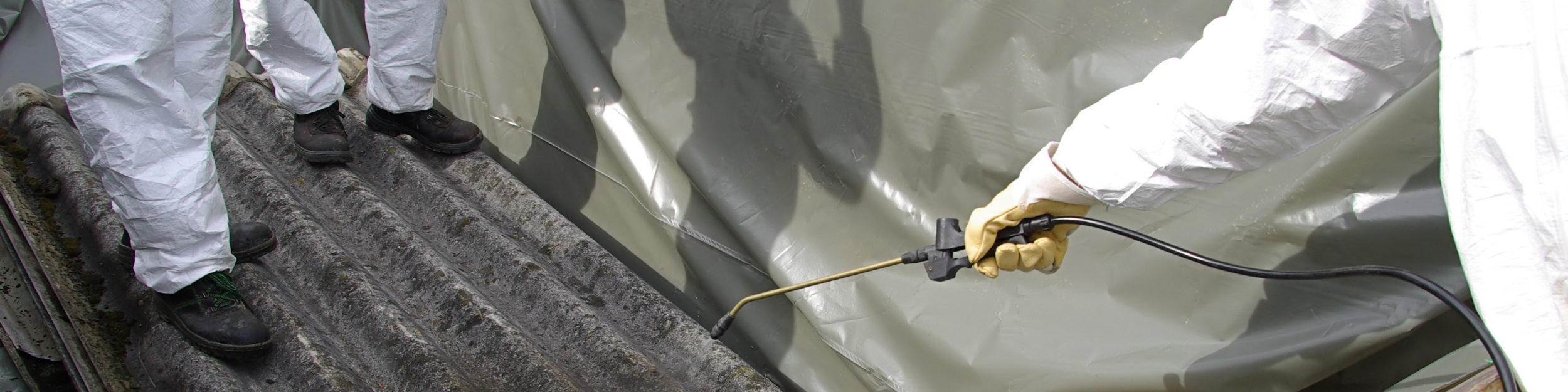
If you own a pre-2004 rental property anywhere in Melbourne or Victoria — a 1960s weatherboard in Reservoir, a 1970s brick veneer in Glen Iris, a 1980s townhouse in Caulfield, a fibro beach shack in Rosebud, a country cottage in Ballarat or Bendigo — your legal position as a rental provider is materially different to the position of an owner-occupier next door. The walls may be the same. The asbestos may be the same. The duties are not.
The single most expensive mistake a Melbourne landlord can make in 2026 is assuming that residential asbestos law applies to their rental in the same way it applies to their own home. It does not. The moment a property is offered for rent, it becomes a workplace for property managers, tradespeople, inspectors and emergency responders, and the full weight of the Occupational Health and Safety Regulations 2017 (Vic), Part 4.4 engages — on top of the safety, repair and disclosure duties already imposed by the Residential Tenancies Act 2021 (Vic) and the Residential Tenancies Regulations 2021 (which set the Victorian minimum rental standards).
That two-track regulatory structure — workplace duties plus rental provider duties — is what catches landlords out. The OHS Regulations don’t care that no employees live there. The Residential Tenancies Act doesn’t care that the asbestos is “undisturbed.” Both engage in parallel, and both have to be satisfied.
This guide walks through exactly what those obligations look like in practice, what the regulators expect to see, when removal moves from optional to mandatory, what compliant Class B (non-friable) asbestos removal in a tenanted property actually involves, and where landlord policies, VCAT decisions and council enforcement sit in 2026. Written by a Melbourne-based WorkSafe Victoria licensed Class B asbestos removalist servicing all of Greater Melbourne and Victoria.
The Rental Provider’s Asbestos Compliance Snapshot
| Obligation | What It Means | Legal Source | Trigger |
|---|---|---|---|
| Identification | Identify asbestos / ACM in any pre-2004 rental | OHS Regs 2017 (Vic), Reg 422 | Property used as workplace (i.e. let to a renter) |
| Asbestos Register | Written register naming each ACM, location, condition, inspection date | OHS Regs 2017 (Vic), Reg 425 | Pre-2004 building or where asbestos is identified |
| Management Plan | Documented Asbestos Management Plan (AMP) for the property | OHS Regs 2017 (Vic), Reg 429 | ACM identified or assumed at the workplace |
| Tradesperson notification | Provide the Register to any trade before they start work | OHS Regs 2017 (Vic), Reg 425(6) | Every trade visit on a pre-2004 rental |
| Good repair & safety | Property must be in good repair and meet rental minimum standards | Residential Tenancies Act 2021 (Vic), s.68; Reg 12 of the RT Regs 2021 | Throughout the tenancy |
| Urgent repairs | Damaged or disturbed ACM is an urgent repair | RTA 2021 (Vic), s.72 (urgent repairs) | Damage / disturbance event |
| Licensed removal | All non-friable removal >10m² and all friable removal | OHS Regs 2017 (Vic), Reg 458 | Removal scope exceeds DIY exemption (and the DIY exemption is owner-occupier only) |
| WorkSafe notification | 5-day written notification before licensed removal commences | OHS Regs 2017 (Vic), Reg 460 | Licensed removal job |
| Clearance certificate | Independent Regulation 297 clearance before re-occupation | OHS Regs 2017 (Vic), Reg 297 | After every licensed removal |
| EPA-tracked disposal | Double-wrapped waste, Waste Tracker manifest, EPA-licensed landfill | Environment Protection Regs 2021 (Vic) | Every removal job |
If any one of those rows is missing on your rental, you are non-compliant — regardless of whether the property currently looks fine or the tenant has made no complaint.
Why a Rental Is Legally Different to Your Own Home
This is the single most misunderstood point in Victorian residential asbestos law, and it is worth being absolutely explicit about.
An owner-occupied home in Melbourne is not a workplace in the ordinary sense — the OHS framework engages only when trades step onto the site, and the homeowner enjoys a limited DIY exemption (under 10m² of intact non-friable, under one hour in any seven-day period) for their own property.
A rental property is a workplace continuously — from the moment the lease is offered. Property managers attend for inspections. Tradespeople attend for repairs and routine maintenance. Pest controllers attend for treatments. Plumbers, electricians, gas fitters, painters, gardeners, locksmiths, NBN technicians, solar installers and HVAC technicians all attend across the lifecycle of the tenancy. Every one of those visits is a workplace engagement under the Occupational Health and Safety Act 2004 (Vic), and every one of them is legally entitled to see the Asbestos Register before starting work.
That structural difference produces three consequences:
- There is no DIY exemption for the landlord. The 10m²/one-hour exemption is owner-occupier only. A landlord who chips off a metre of asbestos eaves to “tidy it up before the next inspection” is committing an unlicensed removal under Victorian law, regardless of how small the area is.
- The Asbestos Register and Management Plan are mandatory documents — not optional, not best-practice, but mandatory under Regulations 425 and 429 of the OHS Regulations 2017 (Vic) for any rental constructed before 31 December 2003 or where ACM is identified.
- The Residential Tenancies Act layers on top — not instead of. The rental provider must keep the premises in good repair, meet the Victorian minimum rental standards, and respond promptly to urgent repairs. Damaged asbestos is, in most reasonable interpretations of the legislation, an urgent repair.
“It’s only a rental, it doesn’t need the full workplace treatment” is the position that produces WorkSafe prohibition notices, VCAT compensation orders, voided landlord policies and emergency-call-out invoices in five-figure ranges. It is wrong, and it is the position the regulators most often see.
The Five Legal Instruments Every Victorian Landlord Should Know
You don’t need to read each instrument end-to-end. You do need to know they exist and what they impose, because every one of them surfaces at some point on a pre-2004 rental.
1. Occupational Health and Safety Act 2004 (Vic)
The parent workplace safety statute. Section 21 imposes the primary duty on the person with management or control of a workplace to provide a safe environment for workers and others, so far as is reasonably practicable. For a residential rental, that “person with management or control” is the rental provider (landlord), and in some structures the managing agent shares aspects of the duty.
2. Occupational Health and Safety Regulations 2017 (Vic), Part 4.4
The operational asbestos rulebook for Victorian workplaces, including residential rentals. Part 4.4 contains the Register, Management Plan, identification, training, licensed removal, notification, control measures and clearance provisions. Every removal on a Victorian rental is governed end-to-end by Part 4.4.
3. Residential Tenancies Act 2021 (Vic) and Residential Tenancies Regulations 2021
The statute that governs the rental provider–renter relationship, the minimum rental standards (set by the regulations), urgent repair triggers, inspection regimes, and disclosure obligations. Damaged asbestos surfaces as a good repair issue under s.68, an urgent repairs issue under s.72, and — increasingly — as a suitable for occupation issue at first letting.
4. Environment Protection Act 2017 (Vic) and Environment Protection Regulations 2021 (Vic)
Removal is regulated by WorkSafe. Disposal is regulated by EPA Victoria. Asbestos waste is classified as Reportable Priority Waste, must be tracked through the Waste Tracker electronic manifest system, and must be transported by a permissioned operator to an EPA-licensed asbestos landfill. Both regulatory layers run in parallel.
5. Asbestos and Silica Safety and Eradication Agency (ASSEA) — Asbestos National Strategic Plan 2024–2030
The current Commonwealth policy framework. It has formalised the national shift toward proactive identification, registers and prioritised removal across the entire residential rental stock. WorkSafe Victoria has matched that policy direction with hardened inspection activity through 2024, 2025 and into 2026 — including rental-specific targeted enforcement programs.
The Asbestos Register: The Document Every Pre-2004 Rental Needs
Under Regulation 425 of the OHS Regulations 2017 (Vic), a person with management or control of a workplace must ensure that a written Asbestos Register is prepared for the workplace if the building was constructed before 31 December 2003, or if asbestos has been identified at the workplace.
A pre-2004 rental property meets that test. Therefore, a Register is mandatory.
What the Register must contain
- A record of any identified asbestos or asbestos-containing material (ACM).
- A record of any inaccessible areas that are likely to contain asbestos (treated as assumed ACM until proven otherwise).
- The location, type and condition of each item.
- The date the item was last inspected and the date of the next inspection.
- A clear statement if no asbestos has been identified or assumed.
For a typical Melbourne pre-1990 rental, the Register will commonly include some combination of: eaves sheeting, garage cladding, fence panels, internal wet-area linings, vinyl floor tiles, bitumen flooring adhesive, switchboard backing panels (Zelemite / Ausbestos / Lebah / Miscolite), flue lagging, downpipes, and roof sheeting.
How often it must be reviewed
The Register must be reviewed at least every five years, and immediately whenever:
- ACM is removed, sealed or enclosed.
- Further ACM is identified.
- The condition of an existing ACM changes (storm damage, impact, deterioration).
- A renovation, refurbishment or maintenance activity is planned that may disturb ACM.
In practice, that means a Register for an actively managed rental is touched every year or two, not once every five.
Where it must be accessible
The Register must be readily accessible to workers, contractors and anyone entering to perform work. On a Melbourne rental, that practically means a hard copy or digital copy held by the managing agent and produced to every trade before the trade starts work. A Register that lives in a filing cabinet at the landlord’s home and never reaches the plumber is, for compliance purposes, no Register at all.
The renter and the Register
The renter is not a worker on the property and is not strictly required to receive the Register. However, the underlying duties of safety, disclosure and good repair under the Residential Tenancies Act 2021 (Vic) mean that material safety issues — known asbestos in deteriorated condition, planned removal works, identified disturbance — must be communicated to the renter through the normal disclosure and notice channels. Concealing a known asbestos condition from a renter is a path to a VCAT order, a compensation claim, and in serious cases a referral to Consumer Affairs Victoria.
The Asbestos Management Plan (AMP) for Rental Properties
Where the Register documents what ACM is present, the Asbestos Management Plan documents what is being done about it. Under Regulation 429, an AMP is mandatory for any workplace where asbestos is identified or assumed — including residential rentals built before 2004.
A compliant AMP for a rental covers:
- Identification of asbestos / ACM (cross-referenced to the Register).
- The decision for each item — retain and manage, encapsulate, remove at next vacancy, remove immediately, remove ahead of refurbishment.
- Procedures for managing incidents, damage events and exposures.
- Procedures for how trades, the managing agent and the renter access the Register and report damage.
- Information, instruction and supervision arrangements for any contractor engaged on the property.
- Roles, responsibilities and review timeframes (typically annual review and post-incident review).
The AMP is the document a court — including VCAT or any higher court hearing a personal injury or compensation matter — will ask to see if a renter, contractor or visitor is later diagnosed with an asbestos-related disease or claims contamination exposure. Its presence is the single biggest determinant of whether the rental provider has discharged the duty under section 21 of the OHS Act.
For most Melbourne landlords with one or two pre-2004 rentals, the Register and AMP can be commissioned together by a competent assessor for a combined fee of $550 to $1,200, depending on property size and number of ACM items. That is the cheapest insurance available against the downside scenarios described later in this guide.
The Residential Tenancies Layer: Good Repair, Urgent Repairs and Rental Minimum Standards
Sitting on top of the workplace framework, the Residential Tenancies Act 2021 (Vic) imposes a separate set of rental provider duties that engage when asbestos surfaces.
Section 68 — General duty to maintain the premises in good repair
The rental provider must ensure that the rented premises is maintained in good repair and in a reasonably fit and suitable condition for occupation. Asbestos in good, undisturbed condition is not, in itself, a breach of s.68. Asbestos that is broken, damaged, weathered, friable, or releasing fibres is a breach.
That is the live-or-die line for landlords. Intact, painted, well-maintained eaves on a 1970s home: typically not a s.68 problem. Cracked, weathered, paint-flaking eaves with chips visible on the lawn: a s.68 problem and an urgent repairs problem.
Section 72 — Urgent repairs
Section 72 lists the categories of urgent repair that a renter can have undertaken (and recover the cost for, up to the prescribed amount) if the rental provider does not act quickly. The list includes any fault or damage that makes the premises unsafe or insecure. Damaged asbestos that may be releasing fibres into the rented premises sits squarely inside that definition.
Renters who become aware of damaged asbestos can — and increasingly do — engage their own assessor, document the damage, demand urgent repair, escalate to Consumer Affairs Victoria, and apply to VCAT for orders if the rental provider does not respond. By the time that escalation cycle has run, the landlord is looking at a remediation cost plus a compensation order plus a damaged tenancy. The compliant response is to attend the property within 24 hours, isolate, and engage a licensed Class B (or Class A) removalist immediately.
Rental minimum standards (Residential Tenancies Regulations 2021)
The Victorian rental minimum standards do not currently include a positive “no asbestos” requirement, but they do require the property to be structurally sound, weatherproof, free of mould and damp arising from a structural defect, and otherwise suitable for occupation. A pre-1990 rental with crumbling asbestos eaves, a leaking asbestos cement roof, or asbestos vinyl tiles lifting in the kitchen is, in practical terms, struggling to satisfy those standards.
Disclosure at the start of the tenancy
Section 30 of the Act, the prescribed rental application limits, and the disclosure obligations engaged at the start of a tenancy do not currently require a tick-box asbestos declaration. However:
- Known material safety issues should be disclosed.
- A known active asbestos contamination or unresolved damaged-ACM scenario should not be let to a new renter without remediation.
- Where the property is being let mid-removal works, the renter must be made aware of the scope, scheduling and clearance arrangements.
Withholding known material safety information from an incoming renter creates exposure under the RTA, under general misrepresentation principles, and under section 21 of the OHS Act to the extent that the premises is also a workplace.
The interaction with VCAT
Asbestos matters are landing at VCAT with increasing frequency. The common patterns:
- A renter discovers damaged eaves, photographs the chips, engages an assessor, applies for compensation for distress, additional cleaning, and the cost of alternative accommodation during remediation.
- A renter alleges the rental provider concealed a known asbestos condition at the start of the tenancy and seeks termination plus damages.
- A trade who was not provided with the Register pre-works claims compensation for exposure, escalates to WorkSafe, and triggers a parallel WorkSafe investigation.
- A managing agent argues — successfully or otherwise — that the duty to maintain a Register sat with the rental provider, not the agent.
VCAT’s willingness to make compensation orders in these scenarios has hardened materially since 2023. The honest commercial advice is to assume that an undisclosed, undocumented asbestos position is a future VCAT case waiting to happen.
When Asbestos Removal in a Rental Becomes Mandatory
The Victorian framework does not require landlords to remove all asbestos from all rentals. The legal model is built around managing disturbance, not eliminating the material. There are, however, scenarios where removal moves from optional to mandatory, and a landlord who tries to defer in these scenarios is creating a serious legal and financial exposure.
Removal is mandatory when:
- The ACM is friable (or has become friable through age, damage, fire or water exposure). Class A licensed only.
- The ACM is damaged, weathered, deteriorated or releasing fibres. Class B (or Class A) licensed.
- A renovation or refurbishment is planned that will disturb identified or assumed ACM. Regulation 274 mandates pre-refurbishment identification and removal of disturbed material before works commence.
- A demolition or partial demolition is planned. Regulation 273 mandates pre-demolition removal of all identified or assumed ACM before mechanical demolition begins.
- The property is changing use — for example, from a single dwelling to a granny-flat + main-dwelling rental, or from residential to short-stay accommodation — and the change of use triggers a refurbishment or council permit pathway.
- A WorkSafe Victoria improvement notice or prohibition notice has been issued. Compliance is non-negotiable and the timeframe is short.
- A VCAT order has been made compelling remediation following a renter’s application.
Removal is recommended (and increasingly priced into landlord risk frameworks) when:
- The property is being prepared for sale to an investor buyer who will require a clean asbestos position.
- The ACM is in a high-traffic or high-disturbance location — switchboard backing, eaves above an entry door, kitchen splashback substrate, bathroom wet-area sheeting behind tiles.
- The next anticipated trade visit involves drilling, cutting or fastening through a known ACM (solar installation, EV charger fit-out, switchboard upgrade, NBN entry, split-system installation).
- The Register identifies ACM that cannot be reliably re-inspected because of access constraints — meaning the five-year review cycle cannot be honestly satisfied.
For Class B (non-friable) materials — the dominant category in pre-1990 Melbourne residential rentals — removal is a Class B licensed scope. For friable materials, including textured “popcorn” ceilings, deteriorated millboard around old heater flues, sprayed limpet insulation in older industrial-conversion dwellings, and any non-friable material that has been damaged into a friable state — Class A only.
A reputable Class B contractor will coordinate Class A specialist trades where required under a single project structure.
The Compliant Removal Process on a Tenanted or Vacant Rental
Once the decision to remove has been made, the licensed process follows a tightly defined sequence. The same sequence runs whether the property is currently tenanted or vacant — the operational coordination differs, but the regulatory backbone does not.
Step 1 — Pre-works survey and updated Register
A licensed asbestos assessor inspects the in-scope area, lifts ceilings or skirtings where required, samples each suspect material under AS 5370:2024 at a NATA-accredited laboratory, and updates the Register with the project-specific schedule of items to remove.
Step 2 — Fixed-price quote, ARCP and SWMS
The licensed Class B removalist provides a fixed-price written quote covering the full scope: survey integration, removal, site decontamination, transport, EPA-licensed landfill disposal, manifests, and the independent Regulation 297 clearance certificate. The site-specific Asbestos Removal Control Plan (ARCP) and Safe Work Method Statement (SWMS) are prepared before mobilisation.
Step 3 — WorkSafe Victoria notification
Under Regulation 460, the licensed removalist lodges a written notification with WorkSafe Victoria at least five clear days before the work commences. The five-day clock is concurrent with the renter and managing agent coordination, so it rarely sits on the critical path if the quote is accepted promptly.
Step 4 — Renter and managing agent coordination
For a tenanted job, the rental provider must give proper notice under the Residential Tenancies Act 2021 — typically a written Notice to enter under section 86 of the Act, with at least 24 hours’ notice (and more in practice, where the renter is being asked to vacate the affected area for the day). For larger jobs requiring temporary alternative accommodation, that arrangement should be negotiated, documented and — in most cases — funded by the rental provider. Sending a contractor to a renter’s home without proper notice is a separate breach of the RTA and creates its own exposure.
Step 5 — Containment and removal
Wet methods, hand tools (no power tools on ACM), H-class HEPA vacuums, P2/P3 respiratory protection, sealed enclosures where the ARCP requires, double-bagged waste in compliant 200µm asbestos bags, and three-stage decontamination units where required. For a typical Melbourne residential Class B job — eaves, fence, garage cladding — the removal proper typically runs one to three working days.
Step 6 — Independent clearance certificate
Under Regulation 297, an independent licensed assessor — not the removal contractor — inspects the cleared area, certifies the site as safe for re-occupation, and issues the clearance certificate. The renter cannot be returned to the affected area before the clearance is issued.
Step 7 — EPA-tracked disposal
Every load is double-wrapped, labelled, manifested through the EPA Waste Tracker system, transported by a permissioned operator and tipped at an EPA-licensed asbestos landfill. Manifests and tip receipts are retained.
Step 8 — Documentation pack
A compliant Class B contractor hands back a full pack on completion: the licence copy, the updated Register, the ARCP, the SWMS, the WorkSafe notification, NATA lab results, EPA Waste Tracker manifests, landfill tip receipts, the independent Regulation 297 clearance certificate, and photographs of the site before, during and after the works. Retain this pack indefinitely. It is your evidence of compliance for every future scenario — sale, refinance, audit, insurance claim, new tenancy disclosure, future renovation, future demolition.
Tenanted vs Vacant Removal — What Actually Differs
Removal in a tenanted property is operationally more complex, and the additional cost is overwhelmingly a function of access, scheduling and temporary accommodation rather than the asbestos work itself.
| Factor | Vacant Property | Tenanted Property |
|---|---|---|
| Access | Full, immediate, all hours | RTA notice required, 24+ hours minimum |
| Scheduling | Single mobilisation, fastest path | Coordinated around renter availability |
| Containment scope | Standard | Often expanded to protect renter possessions |
| Alternative accommodation | Not required | May be required for 1–5 days, landlord-funded |
| Renter coordination | Not required | Required throughout; written notices |
| VCAT exposure | Nil during works | Live throughout — non-compliant process = VCAT order |
| Typical add-on cost | Baseline | +10–25% for coordination, accommodation, longer program |
The practical takeaway: most Melbourne landlords elect to schedule discretionary removal works during a vacancy between tenancies. For the typical three-bedroom pre-1990 rental, that allows the eaves, fence and any minor wet-area sheeting to be addressed inside a 5–10 working-day window with no renter coordination friction, no notice issues, no temporary accommodation cost, and a clean clearance certificate before the next tenant moves in. Where damage forces removal mid-tenancy, the work is run with proper RTA notices, written renter coordination, and — for larger scopes — landlord-funded alternative accommodation.
Indicative Removal Costs on Melbourne Rental Properties (2026)
These are indicative ranges only. Actual quotes depend on access, height, condition, distance to disposal, and scope detail. A free site inspection by a licensed Class B contractor will return a fixed-price written quote.
| Scope | Indicative range |
|---|---|
| Asbestos register + management plan (single rental) | $550 – $1,200 |
| Asbestos cement fence (20–40 lineal metres) | $2,500 – $6,000 |
| Asbestos eaves (standard 3-bedroom home) | $3,000 – $7,500 |
| Asbestos garage roof | $3,500 – $8,000 |
| Asbestos cement house roof (single residential) | $8,000 – $20,000 |
| Bathroom and laundry wet-area sheeting | $2,500 – $6,500 |
| Vinyl asbestos floor tiles + bitumen adhesive (per room) | $1,800 – $4,500 |
| Switchboard backing panel (Zelemite / Ausbestos / Lebah) — coordinated with licensed electrician | $1,400 – $3,200 |
| Full pre-1990 rental strip (non-friable, vacant) | $12,000 – $35,000 |
| Pre-demolition full house strip (KDR / redevelopment) | $15,000 – $50,000+ |
Compared to the downside scenarios — voided landlord insurance after a contamination event, VCAT compensation orders, EPA infringements for illegal dumping (above $50,000), WorkSafe prohibition notices stopping all works, and the loss of rental income during a forced remediation — these numbers are the cheap end of the equation.
Insurance: The Landlord Policy Trap
Standard Australian landlord policies almost universally exclude:
- Losses arising from unlicensed asbestos work.
- Losses arising from the insured’s failure to maintain compliant workplace records (Register, AMP).
- Contamination events caused by works that did not follow the OHS Regulations and Compliance Codes.
What that means in practice:
- A landlord who instructs a handyman to “just take down those old eaves” without a licensed Class B contractor and a contamination event follows — voided policy.
- A landlord with no Register and no AMP at the time of a renter’s exposure claim — voided policy or materially reduced cover.
- A landlord who attempts to remove under the residential DIY exemption (which does not apply to rentals) — voided policy.
The Register, the AMP, the licensed contractor, the clearance certificate and the EPA-tracked disposal are not just regulatory compliance. They are also the documentation the insurer will ask for in the event of any claim that touches the asbestos position of the property. The absence of any of those documents is grounds for the insurer to decline.
Speak to your landlord insurance broker specifically about the asbestos clause in your policy. The wording varies between insurers, but the direction of travel since 2023 has been steadily toward tighter exclusions — and the post-2024 policies are noticeably more stringent than the policies they replaced.
Frequently Asked Questions: Asbestos and Victorian Rental Properties
Do I legally have to remove asbestos from my Melbourne rental property?
No — not as a blanket rule. Victorian law does not require landlords to remove all asbestos from all rentals. Undisturbed, intact, well-maintained ACM in good condition can be registered and managed in place under a compliant Asbestos Register and Asbestos Management Plan. However, removal becomes mandatory where the material is friable, damaged or releasing fibres; where renovation or demolition is planned; where WorkSafe Victoria has issued an improvement or prohibition notice; or where VCAT has ordered remediation. “Leave it because it’s undisturbed” is only a defensible position when the material is genuinely undisturbed and the Register and AMP are actually in place.
Do I need an Asbestos Register for my rental?
Yes — for any rental constructed before 31 December 2003, or any rental where asbestos has been identified, the Register is mandatory under Regulation 425 of the OHS Regulations 2017 (Vic). It must record each ACM, its location, type and condition, the date of last inspection and the date of next inspection, and it must be reviewed at least every five years (and immediately on any change of condition). The Register must be made available to any contractor before they start work on the property.
Can my managing agent prepare the Register for me?
No — not directly. The Register must be prepared by a competent person with the relevant training and experience in asbestos identification, typically a licensed asbestos assessor. A managing agent can engage the assessor on the rental provider’s behalf, hold the resulting Register, and produce it to trades, but the document itself is an assessor product, not an agent product. The duty under Regulation 425 sits with the person with management or control of the workplace — which is the rental provider, with the managing agent as a coordinating party.
Does the residential 10m² / 1-hour DIY exemption apply to my rental?
No. The DIY exemption in Victoria applies only to owner-occupier residential properties. The moment a property is offered for rent — even short-term, even Airbnb-style — it becomes a workplace, and the DIY exemption does not engage. Every removal on a Victorian rental, regardless of quantity, requires a licensed contractor (Class B for non-friable, Class A for friable). There is no “small rental job” carve-out.
My tenant says the eaves are crumbling. What’s my legal position?
Damaged asbestos releasing fibres into a rented premises is almost certainly an urgent repair under section 72 of the Residential Tenancies Act 2021 (Vic). The compliant response is to (a) attend within 24 hours, (b) advise the renter not to disturb the affected area, (c) restrict access to the affected zone, (d) engage a licensed Class B (or Class A) removalist for an urgent assessment, (e) obtain a fixed-price remediation quote, (f) carry out the works under a compliant ARCP and SWMS with WorkSafe notification, and (g) issue the renter with the clearance certificate before they return to the area. Doing nothing, or instructing an unlicensed handyman to “patch it up,” compounds the legal exposure significantly. Our emergency response guide for disturbed asbestos covers the step-by-step in detail.
What if my rental is in regional Victoria — Ballarat, Bendigo, Geelong, the Mornington Peninsula?
The same framework applies. The Occupational Health and Safety Regulations 2017 (Vic), the Residential Tenancies Act 2021 (Vic), the Environment Protection Regulations 2021 (Vic) and the WorkSafe Victoria Compliance Codes are state-wide. A pre-2004 rental in Ballarat, Bendigo, Geelong, Shepparton, the Goulburn Valley, the Mornington Peninsula, the Yarra Valley, the Latrobe Valley or the Western District carries the same obligations as a pre-2004 rental in Brunswick or Box Hill.
Can I let a property mid-removal works?
Generally, no — and we strongly recommend against it. Letting a property where removal works are active, incomplete, or pending clearance creates exposure under both the OHS Regulations (incomplete control measures) and the Residential Tenancies Act (premises not in a suitable condition for occupation). The clean sequence is to complete the removal, obtain the independent Regulation 297 clearance certificate, update the Register to reflect the removed items, and then offer the property to a new renter — with the updated Register and any retained-and-managed items disclosed to the incoming party.
My rental is a short-stay (Airbnb / Stayz) — does any of this still apply?
Yes — and arguably with sharper edges. Short-stay accommodation is still a workplace under the OHS Act for managing agents, cleaners and trades, and short-stay platforms have increasingly tightened their own host-side safety frameworks. The Register and Management Plan obligations apply. Where a short-stay falls outside the strict definition of “rental premises” under the RTA, that does not remove the OHS framework — and the council and council-permit position may be more demanding, not less, given the higher turnover of guests.
Does asbestos in good condition affect my rental’s market value?
The post-2024 rental and investor-sales market is increasingly nuanced. Documented, registered, well-managed ACM — or fully removed material with a clearance certificate — is increasingly priced near parity with an asbestos-free comparable. Undisclosed, undocumented asbestos discovered during pre-purchase due diligence on an investor sale routinely triggers price reductions of 1–5% of the property value, or contract renegotiation. The financial logic of getting a proper Register and AMP in place — and clearing the discretionary high-visibility items at the next vacancy — is increasingly straightforward for any Melbourne rental above the $800,000 mark.
Who pays for the removal — the landlord or the tenant?
The rental provider (landlord) pays. The Residential Tenancies Act 2021 (Vic) duty to maintain the premises in good repair and respond to urgent repairs sits with the rental provider, not the renter. A renter who is required to vacate during the works should — in most reasonable cases — receive a corresponding rent reduction or be provided with alternative accommodation funded by the rental provider, depending on the duration and scope.
Can I pass the asbestos compliance cost on through the rent?
You can, of course, factor any cost of ownership into your rent-setting decisions for new tenancies, subject to market conditions. You cannot retrospectively recover a one-off remediation cost from a current renter, and you cannot reduce the rental property to a sub-standard condition to avoid the cost. Rent increases mid-tenancy are governed by the RTA’s rent increase rules and timing limits, which do not include an “asbestos remediation” carve-out.
What does WorkSafe Victoria actually enforce on residential rentals?
WorkSafe’s enforcement reach on residential rentals is most often triggered by:
- A tradesperson complaint — usually a plumber, electrician or roofer who attended a job and was not provided with a Register.
- A renter complaint — increasingly common since 2023, often after the renter consults Consumer Affairs Victoria.
- An incident notification — a damage event during a renovation or maintenance visit.
- A post-incident audit — flowing on from any related WorkSafe investigation.
Enforcement outcomes include improvement notices (a defined window to bring the property into compliance), prohibition notices (immediate stop on all works at the site until compliance is achieved), and in serious or repeated cases, prosecution. The Register and AMP are the first documents WorkSafe will request.
Are there special obligations if my rental was previously a Mr Fluffy / loose-fill insulation property?
The Mr Fluffy issue was overwhelmingly a Canberra and southern NSW phenomenon and is rare in Victoria. However, any property with loose-fill ceiling insulation of unknown composition should be treated as a high-risk friable scenario, with Class A licensed assessment and removal. This is not a Class B scope and not a scenario any landlord should attempt to navigate without specialist advice.
How often should the Register be reviewed on a rental?
The regulatory minimum is at least every five years, plus immediately on any change of condition, removal, identification, or planned disturbance work. The honest practical standard for an actively managed rental is a brief annual walk-around with the existing Register — typically 20 minutes — checking each item against the previous baseline, photographing any change, and updating the Register entry. Annual review also makes the five-year formal re-inspection trivial when it falls due.
How Asbestos Gone and Clean Handles Rental Property Asbestos Removal in Melbourne and Victoria
We are a WorkSafe Victoria licensed Class B (non-friable) asbestos removalist and demolition contractor based in Melbourne, with a dedicated workflow for residential rental properties. We service all of Greater Melbourne and regional Victoria — from the inner-north (Brunswick, Northcote, Coburg, Preston, Reservoir) through the inner-east (Hawthorn, Kew, Camberwell, Balwyn), inner-west (Footscray, Yarraville, Sunshine, Maribyrnong), bayside (St Kilda, Brighton, Sandringham, Mentone), south-east (Glen Iris, Malvern, Caulfield, Bentleigh, Cheltenham), outer-growth corridors (Wyndham, Casey, Cardinia, Whittlesea, Hume) and out to Geelong, Ballarat, Bendigo, the Mornington Peninsula, the Yarra Valley and the Latrobe Valley.
Every rental property job we run follows the same compliance backbone:
- Free site inspection with the rental provider, managing agent — or, with proper notice, the renter — and a fixed-price written quote.
- NATA-accredited sampling under AS 5370:2024 where required, with full laboratory results provided.
- Asbestos Register and Management Plan preparation if not already in place — typically packaged with the removal scope.
- Site-specific ARCP and SWMS prepared before mobilisation.
- WorkSafe Victoria five-day notification lodged on your behalf, with a copy in your documentation pack.
- Coordination with the managing agent and renter under proper section 86 Notice to Enter procedures for tenanted jobs — including alternative accommodation arrangements where the scope requires it.
- Wet methods, hand tools, H-class HEPA vacuums, P2/P3 respiratory protection and three-stage decontamination as standard on every job.
- Independent licensed assessor clearance under Regulation 297 — never signed by us, never signed by a related party.
- EPA Waste Tracker manifests and EPA-licensed landfill disposal for every load.
- Full documentation pack delivered on completion — for your landlord insurer, your council, your future purchasers, your incoming tenants, and any future WorkSafe or EPA audit.
Because we run asbestos removal and demolition under one ABN, investor clients planning a future knock-down-rebuild on a current rental can use us across the entire lifecycle — current-tenancy compliance, vacancy-window removal, pre-demolition strip, and the demolition itself — under one project management structure.
Get a Compliant Rental Property Quote — Melbourne and Victoria
If you are a landlord, investor, managing agent or property manager looking after a pre-2004 rental anywhere in Melbourne or Victoria, Asbestos Gone and Clean can provide a no-obligation site inspection, a fixed-price Class B non-friable asbestos removal quote, a Register and Management Plan if you need one, and a complete compliance pack on completion.
☎ Call us: 0475 143 106
✉ Email: asbestosgoneandclean@gmail.com
???? Contact Us: Asbestos Gone and Clean – Contact
We service all Melbourne metropolitan suburbs and travel throughout Victoria for portfolio landlords, property management groups, owners’ corporations and individual rental providers.
Related Reading
- Asbestos Regulations & Legal Requirements in Australia (2026 Guide) — the full Commonwealth and Victorian legal framework, including OHS, EPA and ASSEA.
- Class A vs Class B Asbestos Licence in Melbourne — which licence covers which scope, and what to verify before signing a quote.
- How to Choose a Licensed Asbestos Removalist in Australia — the seven things every licensed removalist must prove and the 12 questions to ask before signing.
- Do I Need an Asbestos Inspection Before Renovating in Melbourne? — the legal trigger, what an inspection involves, and what it costs.
- What to Do If You Disturb Asbestos During a Renovation (Melbourne Emergency Guide) — the step-by-step response when ACM is damaged mid-tenancy.
- DIY vs Professional Asbestos Removal: Risks, Laws & Costs — the honest breakdown of the 10m² rule and why it does not apply to rentals.
- Can You Sell a House With Asbestos in Australia? (2026 Vendor’s Guide) — Section 32 disclosure, investor sale dynamics, and the pre-sale removal decision for landlord vendors.
- Friable vs Non-Friable Asbestos: Key Differences Explained — the underlying classification that drives the Class A vs Class B split, with the hand-pressure test and AS 5370:2024 sampling pathway.
- Is Asbestos Dangerous If Undisturbed and in Good Condition? — when the “leave it in place” position holds up, and when it doesn’t.
- How Long Does Asbestos Removal Take in Melbourne? — the end-to-end timeline from enquiry to clearance certificate.
Sources and Further Reading
- WorkSafe Victoria — Compliance Code: Managing Asbestos in Workplaces
- WorkSafe Victoria — Compliance Code: Removing Asbestos in Workplaces
- WorkSafe Victoria — Public Asbestos Removal Licence Holder Register
- Occupational Health and Safety Act 2004 (Vic), s.21
- Occupational Health and Safety Regulations 2017 (Vic), Part 4.4 (including Regs 273, 274, 297, 422, 425, 429, 458, 460)
- Residential Tenancies Act 2021 (Vic), ss.30, 68, 72, 86
- Residential Tenancies Regulations 2021 (Vic) — Victorian minimum rental standards
- Consumer Affairs Victoria — Renting: Repairs in rental properties
- Victorian Civil and Administrative Tribunal (VCAT) — Residential Tenancies List published decisions
- EPA Victoria — Publication IWRG611.2: Asbestos Transport and Disposal
- EPA Victoria — Waste Tracker System
- Environment Protection Act 2017 (Vic) and Environment Protection Regulations 2021 (Vic)
- Asbestos and Silica Safety and Eradication Agency (ASSEA) — Asbestos National Strategic Plan 2024–2030
- Standards Australia — AS 5370:2024 Air Quality — Bulk Materials
- Insurance Council of Australia — Landlord insurance product guidance
Disclaimer: This article is general information only and is current as at May 2026. It is not legal, financial or insurance advice. For advice on a specific rental property, contact WorkSafe Victoria, Consumer Affairs Victoria, EPA Victoria, your landlord insurance broker, your conveyancer, or speak directly with Asbestos Gone and Clean.